
Choosing the Right Software Development Methodologies
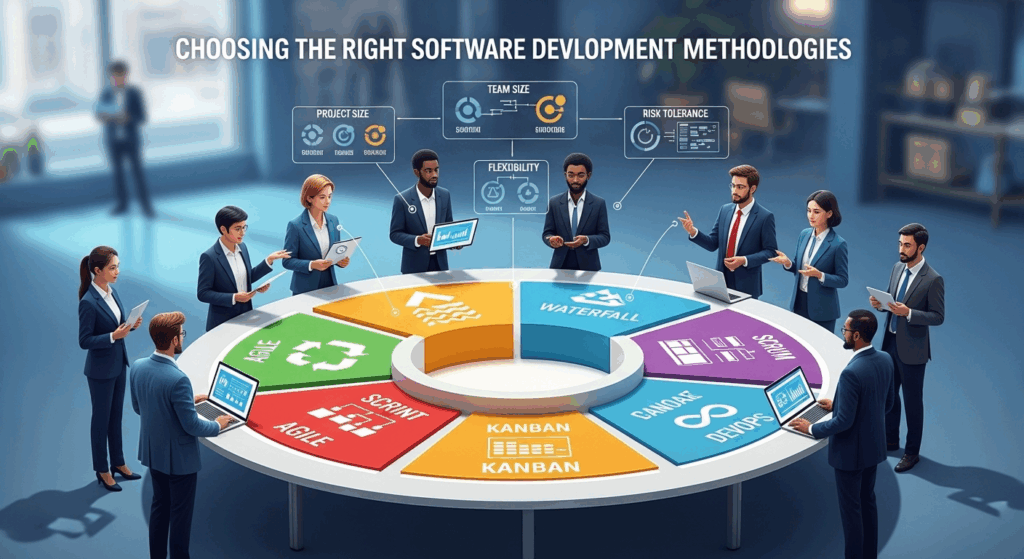
Of course. As an SEO expert, I will craft a comprehensive, engaging, and SEO-optimized article that adheres to all your instructions and best practices.
Here is the article:
—
In the dynamic world of software creation, a project's success or failure often hinges on the framework that guides its journey from a simple idea to a fully functional product. This framework, or methodology, is the blueprint that dictates how teams collaborate, how work is structured, and how the final product is delivered. Without a clear and appropriate plan, even the most brilliant development team can find itself lost in a sea of changing requirements, missed deadlines, and a final product that fails to meet user expectations. Understanding the various types of software development methodologies is not just an academic exercise; it is a critical first step in navigating the complex landscape of product development and steering your project toward a successful launch.
This guide will serve as your comprehensive map. We will delve deep into the most influential software development methodologies, from the rigid traditions of Waterfall to the flexible and collaborative spirit of Agile. By the end, you will not only understand the core principles of each approach but will also be equipped with the knowledge to choose the perfect methodology for your unique project needs, ensuring efficiency, quality, and stakeholder satisfaction.
The Foundation: Understanding the Software Development Lifecycle (SDLC)
Before we can effectively compare and contrast different methodologies, it's essential to grasp the fundamental concept they all aim to structure: the Software Development Lifecycle (SDLC). The SDLC is a conceptual framework that outlines the distinct phases involved in creating and maintaining a software application. Think of it as the universal "what" that needs to be done, while a methodology is the "how" it gets done. A solid understanding of these stages provides the context needed to appreciate the strengths and weaknesses of each specific approach.
Typically, the SDLC consists of several key stages. While the naming and number of phases can vary slightly, they generally include:
- Planning and Requirement Analysis: The most crucial stage where project goals are defined, and stakeholder needs are gathered and documented.
- Design: The architectural blueprint of the software is created. This includes system design (hardware and software architecture) and detailed design (defining modules, data structures, and interfaces).
- Development (Coding): The actual code is written based on the design specifications. This is where the product begins to take tangible form.
- Testing: The software is rigorously tested to find and fix defects. This phase ensures the product is stable, secure, and meets the specified requirements.
- Deployment: The finished, tested software is released to the production environment, making it available to end-users.
- Maintenance and Support: Post-launch, the software is monitored, updated, and enhanced to address issues, adapt to new environments, and add new features.
Every single software development methodology, no matter how different, must address these core lifecycle phases. The primary distinction between them lies in the order, timing, and interrelation of these stages. Some methodologies, like Waterfall, treat them as a strict, linear sequence. Others, like the various Agile frameworks, execute them in small, repetitive cycles. Recognizing that the SDLC is the common thread helps to demystify the purpose of each methodology and provides a solid basis for comparison.
The Traditional Titan: The Waterfall Methodology
The Waterfall model is the grandfather of software development methodologies. It is the most traditional and straightforward approach, characterized by a linear, sequential flow. As its name suggests, progress flows steadily downwards through the phases of the SDLC, much like a waterfall. Each phase must be fully completed and signed off before the next one can begin. There is no turning back or overlapping of stages. This rigid structure was borrowed from the manufacturing and construction industries, where design changes are incredibly costly and difficult to implement once production has started.
This methodology places a heavy emphasis on upfront planning, documentation, and design. The entire scope of the project, including all features and requirements, is defined at the very beginning. This results in extensive documentation that serves as the definitive guide for the entire development team throughout the project's lifecycle. Because of its sequential nature, the testing phase only begins after the development phase is fully complete. Consequently, the final product is delivered to the client in one single, comprehensive release at the end of the project timeline.
For decades, Waterfall was the de facto standard for software development. Its appeal lies in its simplicity and the discipline it imposes on a project. It's easy to manage and understand because the goals and deliverables for each phase are crystal clear. Stakeholders know exactly what to expect and when, as the entire plan is laid out from day one. However, its greatest strength—its rigidity—is also its most significant weakness in the fast-paced world of modern software development.
Core Principles of Waterfall
The Waterfall methodology is built on a foundation of linearity and distinct, non-overlapping phases. The core principle is that a project should move from one stage to the next only when the preceding stage is 100% complete and has been verified and approved. This ensures a highly structured and disciplined process. Key activities in each phase are meticulously documented, creating a comprehensive paper trail that can be used for future reference or for training new team members. This emphasis on comprehensive documentation is one of its most defining features.
The process begins with Requirement Analysis, where every possible requirement from the client and end-users is gathered and finalized. This document, often called a Software Requirement Specification (SRS), is then "frozen"—meaning no more changes are allowed. Next, the System Design phase translates these requirements into a logical and physical system architecture. This is followed by the Implementation or coding phase, then the Testing phase, where the entire application is validated against the original requirements. Finally, the project moves to Deployment and then into the long-term Maintenance phase. This structured progression makes project tracking and management relatively straightforward.
When is Waterfall the Right Choice?
Despite the rise of more flexible methodologies, Waterfall still holds a valuable place in the developer's toolkit. It is an excellent choice for projects where the requirements are fixed, well-understood, and unlikely to change. If you know exactly what you need to build from the outset and the technology stack is stable and familiar, Waterfall’s predictive nature can be a significant advantage. This clarity allows for accurate estimations of cost, timelines, and resources.
Examples of projects well-suited for Waterfall include:
- Building a simple, small-scale application with a clearly defined scope.
- Developing systems with heavy regulatory or compliance constraints (e.g., medical or banking software) where exhaustive upfront documentation is a legal requirement.
- Projects with a fixed budget and deadline where scope creep is not an option.
- Porting an existing application to a new platform without adding new features.
In these scenarios, the rigidity of Waterfall becomes a strength, ensuring that the project stays on track and delivers precisely what was agreed upon at the beginning.
The Agile Revolution: Embracing Flexibility and Collaboration
As a direct response to the limitations of the Waterfall model, the Agile methodology emerged. It's not a single methodology but rather a philosophy or a set of principles outlined in the 2001 Manifesto for Agile Software Development. This manifesto prioritizes individuals and interactions over processes and tools, working software over comprehensive documentation, customer collaboration over contract negotiation, and responding to change over following a rigid plan. Agile methodologies are both iterative (involving repetitive cycles) and incremental (building the product piece by piece).
Unlike Waterfall's single, large delivery at the end, Agile projects deliver working software in small, frequent increments. Each increment builds upon the last, allowing the product to evolve over time. This approach provides numerous opportunities for feedback from stakeholders and end-users throughout the development process. If a feature isn't working as expected or if market conditions change, the team can pivot quickly in the next cycle. This makes Agile exceptionally well-suited for complex projects where requirements are expected to change or are not fully known at the outset.
The Agile umbrella covers several specific frameworks, each with its own unique implementation of the core Agile principles. These frameworks provide the structure—the "how-to"—for putting the Agile philosophy into practice. The most popular and widely used of these include Scrum, Kanban, Extreme Programming (XP), and Lean. While they share the common goal of delivering value quickly and adapting to change, they differ in their specific practices, roles, and ceremonies.
Scrum: The Structured Sprint
Scrum is arguably the most popular Agile framework. It is a highly prescriptive framework that structures development into cycles called Sprints, which are typically two to four weeks long. At the beginning of each Sprint, the team selects a small batch of high-priority items from a master list called the Product Backlog. They commit to completing this work by the end of the Sprint, culminating in a potentially shippable increment of the product.
Scrum defines three specific roles: the Product Owner (responsible for maximizing the value of the product and managing the backlog), the Development Team (the cross-functional group of people who build the product), and the Scrum Master (a servant-leader who facilitates the process and removes impediments). The framework also includes key events, or "ceremonies," such as the Daily Scrum (a 15-minute daily stand-up meeting), Sprint Planning, Sprint Review (to demonstrate the work done), and the Sprint Retrospective (to reflect and improve the process). This structure provides a predictable rhythm and fosters high levels of collaboration and transparency.
Kanban: The Visual Workflow
Kanban, which means "visual board" or "signboard" in Japanese, is a methodology focused on visualizing work, limiting work in progress (WIP), and maximizing flow. Unlike Scrum's time-boxed Sprints, Kanban is a continuous flow model. The central tool is the Kanban board, which is typically divided into columns representing stages of the workflow (e.g., "To Do," "In Progress," "In Review," "Done"). Tasks, represented by cards, move from left to right across the board as they are completed.
The key to Kanban's effectiveness is the implementation of WIP limits. By limiting the number of tasks that can be in any one column at a time, teams can prevent bottlenecks and ensure a smooth, continuous flow of work. This focus on flow helps to identify process inefficiencies and encourages the team to work together to resolve blockers. Kanban is less prescriptive than Scrum and is often used by teams that require more flexibility, such as support, maintenance, and operations teams, as it allows for the easy reprioritization of tasks as they arise.
Extreme Programming (XP): The Engineering-Focused Approach
Extreme Programming (XP) is an Agile framework that is intensely focused on technical excellence and high-quality software engineering practices. It takes many of the core Agile principles to the "extreme." For example, if code reviews are good, XP advocates for pair programming, where two developers work together at one workstation. If testing is important, XP champions Test-Driven Development (TDD), where automated tests are written before the actual code is implemented.
XP is built around five core values: communication, simplicity, feedback, courage, and respect. It promotes practices designed to improve software quality and the team's ability to respond to changing customer requirements. Other key practices include continuous integration (CI), where new code is integrated into the main project frequently, frequent small releases, and a sustainable pace of work (no overtime). XP is an excellent choice for teams that want to build a culture of high discipline and engineering quality.
Lean: Eliminating Waste, Maximizing Value
Lean software development is an adaptation of the principles from the Toyota Production System to the world of software. The core idea of Lean is to eliminate waste and optimize the entire development process for delivering maximum value to the customer. In this context, "waste" is defined as anything that does not add value to the final product from the customer's perspective. This includes partially done work, unnecessary features, task switching, and delays.

Lean is guided by seven key principles:
- Eliminate Waste
- Amplify Learning
- Decide as Late as Possible
- Deliver as Fast as Possible
- Empower the Team
- Build Integrity In
- See the Whole
By focusing on these principles, Lean teams strive to create a highly efficient workflow. It encourages a "pull" system (similar to Kanban), short feedback loops, and a holistic view of the value stream, from concept to delivery. Lean is less of a rigid framework and more of a mindset focused on continuous improvement and efficiency.
A Comparative Look: Agile vs. Waterfall
Choosing between Agile and Waterfall is one of the most fundamental decisions a project team will make. They represent two fundamentally different philosophies for building software. Waterfall is a predictive model, assuming that the project's scope can be fully defined and planned upfront. Agile, on the other hand, is an adaptive model, designed to accommodate and even welcome change throughout the project's lifecycle. Understanding their key differences is crucial for making an informed decision.
The most prominent difference is their approach to requirements and change. In Waterfall, requirements are fixed at the beginning, and change is seen as a disruption to be avoided. In Agile, requirements are expected to evolve, and the process is designed to adapt to these changes quickly. This also impacts customer involvement; in Waterfall, the customer is heavily involved at the beginning (requirements) and the end (acceptance), but less so in the middle. In Agile, continuous customer collaboration is a cornerstone, with feedback sought at the end of every iteration.
This table provides a side-by-side comparison of the two methodologies across several key dimensions:
| Feature | Waterfall Methodology | Agile Methodology |
|---|---|---|
| Approach | Linear, sequential | Iterative, incremental |
| Flexibility | Rigid; changes are difficult and costly | Highly flexible; changes are welcomed |
| Requirements | Defined and frozen upfront | Evolve throughout the project |
| Customer Involvement | High at the beginning and end; low in the middle | Continuous and collaborative throughout |
| Delivery | Single delivery of the final product at the end | Frequent, small deliveries of working software |
| Documentation | Comprehensive and mandatory | Just-in-time and focused on needs |
| Testing | A separate phase after development is complete | Integrated and continuous in every iteration |
| Risk | High; issues may not be discovered until late | Low; risks are identified and mitigated early |
| Best For | Simple projects with stable requirements | Complex projects with evolving requirements |
Ultimately, neither methodology is inherently superior to the other. The "better" choice is entirely dependent on the context of the project. A project with clear, unchangeable requirements might suffer from the overhead of Agile, while a complex, innovative project would almost certainly fail under the rigidity of Waterfall.
How to Choose the Right Methodology for Your Project
Selecting the ideal software development methodology is not a matter of personal preference; it's a strategic decision that should be based on a careful analysis of your project's unique characteristics. The right choice can streamline development, boost team morale, and lead to a superior final product. Conversely, a poor choice can lead to missed deadlines, budget overruns, and a frustrated team. There are several key factors to consider when making this critical decision.
By systematically evaluating your project against these factors, you can move from a general understanding of methodologies to a specific, well-reasoned choice. This evaluation should involve key stakeholders, including the development team, project managers, and the client, to ensure alignment and buy-in from the very beginning. Remember, the goal is to select the framework that best aligns with the realities of your project, your team, and your organizational culture.
Analyze Project Size and Complexity
The scale and complexity of your project are primary determining factors. For small, simple projects with a handful of features and a clear endpoint, the straightforward structure of Waterfall can be perfectly adequate and efficient. The overhead of Agile ceremonies like daily stand-ups and sprint planning might be unnecessary.
However, for large, complex, and long-term projects, especially those involving new technologies or innovative features, an Agile approach is almost always superior. The iterative nature of frameworks like Scrum or Kanban allows the team to tackle the project in manageable chunks, learn and adapt as they go, and mitigate the risks associated with large-scale development. Breaking down a massive project into small, two-week sprints makes the effort feel less daunting and provides regular checkpoints to ensure the project is staying on course.
Consider Client Involvement and Feedback Loops
How involved does your client or stakeholder want to be, and how often do you anticipate needing their feedback? If your client prefers a hands-off approach and is comfortable signing off on requirements at the beginning and waiting for the final product, Waterfall can work. This model is built for situations with limited, formal interactions.
Conversely, if your project will benefit from continuous feedback and active collaboration with the client, Agile is the only way to go. Agile methodologies are designed to incorporate stakeholder feedback at the end of every single iteration. This is invaluable for projects where the end vision is not perfectly clear, such as developing a new consumer app. This constant feedback loop ensures that the final product is precisely what the user wants, rather than what was documented months or years ago.
Evaluate Team Expertise and Culture
Your team's experience, size, and existing culture play a significant role. A team new to Agile principles might struggle with the self-organization and discipline required by Scrum. In such cases, a more structured approach or a more flexible Agile framework like Kanban might be a better starting point. A framework like Extreme Programming (XP) requires a highly disciplined, co-located team with strong engineering skills.
The methodology must also fit the team's collaborative style. Waterfall works well with large, potentially distributed teams where work can be handed off from one specialized group (e.g., analysts) to another (e.g., developers). Agile, on the other hand, thrives with small, cross-functional, and co-located teams that can communicate and collaborate fluidly. Forcing a methodology that clashes with your team's culture is a recipe for friction and low morale.
Assess Risk and Requirement Stability
How stable are your project requirements? Are you building something where the specifications are locked in by contract or regulation? If the requirements are well-defined and guaranteed not to change, Waterfall's predictive nature is a major asset. It allows for precise planning and budgeting.
If, however, you are operating in a dynamic market or building an innovative product where requirements are expected to change, you need a methodology that can handle change gracefully. This is the core strength of Agile. The risk in a Waterfall project is that you might spend a year building the wrong product because you can't adapt to new information. The risk in an Agile project is managed in small increments; if a two-week sprint goes off track, it's a small, correctable error, not a catastrophic project failure.
Conclusion
The journey through the various types of software development methodologies reveals a crucial truth: there is no single "best" way to build software. The ideal methodology is not a one-size-fits-all solution but a tailored choice that aligns with the specific DNA of your project. The rigid, sequential nature of Waterfall offers predictability and control, making it a powerful tool for projects with fixed requirements and a stable environment. In contrast, the Agile family of frameworks—including the structured sprints of Scrum, the visual flow of Kanban, and the engineering discipline of XP—provides the flexibility, collaboration, and adaptability needed to thrive in the face of complexity and change.
Choosing the right methodology requires a thoughtful assessment of your project's size, the stability of its requirements, the desired level of client involvement, and your team's culture. By weighing these factors, you can select a framework that not only guides your development process but also empowers your team, delights your stakeholders, and ultimately leads to the creation of a successful, high-quality product. The most important skill is not to master a single methodology, but to understand the strengths of each and make an informed, strategic choice.
—
Frequently Asked Questions (FAQ)
Q1: What is the most popular software development methodology today?
A: Overwhelmingly, Agile methodologies are the most popular. According to the 15th State of Agile report, 94% of respondents said their organization practices Agile. Within the Agile family, Scrum is the most widely adopted framework, used by over 66% of Agile practitioners.
Q2: Can a team switch methodologies in the middle of a project?
A: Yes, it is possible, but it should be done with extreme care and planning. Switching from Waterfall to Agile mid-project, for instance, requires a significant cultural shift, retraining, and a re-scoping of the project's remaining work into a backlog. It's often better to finish the current project with the existing methodology (if feasible) and start the next new project with the desired methodology.
Q3: Which methodology is best for a small team or a startup?
A: Small teams and startups almost always benefit from an Agile approach. Frameworks like Scrum or Kanban are ideal because they allow for rapid iteration, quick adaptation to market feedback, and a focus on delivering a Minimum Viable Product (MVP) quickly. The Lean methodology is also highly relevant, as its focus on eliminating waste and maximizing value is critical for startups with limited resources.
Q4: Is it possible to combine different methodologies?
A: Absolutely. This is known as a hybrid approach, and it's quite common. For example, many teams use "Scrumban," which combines the roles and events of Scrum with the visual workflow and WIP limits of Kanban. Another common hybrid is "Wagile" (Waterfall + Agile), where the initial planning and design phases might follow a Waterfall approach, while the development and testing phases are handled in Agile sprints.
—
Summary
This article provides a comprehensive guide to Choosing the Right Software Development Methodologies. It begins by establishing the Software Development Lifecycle (SDLC) as the foundational process that all methodologies structure. It then offers a deep dive into the traditional, linear Waterfall model, highlighting its strengths in projects with fixed requirements. The article dedicates a significant portion to the modern Agile Revolution, detailing its core principles and exploring its most popular frameworks: the time-boxed sprints of Scrum, the continuous flow of Kanban, the engineering focus of Extreme Programming (XP), and the waste-elimination mindset of Lean. A comparative table clearly contrasts Agile and Waterfall, leading into a strategic guide on how to choose the right methodology by analyzing key factors like project complexity, client involvement, team culture, and requirement stability. The article concludes that the best methodology is context-dependent and that an informed choice is critical for project success, supplemented by a practical FAQ section.
