A Crocodile, a Ski Resort, and a $400 Million Ballroom: How One Ruling Reshapes Legal Challenges to Trump’s Capital Projects
Sandego.net – The question of whether an American citizen can walk into a federal courtroom and say, “I want to look at a crocodile,” as a basis for suing over government action has haunted the Supreme Court since the early 1990s. Now, thanks to a narrow 5-4 ruling handed down last week, that question has acquired a very different answer when the object of the gaze is not an endangered reptile in Egypt but the neoclassical façade of the White House itself.
Five conservative justices, over the objection of Chief Justice John Roberts and the court’s three liberal members, barred a historic preservationist from challenging the construction of a $400 million ballroom on the White House grounds. The unsigned decision, issued Monday, effectively told the plaintiff that aesthetic displeasure with a new structure does not constitute the kind of concrete, particularized injury required to bring a federal lawsuit.
“This court has not found standing in circumstances like these before,” the court wrote. “We have repeatedly held that mere offense, disagreement, or distaste does not qualify as a concrete and particularized injury.”
The ruling arrived while construction on the ballroom was already well underway, meaning the practical effect was immediate: work continues, and the legal avenue for preservation advocates to halt the project through the federal courts has been narrowed considerably.
The Ripple Effect Across Washington’s Construction Sites
The Trump administration moved swiftly to deploy the ballroom decision as a shield against other pending lawsuits targeting the president’s capital-area building plans. Within days, the Justice Department filed the Supreme Court order into lower courts examining two separate projects: a proposed 250-foot arch along a bank of the Potomac River and a planned remodel of a public golf course in Washington, DC.
Other disputes have also been thrown into uncertainty. The administration’s troubled effort to renovate the Lincoln Memorial Reflecting Pool and a separate plan to repaint an iconic Gilded Age government building near the White House have each raised standing questions that the ballroom ruling now complicates. On Friday, a federal court reviewing the Reflecting Pool case ordered a new round of briefing specifically in light of the Monday decision, signaling that lower judges expect the ruling to reshape the legal landscape for weeks to come.
The Legal Lineage: From Sequoia to the Nile
To understand why the crocodile reference matters, one must trace the doctrine of “aesthetic standing” back to its origins. In the 1970s, as the Supreme Court was tightening standing requirements across federal courts, the justices simultaneously opened a narrow door for plaintiffs claiming injury from changes to landscapes or natural environments. That door was first articulated in Sierra Club v. Morton, a case challenging a Disney ski resort planned for Sequoia National Park in California.
Writing for the majority in that landmark decision, Justice Potter Stewart declared that “aesthetic and environmental wellbeing” are “important ingredients of the quality of life” and are not less deserving of legal protection than “economic wellbeing.” Yet the court ultimately ruled the plaintiff lacked standing to sue. The ski resort itself was later abandoned, making the legal victory somewhat moot in practice.
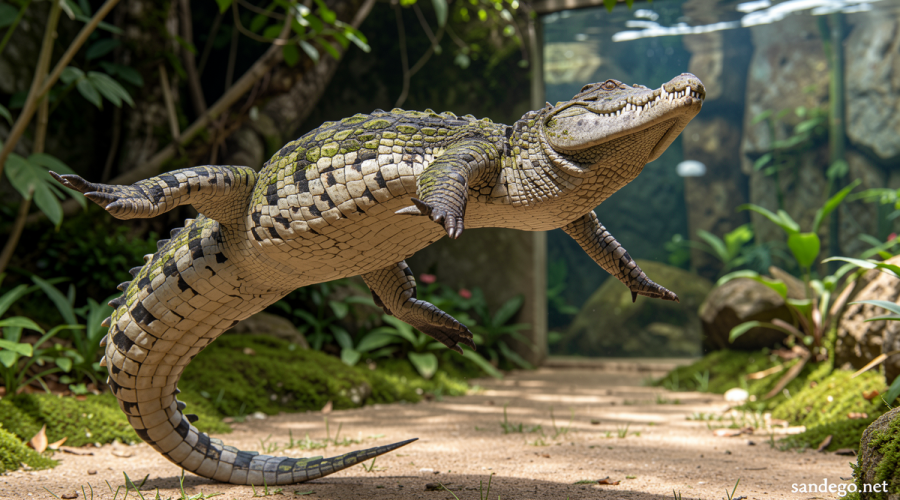
Then came the 1992 Nile crocodile case. A 6-3 court addressed a challenge to foreign aid funding for a project that wildlife groups feared would degrade the habitat of the endangered Nile crocodile. The justices concluded the plaintiffs did not have standing, but not before writing language that has since become a touchstone in environmental litigation:
“Of course” the desire to “use or observe an animal species, even for purely esthetic purposes” is “undeniably a cognizable interest for purpose of standing.”
Roberts invoked that language in his Monday dissent. His point was pointed: the court had once acknowledged that wanting to observe a wild animal counts as a legally cognizable interest, yet now it was telling a preservationist that wanting to observe the White House as it existed before the ballroom does not.
“It now is the case that ‘I want to look at a crocodile’ can adequately answer the ever critical ‘what’s it to you?’ question,” Roberts wrote, “but that ‘I want to look at the White House’ cannot.”
Experts Weigh In: Limited Precedent, Real Consequences
Robert Pushaw, a professor at Pepperdine University Caruso School of Law, noted that the fundamental difficulty with aesthetic standing is that “aesthetic injury is a gut call.” Because aesthetics are inherently subjective and a matter of personal taste, courts struggle to draw a bright line between a cognizable injury and mere displeasure.
Pushaw also flagged a procedural wrinkle: because the ballroom case came through the emergency docket, the decision technically carries limited precedential weight. It is not a full opinion with a published majority opinion and formal citations that lower courts must follow in every context.
“But the case does indicate where five conservative justices are going, and they might be inclined in a later case to either reject aesthetic injuries or limit them to plaintiffs challenging environmental laws,” Pushaw said. “Either way, however, plaintiffs suing over alleged legal violations will have great difficulty establishing standing.”
What Remains for Preservation Advocates
If historic preservation groups and their individual members cannot establish standing to sue, it is unclear who can, and whether federal courts retain any practical mechanism to check the president’s capital-area construction agenda. Yet practitioners who have tracked the growing web of disputes over Trump’s projects say the ballroom ruling does not close every door.
Nicolas Sansone of the Public Citizen Litigation Group, among other litigators and scholars closely following these cases, points out that challenges grounded in specific statutory violations—rather than purely aesthetic objections—may still find a path through the courts. The distinction between “I dislike how this looks” and “this project violates a named preservation statute” remains legally significant, even after Monday’s ruling.
For now, the crocodile lives on in the casebook as a symbol of how far the standing doctrine has traveled: from a ski slope in Sequoia to a riverbank in Egypt to the marble steps of the White House, where the question of who gets to stand before a judge and say “this changes what I see” has just grown considerably harder to answer.
Related Reading
Frequently Asked Questions
What is What a Nile crocodile case means?
What a Nile crocodile case means is the main topic of this guide. The article explains the context, practical details, and next steps readers should understand.
Why does What a Nile crocodile case means matter?
What a Nile crocodile case means matters because readers are looking for a useful answer, not just a short summary. Good content should match search intent and help them decide what to do next.