
Why the Gulf fears Israel’s ‘day after’ in Iran
Why the Gulf fears Israel’s ‘day after’ in Iran
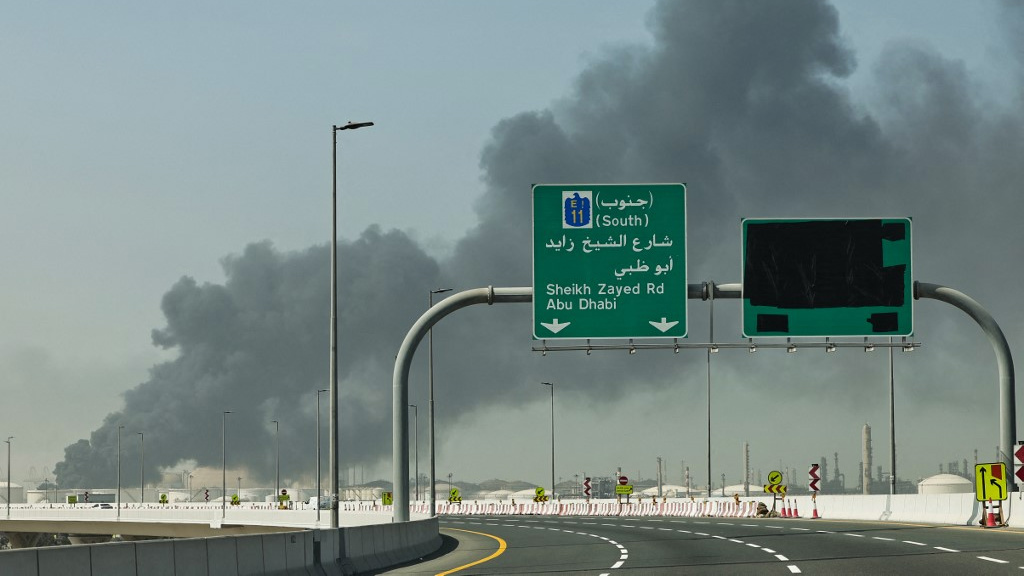
The Gulf Cooperation Council (GCC) nations have remained largely unresponsive despite Iran’s missile and drone strikes across all Gulf states. While the region’s wealthier countries possess formidable military capabilities, their actions have been restrained, focusing primarily on defense and damage mitigation.
Analysts had long anticipated the conflict, forecasting weeks of speculation about when the US and Israel would take action. Meanwhile, Iran’s leadership vowed to unleash “hell” on the area, a threat that proved prescient as the war unfolded.
Both sides fulfilled their warnings: the US and Israel initiated the conflict, while Iran escalated it by targeting civilian infrastructure in every GCC nation. Yet the Gulf states’ passive response persists, despite the unprecedented scale of the attack.
Strategic Divide and Regional Fears
The reason for this inaction lies in the fact that although they face significant pressure, their strategic priorities have not shifted. Though angered by Iran’s aggression, the GCC nations still believe they lack viable alternatives for the postwar era.
“hell” on the region
On a strategic level, the Gulf states and Israel differ fundamentally in their vision for a postwar Iran. The former seeks a swift resolution with minimal disruption, while the latter favors prolonged instability and chaos.
Regardless of whether Iran’s regime survives, the Gulf states anticipate further turmoil. They also fear that the conflict will strengthen Israel’s regional ambitions and its influence over Gulf territories. This explains their efforts to delay the war through defensive tactics.
Potential Outcomes and Challenges
The Gulf’s ideal outcome would be a rapid conflict end following the removal of Iran’s top leaders. For them, the stability of Iran’s internal structure is secondary to its regional influence as the “axis of resistance.”
Any new leadership would need to significantly curb Iran’s military actions to align with Gulf interests. This could reduce the chaos they associate with a more radical regime shift, allowing them to resume normal operations and reengage with Tehran.
However, achieving this remains uncertain. Decapitation alone does not meet Israeli or US objectives. President Donald Trump has
bragged
that the US has eliminated not just current Iranian leaders, but also potential successors.
Israel’s approach mirrors this goal, but through a different method. Prime Minister Benjamin Netanyahu has
explicitly stated
that leadership changes are insufficient; the aim is to dismantle Iran’s institutions systematically, gradually weakening its capacity to threaten adversaries.
Both the US and Israel share the objective of an Iran incapable of challenging their interests. Yet this outcome depends on a protracted and destabilizing confrontation, raising questions about its feasibility.
An alternative scenario involves the conflict continuing in a drawn-out, simmering form. Similar to the situation in Gaza, any ceasefire would likely be symbolic, with low-level violence persisting and tit-for-tat exchanges remaining a常态 between the parties involved.
