
Sudan war: Why Hemedti’s legitimacy push in Uganda falters amid RSF atrocities
Sudan War: Why Hemedti’s Legitimacy Push in Uganda Falters Amid RSF Atrocities
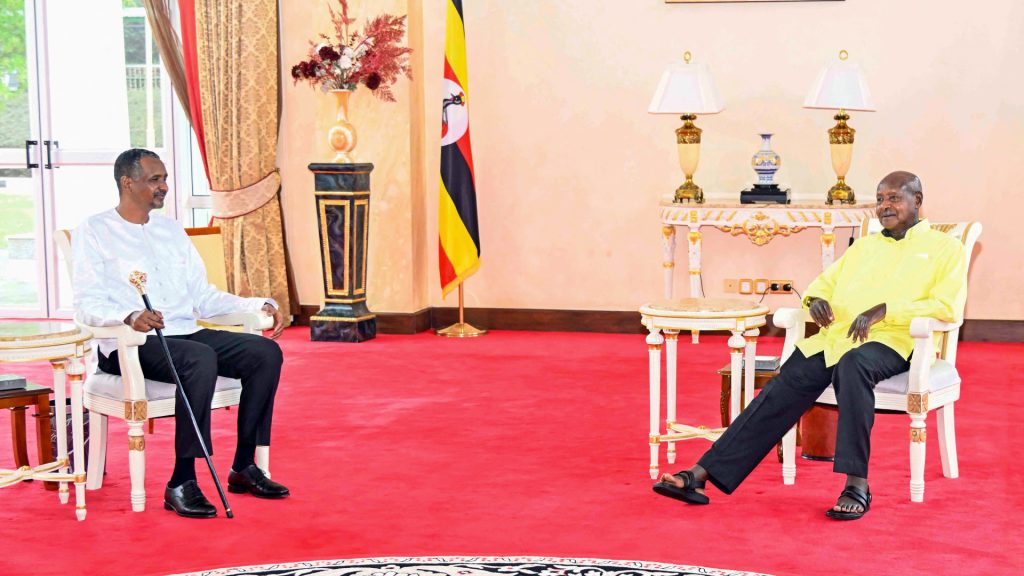
On 20 February, Mohamed Hamdan Dagalo, the Sudanese Rapid Support Forces (RSF) commander known as Hemedti, made his first diplomatic trip abroad in months when he visited Kampala, Uganda, to meet with President Yoweri Museveni.
This engagement marked a significant effort by Hemedti to bolster the RSF’s international standing, yet the timing raised questions about the group’s efforts to counter recent allegations of mass violence.
The visit followed a UN investigation revealing the RSF’s role in genocide in Darfur, with the US imposing sanctions on three commanders for atrocities in el-Fasher just a day prior. These actions underscored growing international scrutiny of the RSF’s conduct, which has been condemned for years over its role in civilian casualties and territorial expansion.
Hemedti did not travel alone. He was joined by individuals linked to the parallel political structure he helped create in Nairobi, called “Tasis.” This initiative aimed to position RSF-controlled areas as a civilian-backed governance model, but it struggled to gain support from Sudanese leaders and global institutions.
The Sudanese government criticized Uganda for hosting Hemedti, calling it an affront to the nation’s dignity and the broader human community. This move, however, signaled Kampala’s role as a strategic venue for the RSF, not just a symbolic gesture.
Despite international criticism, the RSF continues to assert administrative control over regions it occupies, establishing independent governance frameworks. This development has fueled concerns about Sudan’s potential fragmentation, as the group challenges the state’s authority while maintaining military power.
A Deliberate Strategic Shift
The timing of Hemedti’s trip reflects a calculated shift in strategy. No longer confined to military operations or domestic politics, the RSF is now seeking regional influence to shape narratives and solidify its position as a political actor.
In his address, Hemedti highlighted national unity and opposition to division, framing the conflict as a battle against Islamist groups. He also claimed the RSF’s ranks have surpassed 500,000, positioning the force as a key player in Sudan’s future.
These statements were tailored to reinforce internal loyalty, reassure allies, and signal the RSF’s readiness to engage in broader political processes. The speech served as a dual-purpose exercise: reinforcing domestic credibility and enhancing the group’s diplomatic profile.
Yet, the RSF’s pursuit of legitimacy contradicts its international reputation. Accused of systematic abuses, the force now advocates for democracy while operating parallel to state institutions. This duality raises doubts about its ability to transition from a military entity to a recognized political power without compromising autonomy.
Uganda’s Role in the Regional Context
Uganda’s choice as a host was deliberate. Museveni has long promoted “African solutions to African problems,” and the country holds a neutral stance in regional diplomacy. By welcoming Hemedti, Uganda elevated its role as a potential mediator without aligning with any one Sudanese faction.
This partnership also offers the RSF a platform beyond Nairobi’s limited support. Uganda’s status as a respected regional leader can lend symbolic credibility to the RSF’s ambitions, while providing a venue free from the shadow of previous initiatives that failed to gain traction.
The visit indirectly ties into broader mediation efforts involving the African Union and the Intergovernmental Authority on Development (Igad). However, Museveni’s engagement with Hemedti places him in a precarious position, balancing support for the RSF with potential backlash from Sudan’s government.
“By engaging Hemedti publicly, Museveni steps into a delicate balancing act.” – Rift Valley Institute
