
Syria walks back Damascus alcohol ban after outcry from residents
Syria Reverses Damascus Alcohol Ban Amid Public Backlash
Following widespread complaints from citizens, authorities in Damascus have scaled back a proposed alcohol prohibition. The decision came after residents voiced dissatisfaction and accused the policy of favoring certain religious groups.
Initial Restrictions Targeted Christian Neighborhoods
A Monday decree initially barred alcohol sales in restaurants and nightclubs across Damascus, with exceptions granted only to Christian districts like Bab Touma, Qassaa, and Bab Sharqi. Officials cited “numerous” concerns about public morality as the rationale for the measure.
However, on Sunday, the governorate released a clarification that eased the restrictions. The update allowed alcohol sales for tourism, including in hotels and designated establishments. It also extended the exemptions to cover more areas, aiming to address accusations of discrimination.
“The Damascus Governorate apologises to our people in Bab Touma, Qassaa, and Bab Sharqi for the misunderstanding that arose from the decision, which was circulated inappropriately,” the statement read.
The clarification emphasized that the neighborhoods are central to Damascus’s cultural identity. “These areas are considered part of the beating heart of the capital and constitute an icon of its identity and culture,” the text added. Officials pledged to review the affected zones to ensure equitable treatment of all communities.
Context of a Transitional Regime
Since ousting Bashar al-Assad in December 2024, the interim government under President Ahmed al-Sharaa has largely avoided imposing strict social rules. Yet, recent policies such as banning female public sector workers from wearing makeup and requiring full-body swimsuits on beaches have sparked worries about shifting priorities.
The new administration, which includes the former al-Qaeda-linked Hay’at Tahrir al-Sham, faces challenges in balancing public safety with civil freedoms. While conservative Sunni Muslims dominate the population and often avoid alcohol for religious reasons, secular Sunnis and minorities view the restrictions as an encroachment on personal liberties.
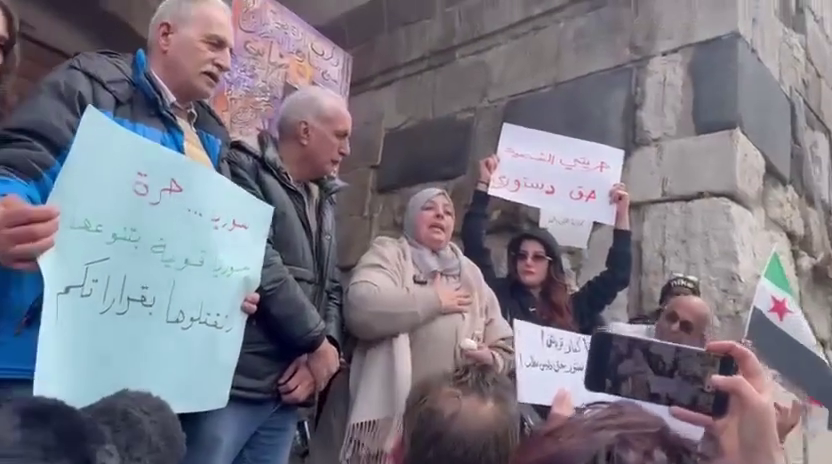
Residents of Bab Touma staged a protest, highlighting broader grievances. Demonstrators, both Muslim and Christian, criticized the law as “sectarian” and warned of its impact on unity. A coalition of Christian advocacy groups also issued a joint letter, arguing the policy could expose their community to renewed attacks.
“Restricting the sale of alcohol to predominantly Christian areas could make these zones direct targets for terrorist attacks, given the history of targeting Christians in Syria,” the letter stated.
The transitional government has grappled with internal unrest, external threats from Israel, and complex relations with allies and adversaries. In October, parliamentary elections were held, with Sharaa personally selecting a third of the seats. Local committees, composed of appointed officials, filled the rest, leaving 32 seats in Sweida province—home to a majority Druze population—unfilled.
Under a temporary constitution adopted in March, the parliament will handle legislative duties until a permanent framework is established. The interim authorities claim popular elections are impractical due to the war’s devastation, which claimed hundreds of thousands of lives and displaced millions. Nonetheless, the selection process disappointed pro-democracy activists who had hoped for greater inclusivity after Assad’s fall.
