
How to Improve 2026 Security Protocols for Better Protection

How to Improve 2026 Security Protocols for Better Protection
As the digital landscape continues to evolve, the importance of securing sensitive data and systems cannot be overstated. With new technological advancements and emerging threats, improving security protocols for 2026 has become more crucial than ever. Whether you’re in charge of a small business, a large corporation, or managing government-level infrastructure, how to improve 2026 security protocols should be at the forefront of your cybersecurity strategy. This article will explore the essential steps and strategies for enhancing security measures, ensuring better protection from potential vulnerabilities and threats.
Understanding the Current Security Landscape
Before diving into how to improve 2026 security protocols, it is essential to understand the current state of cybersecurity. As organizations continue to adopt technologies like artificial intelligence (AI), the Internet of Things (IoT), and blockchain, security protocols need to adapt to address new challenges. Cyberattacks have become increasingly sophisticated, targeting everything from user data to critical infrastructure. Therefore, it is necessary to update security protocols continuously, ensuring that new weaknesses are mitigated.
Many organizations still rely on traditional security protocols that are no longer adequate in the face of modern threats. Relying on outdated methods like simple password protection or basic encryption can leave businesses vulnerable to a range of attacks, from ransomware to advanced persistent threats (APTs). To combat these challenges, organizations must stay ahead of the curve and proactively update their security measures for 2026 and beyond.
Implementing AI and Machine Learning for Threat Detection
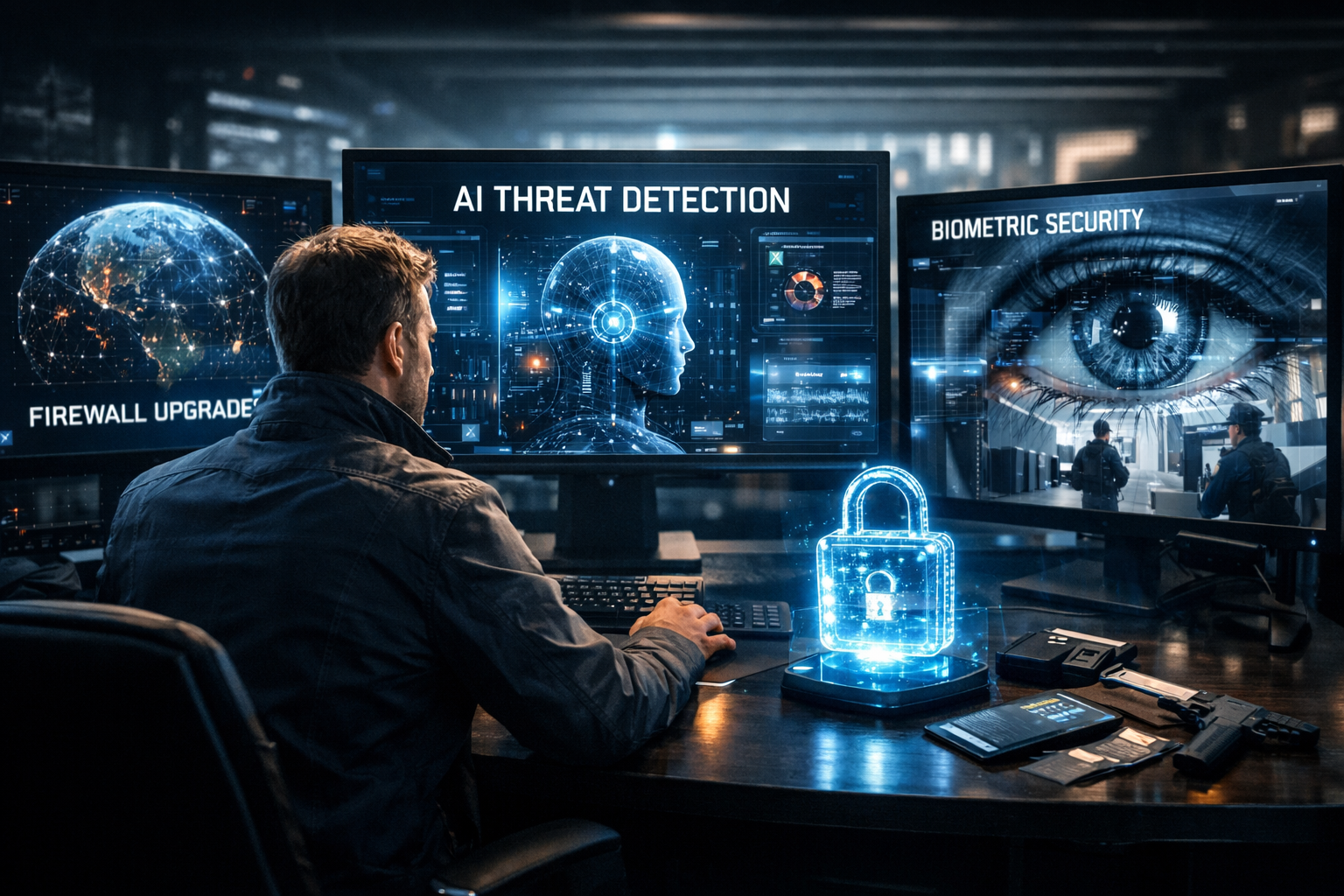
One of the most effective ways to improve security protocols is by leveraging AI and machine learning for threat detection. These technologies can analyze vast amounts of data in real-time, identifying patterns and anomalies that may indicate a potential breach. By automating threat detection, AI and machine learning can provide faster responses to emerging threats, reducing the risk of a successful attack.
AI-powered systems can learn from past incidents and adapt to new types of attacks, making them highly effective at predicting and identifying vulnerabilities before they are exploited. This level of automation not only increases the speed of detection but also reduces the strain on human cybersecurity teams, allowing them to focus on more complex tasks. Investing in AI and machine learning for security purposes will be a critical step for organizations looking to improve their security protocols in 2026.
Zero Trust Architecture: A New Standard for Security
Another significant advancement that organizations should implement to improve 2026 security protocols is Zero Trust Architecture (ZTA). The Zero Trust model is based on the principle that no user or device, whether inside or outside the network, should be trusted by default. This model assumes that every attempt to access resources is a potential threat, regardless of the source.
To effectively implement Zero Trust, organizations must use a combination of technologies such as multi-factor authentication (MFA), least privilege access, and continuous monitoring. By adopting Zero Trust, businesses can minimize the impact of internal and external threats, ensuring that access to sensitive data is tightly controlled. For organizations looking to bolster their cybersecurity in 2026, transitioning to a Zero Trust model will be an essential step in improving their security protocols.
Strengthening Endpoint Security
With more employees working remotely and using personal devices, endpoint security has become a critical component of a comprehensive security strategy. In 2026, improving endpoint security should be a priority to protect against a wide range of cyber threats. Endpoint security involves securing all devices—computers, smartphones, tablets, and IoT devices—that connect to your organization’s network.
Deploying advanced endpoint protection tools such as next-generation antivirus (NGAV) software, endpoint detection and response (EDR) systems, and mobile device management (MDM) solutions can help safeguard devices from malware, ransomware, and other attacks. Additionally, educating employees on best practices for using personal devices securely, such as using strong passwords and avoiding public Wi-Fi for sensitive activities, can further mitigate risks.
Ensuring robust endpoint security is an essential part of how to improve 2026 security protocols, as it strengthens the overall defense perimeter of your organization and reduces the attack surface.
Regular Security Audits and Vulnerability Testing
Another crucial aspect of improving security protocols is conducting regular security audits and vulnerability testing. Cyber threats are continuously evolving, and what may be secure today could be a vulnerability tomorrow. By conducting regular audits, organizations can identify and address weaknesses before they become exploitable.
Penetration testing, vulnerability scanning, and threat simulations are all valuable tools for finding potential risks within an organization’s infrastructure. These tests can simulate real-world attacks and help uncover hidden vulnerabilities that might be overlooked during routine security maintenance. Regular security audits also ensure that compliance standards are met and that security policies are up-to-date.
Implementing this process in 2026 will ensure that your security protocols are proactive rather than reactive, providing a continuous assessment of potential risks.
Employee Training and Awareness
Security is not just about the tools and technologies; it’s also about the people using them. One of the most common causes of security breaches is human error, whether it’s clicking on a phishing link or using weak passwords. Therefore, improving 2026 security protocols requires an ongoing commitment to employee training and awareness.
Regularly training employees on cybersecurity best practices, such as identifying phishing attempts, creating strong passwords, and following secure communication protocols, can significantly reduce the risk of a breach. It’s essential to foster a security-conscious culture within the organization, where employees are not only aware of potential threats but also actively participate in safeguarding the company’s assets.
Security awareness training should be an ongoing effort, with regular updates and simulated attacks to test the effectiveness of training programs.
Conclusion
Improving 2026 security protocols is an ongoing process that requires adopting new technologies, strategies, and methodologies. By implementing AI and machine learning for threat detection, adopting Zero Trust Architecture, enhancing endpoint security, conducting regular security audits, and focusing on employee training, organizations can significantly strengthen their defenses against evolving threats. It’s crucial to stay proactive and ahead of the curve to ensure better protection for sensitive data and systems.
By taking these steps, businesses will be well-prepared to face the challenges of 2026 and beyond.
FAQ
Q: How can AI improve my organization's security protocols? A: AI can enhance security by automating threat detection, analyzing patterns in real-time, and adapting to new types of attacks, leading to faster responses and improved protection. Q: What is Zero Trust Architecture and why is it important? A: Zero Trust Architecture ensures that no user or device is trusted by default, requiring continuous verification before granting access, which helps minimize internal and external security risks. Q: How can I improve endpoint security in 2026? A: You can improve endpoint security by deploying advanced protection tools like NGAV, EDR, and MDM solutions, as well as educating employees on secure device usage and strong password practices. Q: Why are regular security audits and vulnerability tests important? A: Regular audits and vulnerability tests help identify potential weaknesses and ensure that security protocols are up-to-date, proactively addressing new threats before they can be exploited. Q: How can employee training impact security? A: Employee training ensures that staff are aware of cybersecurity threats and best practices, reducing the likelihood of human errors like falling for phishing scams or using weak passwords.
