
Greek police using masked migrants to forcibly push other migrants back across border
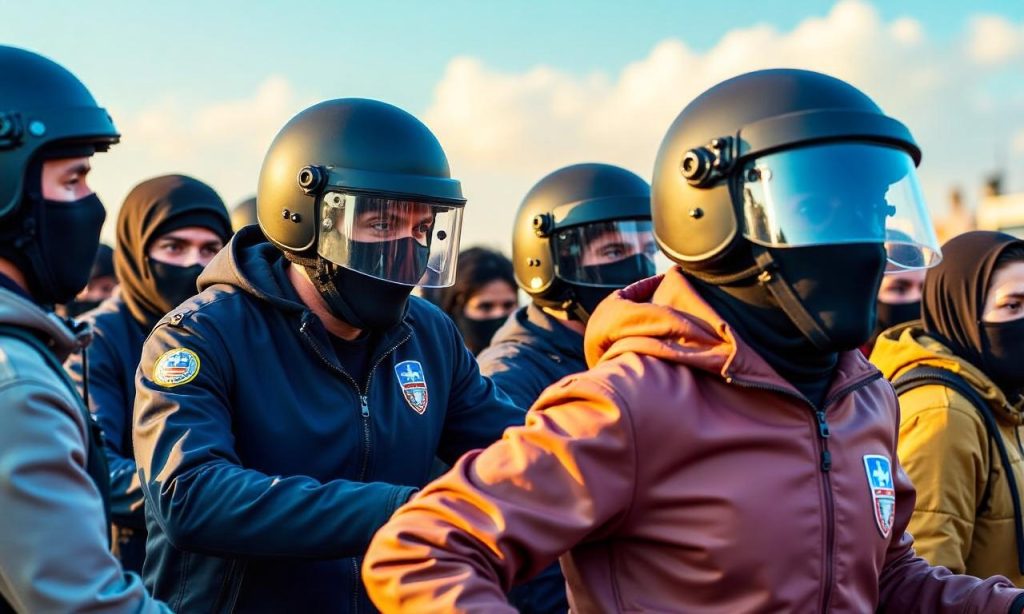
Greek police using masked migrants to forcibly push other migrants back across border
According to extensive evidence gathered by the BBC, Greek authorities are reportedly employing migrants as armed agents to repel others crossing the Turkey border. Internal police records obtained by the BBC detail how senior officers mandated and supervised the recruitment of these so-called mercenaries. Witnesses describe scenes of severe mistreatment, including migrants being stripped, robbed, beaten, and in some cases, subjected to sexual assault.
The practice of using foreign masked individuals for pushbacks has allegedly been ongoing since 2020, with claims of their unofficial involvement. The Greek prime minister, Kyriakos Mitsotakis, told the BBC he was “totally unaware” of these allegations, while government officials have not yet addressed the organization’s detailed written inquiries.
Pushbacks: A legal violation
Forced returns of migrants and asylum seekers without proper legal procedures are typically classified as illegal under international law. Reports of masked men conducting such actions in Greece were first highlighted by Lighthouse Reports, a Dutch-based news outlet, in 2022. The BBC’s investigation, conducted in partnership with the Consolidated Rescue Group (CRG), began in autumn 2022 after receiving distressing video footage allegedly depicting abuse by mercenaries.
The footage was provided by a smuggler who expressed dissatisfaction with his associates. While the BBC has not yet confirmed the video’s authenticity, it aligns with accounts from multiple independent sources. Further analysis has revealed that these mercenaries are themselves migrants, often recruited from countries like Pakistan, Syria, and Afghanistan. They are reportedly compensated with cash, stolen mobile devices, and documents facilitating passage through Greece.
Border dynamics and recent incidents
The land border between Greece and Turkey spans 200 kilometers along the Evros River, forming the edge of the European Union. This area is heavily militarized, featuring watchtowers and restricted zones. A local police source indicated that up to hundreds of individuals are pushed back weekly by mercenaries. “Every officer in Evros knows about these pushbacks,” the source remarked.
In June 2023, the BBC was shown video of an ambush targeting migrants who had crossed into Evros and sought asylum. A Frontex-internal report found that 10 to 20 “third-country nationals” were acting on orders from Greek officials, subjecting migrants to physical and verbal abuse, including threats of death and rape, as well as body searches, beatings, and theft. The report concluded that these actions violated EU human rights law, though Greek authorities disputed the presence of migrants in the area that day.
Human rights concerns and responses
Maria Gavouneli, president of Greece’s human rights commission (GNCHR), described the findings as evidence of a “severe breach” of human rights. The commission has documented over 100 alleged forced returns in Evros since 2020, with cases persisting into October 2025. Despite claims of a decline, dozens of incidents involved non-Greek nationals.
“There is no soldier, police officer or Frontex (EU border agency) officer serving here in Evros who does not know that pushbacks are taking place,”
Frontex has denied allegations of complicity, yet the BBC’s investigation suggests a pattern of coordinated efforts. The prime minister reiterated Greece’s commitment to border security, stating European leaders would not repeat past errors of allowing large-scale migration into the country.
