
Five of Queen Elizabeth II’s most iconic outfits – from new royal exhibit
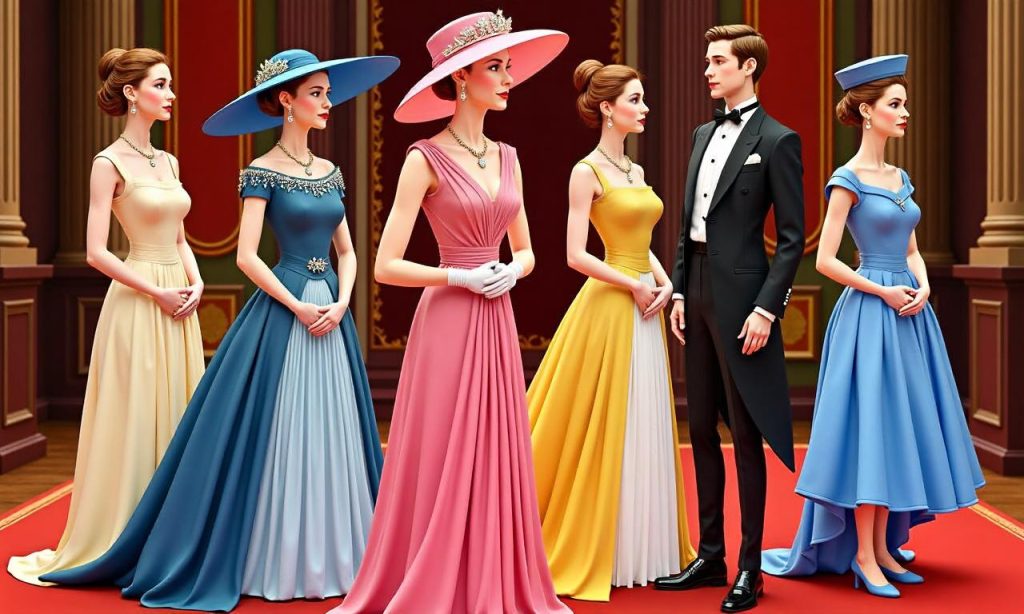
Five of Queen Elizabeth II’s most iconic outfits – from new royal exhibit
Queen Elizabeth II was one of the most widely recognized figures of her era, and her fashion choices—often restrained yet undeniably distinctive—cemented a visual identity that spanned seven decades. Her attire, whether in formal settings or casual moments, mirrored her enduring presence as a monarch. From the elegant hats and vibrant coats of public engagements to the understated tweeds and tartans of her private days, her wardrobe became a symbol of continuity and tradition.
The Harris Tweed Ensemble
Among the 200 items on display at The King’s Gallery in Buckingham Palace, which celebrates the centenary of the Queen’s birth on 10 April, five standout pieces reveal how her style subtly reflected national values and global influence. The Harris tweed jacket and Balmoral Tartan skirt, first worn in the 1950s and designed by her long-time dressmaker Norman Hartnell, exemplify this blend of practicality and symbolic meaning.
“The fabrics were crafted to ‘promote British fashion, excellence and production,’ says royal fashion commentator Marian Kwei. The feminine silhouette and muted tones carry connotations of ‘stability, dependence, soft power,’ subtly reinforcing her authority without overt grandeur.”
Coronation Dress and Commonwealth Symbolism
Another iconic piece is the 1953 Coronation dress, also by Hartnell. Made from Kent silk and adorned with gold bugle beads, diamantés, and pearls, its intricate embroidery tells a story of British craftsmanship and imperial unity. The design included floral emblems of the UK’s four nations, but the Queen expanded the symbolism to embrace the Commonwealth, weaving in motifs like the Canadian maple leaf and India’s lotus flower.
“The gown was pretty much a nod to Britain and the Commonwealth,” adds Kwei. “Her sartorial choice was ‘really an indication of the kind of Queen we had and how she reigned.'”
The 1957 Green Gown
The 1957 sleeveless green gown, worn during a state banquet for US President Dwight Eisenhower at the British Embassy in Washington DC, showcases another facet of her style. While its design was praised for its elegance, its symbolic purpose remains debated. “It’s absolutely beautiful,” says curator Caroline de Guitaut, “but I can’t quite see an overt reference in it.”
“Whatever the intention, the dress was worn during a US visit aimed at strengthening transatlantic ties during the Cold War,” de Guitaut explains. “It might have been a subtle nod to America, with ‘apple crisp green’ echoing the cultural association of apples with classic American imagery.”
Legacy in Modern Design
Elizabeth Holmes, a royal fashion analyst, highlights how the Queen used her clothing early in her reign to reposition herself as a “glamorous young woman on a global stage dominated by men.” Hartnell’s designs, with their fitted waists and voluminous skirts, emphasized her femininity, offering a balance between regal gravitas and approachable charm. This duality continues to inspire contemporary designers, as seen in Miu Miu’s 2024 collection that reinterpreted her tartan kilts.
