
Are US and Israel aligned on Iran war? Deciphering Trump’s post after gas field attacks
Are US and Israel aligned on Iran war? Deciphering Trump’s post after gas field attacks
Trump’s reaction to Israel’s strike raises questions about alliance coordination
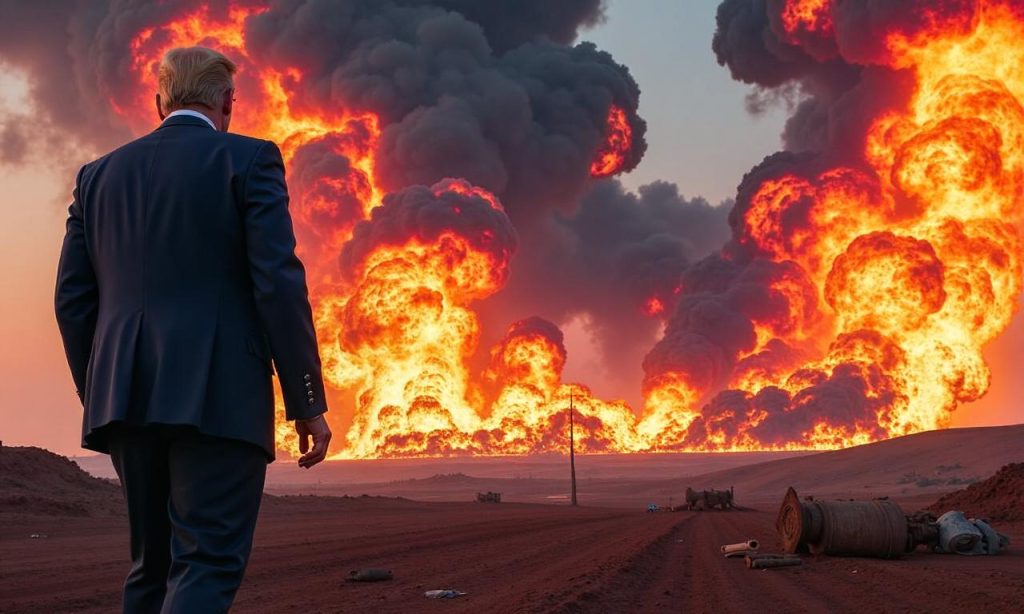
Following recent strikes on an energy hub shared by Iran and Qatar, US President Donald Trump issued a forceful declaration on his Truth Social platform. The attack targeted Iran’s South Pars field, a critical part of the world’s largest natural gas reserve, while Tehran responded by hitting an energy complex in Qatar. The conflict triggered a rise in global energy costs and intensified Trump’s frustration.
Trump claimed the US was “unaware of this specific strike,” contradicting Israeli media reports. The centrist newspaper Yedioth Ahronoth stated that the operation was “coordinated with the United States” and approved by Prime Minister Netanyahu. Right-wing outlet Israel Hayom added that Trump had “discussed the Israeli strike” with leaders from three Gulf nations over the weekend.
“NO MORE ATTACKS WILL BE MADE BY ISRAEL” unless Iran “unwisely decides to strike Qatar,” Trump wrote. This phrasing suggests he views the strike as a retaliatory act rather than a strategic move. The use of all caps here underscores his frustration, though it appears sparingly compared to his usual style.
Trump’s language frames the Israeli action as impulsive, describing it as a “violent response” driven by “anger.” This contrasts with the precision expected of a close ally. Some analysts argue the president may be hinting at a rift, while others suggest it reflects his tendency to emphasize control.
Israeli officials have maintained that the US and Israel share common objectives. Netanyahu, in a press conference, reiterated that Israel acted independently and that Trump had “requested a pause” in similar operations. He emphasized their unity, stating, “I don’t think any two leaders have been as coordinated as President Trump and I. He’s the leader. I’m, you know, his ally.”
However, Israel’s focus on regime change appears more steadfast. Officials in Israeli media described the South Pars attack as part of a broader campaign to weaken Iran’s government. “Shutting off gas supplies to citizens will accelerate the uprising,” one source told Yedioth Ahronoth’s Yossi Yehoshua.
While the US has prioritized disrupting Iran’s military capabilities—targeting its naval forces and Gulf coast infrastructure—Israel has pursued assassinations of Iranian leaders and strikes on state institutions, such as the Basij paramilitary units that enforce crackdowns on protests. This divergence in tactics highlights underlying differences in strategic priorities, despite public assertions of alignment.
