
A free Iran is their shared dream. But the diaspora remains torn on the best path forward.
A Fractured Iranian Exile Community Faces Uncertain Future
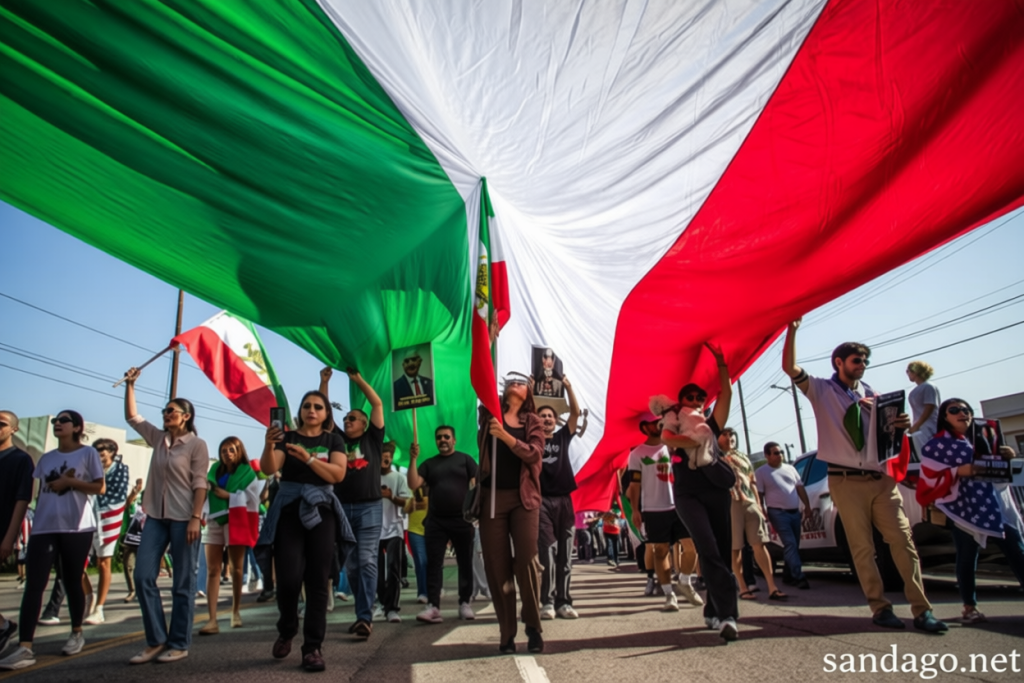
In Los Angeles, contrasting demonstrations revealed the divided sentiments of the Iranian diaspora. On one side, protesters gathered near City Hall, decrying the initiation of an unapproved war, their voices echoing calls for peace. On the other, in Tehrangeles, a vibrant Westside neighborhood, supporters of regime change celebrated the potential end of Iran’s theocratic rule, waving flags from multiple nations and reveling in the news of Ayatollah Ali Khamenei’s assassination.
Contradictory Loyalties Amid Rising Tensions
The split within the community reflects growing unease as Middle Eastern violence intensifies. For those who fled Iran after the 1979 Islamic Revolution, the conflict has stirred mixed emotions. Abbas Milani, a Stanford University expert, noted that some Iranians view the war as a necessary step to dismantle the regime, even if it means sacrificing parts of their homeland. Others, however, seek to remove the leadership without plunging the country into chaos.
“Some people are so aggrieved at this regime that they say, ‘At any cost, come and destroy this regime even if it means destroying parts of the country,’” Milani explained. “Others want to get rid of the regime but not at the expense of war.”
These tensions have grown since the strikes targeting Iran. Online discussions have escalated, with supporters of military action accused of aligning with “Zionists,” a term increasingly used to denounce Jews after the Hamas attacks on Israel in October 2023. Anti-war voices, meanwhile, face backlash for being seen as pro-regime.
Leadership Debates and Uncertain Outcomes
As the death toll climbs and internet access dwindles under a government-imposed blackout, Iranians debate who should lead in the aftermath. Reza Pahlavi, the heir to Iran’s last monarchy, garners support from some, while others remain cautious about restoring royal ties. The prospect of Mojtaba Khamenei, the supreme leader’s son, stepping into power adds to the uncertainty.
Analysts warn that the Islamic Revolutionary Guard Corps, a dominant force in Iran, could consolidate its authority if the current turmoil persists. Meanwhile, former President Donald Trump has suggested replacing Iran’s leadership entirely, proposing names for a “good leader.” Despite his stance, a recent NBC News survey shows 54% of voters disapprove of his approach to the crisis.
A Pluralistic Vision for Iran’s Future
Iranian American groups emphasize the community’s diversity. The Iranian Diaspora Collective, an Instagram platform with over 81,000 followers, highlighted this fragmentation: “Millions of people will never share the same ideology or identity. That plurality is the strength of any free society.”
Los Angeles-based Pastor Ara Torosian, a Christian who emigrated from Iran in 2010, expressed heartache over the destruction of cultural landmarks and civilian casualties. Yet, he argued that the current suffering surpasses historical hardships faced by dissenters. “This is not just about ending tyranny,” he said, “but about breaking cycles of oppression that have endured for decades.”
With Nowruz, the Persian New Year, approaching, the community grapples with the hope of renewal and the fear of further division. As the situation evolves, the path to a “free Iran” remains unclear, with differing visions for the future shaping the diaspora’s response to the ongoing crisis.
