Smartphones Arrived Just Before US Fertility Rate Plunged, Study Claims
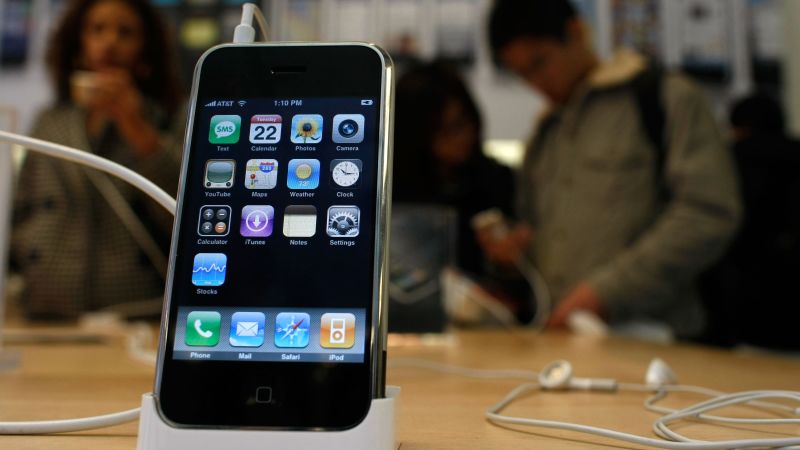
Sandego.net – Smartphones arrived just before the US fertility rate plunged, according to a recent study that links the technology’s rise to a decline in birth rates. Over the past few decades, the U.S. fertility rate has steadily dropped, prompting researchers to seek new explanations. A new analysis by economists at Middlebury College and the National Bureau of Economic Research suggests that the introduction of the iPhone in 2007 might have been a key factor. While the connection is still debated, the study highlights how early smartphone adoption coincided with a sharp drop in fertility, raising questions about its role in shaping family planning decisions.
Timing of Smartphone Diffusion and Fertility Trends
The study’s findings suggest a strong correlation between the spread of smartphones and the fertility rate decline. The researchers analyzed the diffusion of AT&T mobile broadband—initially the only network for the iPhone—and compared it to birth rate changes between 2007 and 2011. In counties where over 90% of residents gained early access to smartphones, fertility rates dropped more steeply than in areas with limited coverage. This pattern hints at a broader cultural shift, with smartphone usage potentially altering how people engage in social and romantic interactions.
“The iPhone’s arrival marked a turning point,” said Caitlin Myers, the study’s lead author. “It created a new way for people to interact, which may have affected their choices about starting families.”
Generational Shifts and iGen Behavior
Myers has long focused on generational changes that could impact fertility. Her research highlights the influence of “iGen,” the first generation raised with smartphones as a central part of daily life. Members of this group tend to communicate primarily through screens, leading to fewer face-to-face interactions that might encourage relationships and parenthood. This shift in behavior, she argues, could have contributed to the fertility decline, particularly among teenagers and young adults.
Her stepson, Ezekiel Hooper, observed these trends in his own life. He noted that his younger siblings engaged in relationships through apps and texts rather than in person. “Smartphones arrived just before the US fertility rate plunged,” Hooper added, “and it changed how we connect, which might have delayed family planning.” His insights, combined with Myers’ analysis, form the basis of a working paper that explores this technological influence on societal norms.
Methodology and Statistical Findings
The researchers used geographic data to trace smartphone adoption and its effects on fertility. By examining the spread of iPhone access across the U.S., they found that counties with higher smartphone penetration experienced sharper declines in birth rates. For instance, teenage fertility dropped by 26% in such areas, compared to a 14% decrease in regions with less access. Among women in their 20s, the decline was also more pronounced, with a 15% drop versus 10% in areas where smartphones were less common. Even for women in their 30s, the data showed subtle but notable shifts in fertility trends.
“Our analysis shows that smartphone adoption aligns with a third to half of the fertility rate decline during that period,” Myers explained. “This suggests that technology may have played a significant role in changing reproductive behaviors.”
Behavioral Changes and Attention Economy
The study proposes that smartphones have redefined how individuals spend their time and prioritize activities. With constant access to digital communication, people may have shifted focus from dating and family planning to screen-based entertainment and work. This “attention economy” could have reduced opportunities for unplanned pregnancies, particularly among younger generations. Hooper noted that the iPhone’s introduction changed the rhythm of daily life, with more time dedicated to online interactions than in-person ones.
The researchers also point to the role of smartphones in shaping expectations about relationships and independence. Young people today may feel less pressure to marry or have children early, as technology allows for more flexible lifestyles. While the study doesn’t prove a direct cause, it presents a compelling case that the smartphone’s arrival coincided with a major change in fertility patterns, warranting further investigation.