
The Greens’ Gorton and Denton by-election win was about inclusion — not sectarianism
The Greens’ Gorton and Denton by-election win was about inclusion — not sectarianism
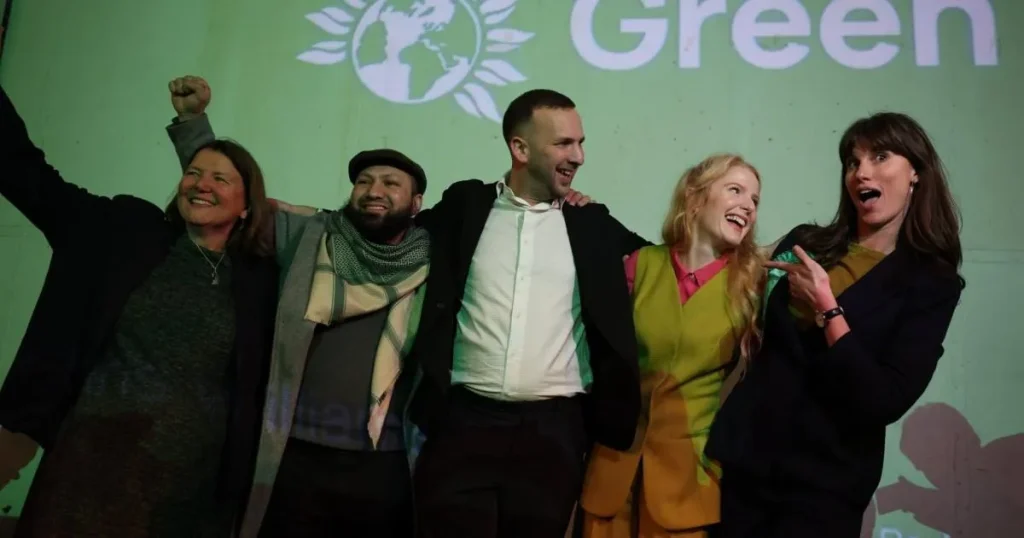
What a historic night! The Green Party’s triumph in the Gorton and Denton by-election marks their first parliamentary victory in this area. It wasn’t just the end of a once-unshakable Labour majority exceeding 13,000 votes that made the night memorable. For the first time, a Green MP has been elected in the North of England, a milestone that feels even more significant in the context of this dramatic shift.
But this result goes beyond any single achievement. It signifies a broader movement toward a politics that prioritizes unity over division, empathy over hostility, and shared values over exclusionary rhetoric. The Green Party’s message resonated deeply, offering a vision where everyone—regardless of background—feels represented.
People can’t place a value on hope—especially when it’s rekindled in communities that have long felt sidelined by traditional political narratives. The Green campaign’s inclusive tone, despite efforts by Labour and Reform to dismiss it as a calculated ploy, proved that connection matters more than confrontation.
While strong policies and a compelling candidate like Hannah Spencer played a role, the heart of the victory lay in the campaign’s approach to communication. Politics in the UK has often been monolithic, using a narrow, Westminster-centric English that overlooks the voices of those who speak other languages at home. Reform’s candidate, Matt Goodwin from Kent, exemplified this by relying on a single linguistic framework, which failed to bridge the gap with voters in Gorton and Denton.
In contrast, the Green campaign embraced the linguistic diversity of the area. With nearly 40% of residents identifying as Muslim and many growing up in households where Urdu, Bangla, Arabic, or other languages are spoken, the campaign adapted its message to reflect their lived realities. This wasn’t just about translation—it was about validation.
By producing materials in multiple languages, including a viral Urdu video, the Greens demonstrated a genuine commitment to inclusivity. Critics have labeled this strategy as divisive, but the evidence shows it was about inviting people into the conversation, not pushing them apart. Similar approaches in New York, where Zohran Mamdani’s multilingual outreach in Arabic, Spanish, and Urdu expanded political engagement in overlooked communities, underscored the power of this method.
When discussing issues like rent, bills, the NHS, or peace, language becomes a tool for connection, not division. Multilingual campaigns acknowledge that these concerns transcend borders, whether spoken in English, Punjabi, Somali, or any other tongue. This recognition is what makes inclusion a foundation for real political change.
The success in Gorton and Denton isn’t just about numbers—it’s about meaning. A 26.5% swing toward the Greens reflects a growing trust in their ability to represent diverse communities without alienating them. This win highlights a politics that empowers, rather than marginalizes, people who have long felt their voices ignored.
Ultimately, the campaign proved that democracy thrives when language isn’t a barrier, but a bridge. By respecting the cultural and linguistic identities of voters, the Greens showed that participation should be accessible to all—no matter their native tongue or heritage. This is the kind of politics they aim to build, one that ensures every voice is heard and valued.
