Understanding True Affordability Through Personal Stories
Beyond the Economic Data
I ve spent years studying economic – For months before embarking on this journey, I found myself immersed in economic statistics, pursuing a hypothesis I had never articulated publicly. The prevailing narrative suggested that rising living expenses were merely making daily life costlier. However, my growing conviction was that something more fundamental was occurring—the social contract we had all accepted and trusted was being systematically dismantled. The traditional pathway of education, employment, diligent work, homeownership, family formation, and wealth accumulation was losing its reliability.
This realization prompted an extensive investigation spanning four metropolitan areas, covering approximately 5,000 miles, and involving conversations with three dozen individuals whose experiences challenged conventional economic wisdom. The resulting documentary series, currently available for streaming, examines families navigating the contemporary affordability emergency, exposing the systemic forces that have permanently altered the American economic landscape.
A Conversation in Parma
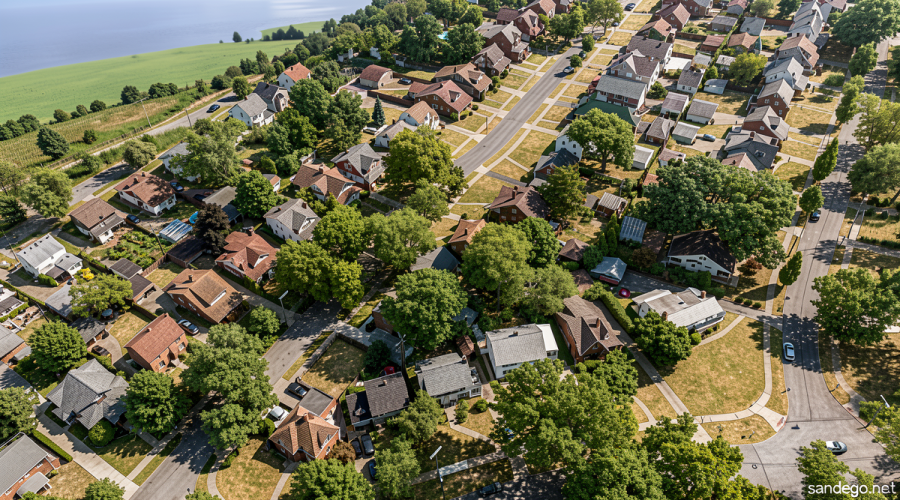
Our journey began during a brief car ride through Parma, Ohio, when Jolene Simecek offered an observation that momentarily left me without words. As she guided me through newly developed neighborhoods, she described the fresh housing subdivisions passing by—rows of recently constructed homes that she had somehow reconciled herself to never possessing. In this area, she explained, properties rarely remain available long enough for prospective buyers to submit competitive offers.
“It’s not fun. I wanted a yard for my kid. Just the normal American dream — a house, a picket fence, a yard. And it just seems like that’s more and more out of touch. Not reality.”
Jolene’s parents never accumulated the generational wealth that families typically pass down through inheritance. Consequently, she found herself in the rental market, working extended hours—sometimes sixteen-hour shifts—spending minimal time at home, yet the financial equation remained unsolvable. This reality applies not only to her but to countless individuals her generation.
The Mathematics of Struggle
At forty-two years old, Jolene is a single mother who has been employed since age thirteen. She recently made a significant personal investment, sacrificing her apartment and accumulating $15,000 in debt to pursue nursing education, betting on healthcare industry demand. The consequence of this decision was moving into her sister’s basement, as alternative housing proved unavailable. Her current living situation includes two young roommates, aged five and three.
“I’ve already paid a quarter million dollars in rent in my life,” she said. “I should already have the home with the equity paid off.”
During our drive past her former residence, she detailed the financial pressures that compelled her departure. Her monthly rent escalated from $785 to approximately $1,600 over seven years for an identical apartment. Meanwhile, her earnings remained stagnant. When I asked about the emotional toll of these circumstances, she responded without hesitation, then added quietly, “But I didn’t make the right decisions.”
Parallel Lives, Divergent Paths
Jolene and I share the same age, graduated from the same class, and come from the same state, yet represent opposite ends of the same geographic divide—her Cleveland, my Toledo. For years, our trajectories ran alongside each other before eventually separating. I cannot pinpoint precisely when or why this divergence occurred, but the outcome remains clear: she followed every instruction society provided, yet now resides in her sister’s basement.
The only explanation I could formulate was an ancient saying: “There but for the grace of God go I.”
The Cost of Living Crisis
The term “affordability” has become ubiquitous in contemporary discourse—a convenient label that reduces complex human experiences into statistical categories designed for polling and political messaging. This terminology often disconnects from the actual people experiencing the gradual deterioration of the economic foundation that once promised upward mobility for Americans.
While the stock market achieves unprecedented milestones weekly and sometimes daily, and corporate profits, productivity metrics, and consumer expenditures demonstrate consistent strength, those already prosperous are advancing even further ahead. Meanwhile, individuals with more limited resources continue falling behind, encountering diminishing opportunities for the economic advancement that characterized the American experience for generations.
Households rarely collapse from a single emergency room visit or a broken vehicle. What ultimately overwhelms families is the compounding pressure of major expenses—housing costs, childcare fees, and eroding retirement security—until a household exists so precariously that any minor disruption proves catastrophic.
Submit Your Questions
What questions do you have about the rising cost of living? Submit your questions and Phil Mattingly will answer in a live Q&A on July 22 at 5 PM ET.