
Iran’s strikes on Gulf energy sites rattle markets and raise recession fears
Iran’s strikes on Gulf energy sites rattle markets and raise recession fears
As the US and Israel ramped up their military preparations for the conflict that began a week prior, Iran consistently issued warnings about retaliation if attacked, aiming to destabilize the region and its global economic ties. A week into the war, Iran’s escalating strikes intensified market volatility, with energy prices fluctuating and concerns about a potential economic downturn gaining traction.
Tehran’s campaign has extended across the Gulf, with attacks hitting critical infrastructure in multiple locations. The recent strike on Azerbaijan marked a new phase in the conflict, while the UK Foreign Office observed a shift in Iran’s targeting strategy. Although the frequency of attacks has decreased compared to the initial days, the focus has broadened to include vital energy and economic assets.
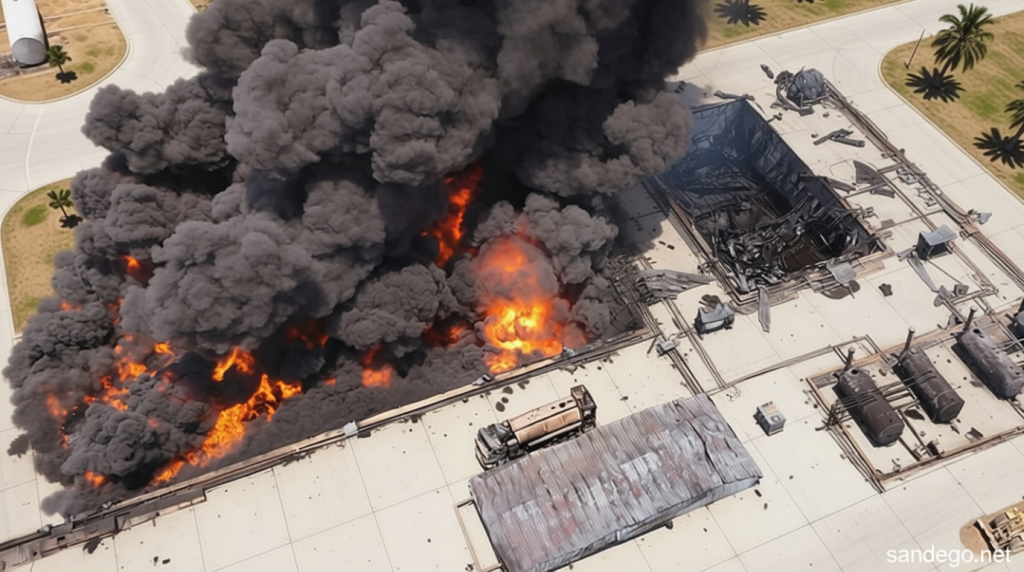
One of the most significant disruptions occurred in Qatar, where Iranian drones struck key LNG facilities in Mesaieed and Ras Laffan Industrial City, prompting a temporary halt in production at the world’s largest plant. This action sent shockwaves through global energy trade, though the impact on prices has been less severe than anticipated. According to Dr. Yousef Alshammari of the London College of Energy Economics, a prolonged blockade of the Strait of Hormuz—where 20% of global oil transit occurs—could be the catalyst for a worldwide economic slowdown.
“As we continue to go towards the summer, I believe the risks of global recession can be amplified,” Alshammari remarked. “And then I think we can have a political pressure coming particularly from China, which is the major consumer of Iranian oil.” He also noted that a 50% surge in gas prices is already visible, especially in Europe, but oil price increases remain below market projections.
Meanwhile, the world’s largest oil refinery in Saudi Arabia was forced to close due to Iranian strikes, with Iraqi oil output and Israeli gas fields also feeling the strain. Dubai’s major ports, crucial for international trade, have reportedly been targeted as well.
Former US ambassador to Azerbaijan Matthew Bryza questioned the logic behind Iran’s attacks, particularly on Nakhchivan and other regions. “It is difficult to understand why Iran would have launched drone attacks against Azerbaijan’s region of Nakhchivan,” he said, adding that the strikes seem to lack a coherent strategy. Bryza highlighted that Azerbaijan’s President Ilham Aliyev had previously shown support for Iran, even offering aid after the war began, making the subsequent assault seem contradictory.
Bryza suggested that Iran’s actions might be aimed at creating societal and economic strain to pressure US President Donald Trump. “Continued supply chain disruptions and rising oil prices could hurt Republicans in the upcoming elections,” he noted, implying a possible political motive behind the escalating conflict.
