SK Hynix Makes History with Record-Breaking American Stock Debut
A Global Semiconductor Giant Enters the U.S. Market
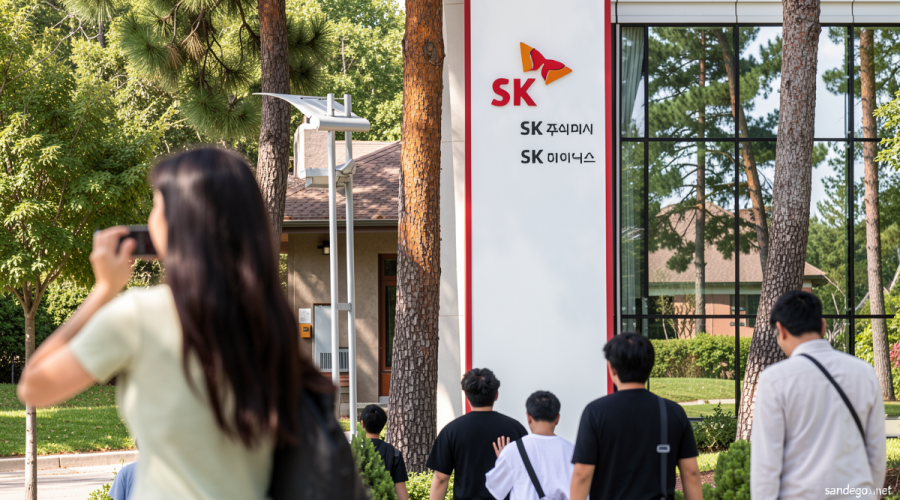
A once obscure chip maker has landed – Investors worldwide are now gaining unprecedented access to one of the most sought-after technology sectors through SK Hynix’s monumental entry into American markets. The South Korean semiconductor manufacturer, which many consumers may not recognize despite its industry prominence, has secured the biggest initial public offering ever achieved by a non-American enterprise. Trading commenced on Friday with shares priced at $149 each, generating approximately $26.5 billion in fresh capital for the company.
This achievement surpasses the previous benchmark established by Alibaba, the Chinese digital commerce powerhouse, which raised $25 billion during its landmark 2014 debut on U.S. exchanges. The remarkable accomplishment highlights the sustained investor enthusiasm that has propelled technology equities to unprecedented levels throughout the current year.
Artificial Intelligence Fuels Unprecedented Chip Demand
The primary catalyst behind SK Hynix’s stellar market performance stems from the explosive growth in artificial intelligence infrastructure development. Organizations globally are constructing massive data center facilities to support AI workloads, creating insatiable demand for the memory semiconductors that SK Hynix produces. This technological transformation has fundamentally altered the landscape for memory chip manufacturers worldwide.
The investment frenzy surrounding SK Hynix and Samsung Electronics—the other dominant player in global memory chip production—has elevated South Korea’s equity market to become the seventh-largest globally. This milestone was achieved when South Korea surpassed Canada’s market capitalization in May of this year. Both corporations, which together represent roughly half of Seoul’s Kospi index, have recently achieved trillion-dollar valuations, marking a historic moment for Asian technology companies.
Market Volatility and Investor Sentiment
While the enthusiasm surrounding artificial intelligence has generated substantial gains, it has simultaneously amplified market volatility. Retail investors, in particular, have demonstrated remarkable eagerness to participate in the AI-driven rally, contributing to pronounced price swings. These dramatic movements have prompted temporary trading suspensions on multiple occasions throughout the current year as market regulators respond to extreme fluctuations.
“The strong demand for the offering suggests global appetite for AI infrastructure remains intact, despite recent volatility,” noted Jung In Yun, chief executive officer at Fibonacci Asset Management Global. She observed that while foreign investors have been swift to realize profits, the SK Hynix listing demonstrates continued optimism regarding artificial intelligence prospects.
Strategic Expansion and Government Support
SK Hynix and Samsung have reported record-breaking profits this year as artificial intelligence applications consume the global supply of memory chips at an accelerating pace. Anticipating extended periods of supply constraints, both companies have committed substantial resources toward expanding their manufacturing capabilities. These investments have received strong encouragement from South Korean authorities, who recognize the strategic importance of semiconductor leadership.
Earlier this month, South Korean officials unveiled comprehensive plans allocating over $500 billion toward new semiconductor fabrication facilities located in the country’s southwestern region. President Lee Jae Myung has emphasized the urgency of rapid implementation, stressing the need to secure essential resources including land, water, and electrical power to preserve the nation’s competitive advantage in advanced technology.
“This pivotal $26.5 billion U.S. listing gives them the firepower to out-scale Samsung, close the valuation gap with U.S. rivals such as Micron, and secure the elite talent with attractive compensation and boost corporate morale,” explained MS Hwang, research director at Counterpoint Research, who specializes in memory semiconductors.
Risks and Future Outlook
Despite the optimistic outlook, concerns persist regarding potential vulnerabilities in the semiconductor sector. The rapid capacity expansion undertaken by memory chip manufacturers, combined with the surge in leveraged investment positions, has raised questions about a possible downturn given the industry’s historical cyclical patterns. According to data compiled by the Korea Financial Investment Association, borrowing by retail investors in the Kospi market has reached unprecedented levels this year.
Several South Korean legislators have issued warnings about the financial risks associated with leveraged exchange-traded funds that track individual stocks like SK Hynix. These financial instruments can magnify both gains and losses, potentially exacerbating market instability during periods of correction.
“The danger is that if earnings disappoint expectations, which is what we kind of think is likely, that share prices especially at the tech companies do start to fall towards the backend of 2027 and you see a slowdown in US business investment,” warned Gareth Leather, senior Asia economist at Capital Economics. “Then it’s very likely at some point you’re going to see this boom in Asian exports turn into a bust.”
Tech equities across both South Korea and the United States remain susceptible to shifts in market sentiment regarding artificial intelligence. Emerging indicators suggest that the technology may not be delivering the return on investment or transformative changes that many stakeholders had anticipated, potentially setting the stage for a market correction in the coming years.