
Cuban president promises ‘impregnable resistance’ to any US attempt to control island
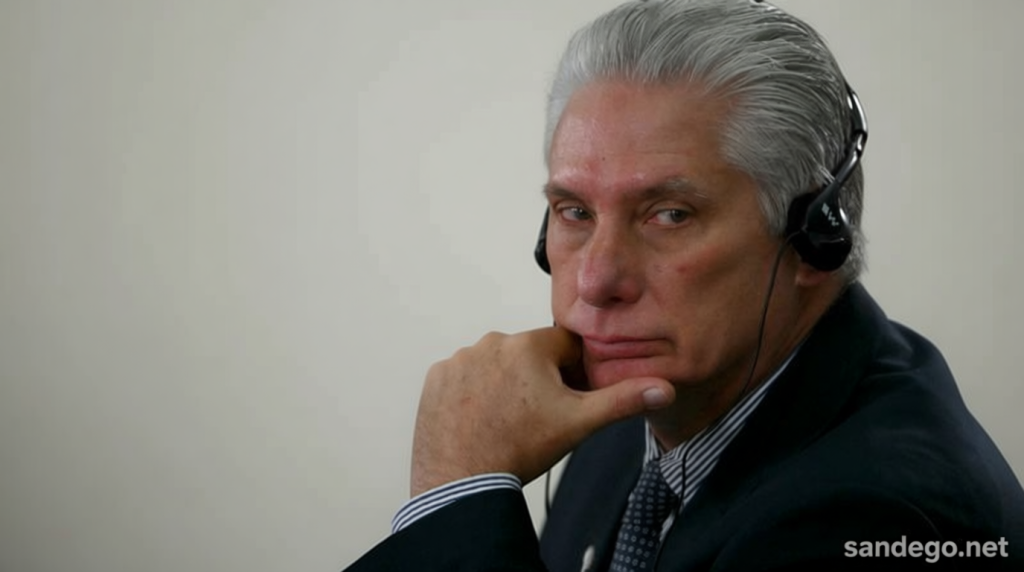
Cuban president promises ‘impregnable resistance’ to any US attempt to control island
On Tuesday, Cuban President Miguel Díaz-Canel declared that the nation would resist any US move to seize control, pledging an “impregnable resistance” against potential aggression. This statement followed the partial restoration of power to parts of the country after a nationwide grid failure disrupted electricity supply. The outage had left most of the island’s 10 million residents without power, forcing them to rely on torches and candles for lighting and cooking.
Cuban leaders have faced sustained economic pressure from the United States, with Díaz-Canel criticizing Washington’s strategy as an “outrageous pretext” for imposing a harsh economic blockade. He argued that the policy, which has persisted for over six decades, aims to punish the Cuban people collectively. “In the face of the worst scenario, Cuba is accompanied by a certainty: any external aggressor will clash with an impregnable resistance,” he added.
The crisis has worsened living conditions for Cubans, who have endured sporadic power cuts for months. With the oil supply effectively blocked by the US earlier this year, the nation’s aging electricity infrastructure was left vulnerable. The power outage led to canceled sporting events, shortened school hours, and neighborhoods struggling with waste accumulation due to the lack of fuel for waste collection vehicles.
By Tuesday afternoon, electricity had been restored to approximately 55% of customers in Havana, as well as some areas in the western and central-eastern regions of the island. However, the outages underscored the nation’s growing economic challenges, which US officials have used as justification for continued pressure.
“We, as people, as civilians, aren’t prepared for a war,” said Havana resident Marianela Alvarez. “I want Trump to understand, to leave us alone.”
US President Donald Trump had previously hinted at taking action against Cuba, claiming on Monday that he could do “anything he wants with the island.” He reiterated his stance on Tuesday, stating: “We’ll be doing something with Cuba very soon.” Secretary of State Marco Rubio echoed this sentiment, suggesting that Cuba needs “new people in charge” to address its economic struggles. “Their economy doesn’t work… They’re in a lot of trouble, and the people in charge, they don’t know how to fix it,” Rubio remarked.
“I truly believe that there will be dialogue and understanding, because it is love that should unite human beings, not war,” said Havana resident Luis Enrique Garcia. In contrast, local Amed Echenique expressed skepticism. “I don’t trust a dialogue with Trump,” he said. “I don’t trust Trump as a person, even with the little I know about him.”
Díaz-Canel confirmed that Cuban officials had engaged in discussions with the US to “identify the bilateral problems that need a solution.” This marked the first official acknowledgment from Havana of ongoing talks, following Trump’s earlier claims of diplomatic efforts. Despite the political tension, some Cubans remain hopeful for reconciliation, while others fear further escalation.
