Gene Shalit, Iconic ‘Today’ Movie Critic with Signature Looks, Passes Away at 100
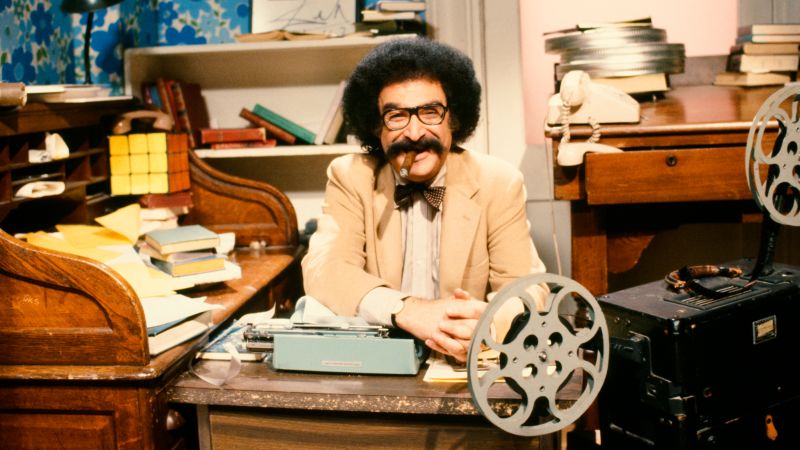
Sandego.net – Gene Shalit, the veteran movie critic and arts reporter who became a familiar face on the “Today” show for over four decades, has passed away. He was 100 years old. Shalit’s family revealed the news to NBC News on Friday, stating that he “passed away peacefully today after 100 years of an amazing life.” His unique presence on television, marked by his bushy hair, massive mustache, and a penchant for humorous wordplay, left an indelible mark on the cultural landscape.
The Rise of a TV Critic
Shalit’s journey to the “Today” show began in print, where he established a reputation as a sharp and engaging writer. He started as an entertainment columnist for McCall’s magazine before ascending to the role of senior film critic at Look magazine in 1968. His work also appeared in Ladies’ Home Journal, where he cultivated a following that eventually led to a television offer. According to his longtime producer, Guy Ludwig, Shalit’s distinctive look was a point of curiosity for NBC when he first joined the network as a contributor in 1970. “No one at NBC had seen him. They’d only read his stuff,” Ludwig recounted in an essay. “So he walked into this executive’s office and the executive took one look at him and said, ‘Mr. Shalit, have you ever thought of radio?’”
Distinctive Style and Delivery
Shalit’s on-air persona was as memorable as his reviews. Known for his middle-of-the-road critiques, he balanced humor with insightful analysis, often using playful language to underscore his points. One of his trademarks was the ability to craft puns that resonated with his audience, such as his description of “The Men Who Stare at Goats” as a film whose oddball title was “heard to bleat.” His wit extended to his reviews, where he famously said of “The Lovely Bones,” “There’s no bones about it.” This blend of intellect and levity made him a standout figure in television.
Shalit’s influence on the film criticism scene was profound. When he joined “Today,” the primary sources of cinematic reviews were newspapers and magazines. By bringing his expertise to television, he helped shift the media landscape, making film analysis more accessible to a broader audience. His role as arts editor from 1973 onward solidified his place as a key voice in American media. As the “Today” show evolved, Shalit’s segment, “Critic’s Corner,” became a fixture, and his ability to engage viewers while maintaining critical rigor set him apart from his peers.
A Legacy of Impact
Shalit’s contributions extended beyond the “Today” show. His reputation as a respected critic led to collaborations with other notable figures. For instance, the rise of Roger Ebert and Gene Siskel’s “Sneak Previews” on PBS in the late 1970s was influenced by the demand for more diverse and dynamic film commentary. Similarly, “Good Morning America” enlisted Joel Siegel as its movie critic in 1981, following Shalit’s trailblazing work. “Shalit was instrumental in changing the balance of critical power in America,” noted The Plain Dealer in 2010, describing him as “Daniel Boone in a bow tie and Groucho glasses.”
His legacy is further underscored by the unique way he approached reviews. Unlike some critics who spoiled plots, Shalit was careful to preserve the suspense for viewers. In 1993, he told The Associated Press, “Many critics will give so much of the plot of a movie away that they destroy the movie for the viewer. … I just don’t give away the story.” This approach reflected his belief in guiding audiences without undermining the experience. His reviews were often infused with clever metaphors, such as calling the character Jack in “Brokeback Mountain” a “sexual predator” and later apologizing for the remark, showing his willingness to adapt and learn.
Memorable Moments and Interactions
Shalit’s tenure on the “Today” show was filled with memorable moments. One standout was his interview with Carol Channing, during which he burst into laughter so spontaneously that it became a highlight of the segment. His ability to connect with guests while maintaining his critical edge was evident in his conversations with icons like John Belushi and Dan Aykroyd. In a 1981 interview, Belushi joked that Shalit’s hair looked like “an ant farm on fire,” yet Shalit’s inquisitive nature made the session feel like a personal conversation, with Belushi admitting, “What do you want to be doing 10 years from now, John Belushi?” to which Belushi replied, “Fiddler on the Roof.”
Shalit’s interactions with hosts were equally noteworthy. He engaged in banter with anchors such as Edwin Newman, Barbara Walters, and Tom Brokaw, often exchanging sharp quips that showcased his personality. While some, like Bryant Gumbel, occasionally critiqued his work, calling it “often late and his interviews aren’t very good,” Shalit’s charm and wit consistently drew audiences. His ability to make even the most serious topics entertaining was a hallmark of his style, whether discussing the historical significance of “Enemy at the Gates” or the whimsical charm of “Frozen,” which he described as “very cool.”
Final Years and Lasting Influence
As his career progressed, Shalit’s reviews continued to reflect his evolving perspective. He covered a wide range of films, from classic titles like “Patton” and “Love Story” to more modern releases such as “Shrek Forever After.” His commentary on the latter included a wry observation: “The bellow fellow is now a mellow fellow.” These remarks, along with his trademark humor, highlighted his ability to adapt while retaining his core identity as a critic.
Shalit’s impact was felt beyond the studio. During his time on the “Today” show, he also reported from the field, such as his coverage of Major League Baseball spring training in St. Pete Beach, Florida. There, a car accident occurred, though details of the incident were not fully disclosed. Despite this, his work remained a blend of professionalism and personality, ensuring his place in the annals of television history.
A Final Reflection
Gene Shalit’s passing marks the end of an era in television criticism. His career, spanning over 40 years, was defined by his ability to merge intellect with humor, making film analysis both informative and entertaining. From his early days in print to his iconic TV presence, Shalit’s influence reshaped how audiences engaged with cinema. As his producer Guy Ludwig once wrote, “What resonated above his unusual appearance was his incredible wit, his remarkable intelligence. But he didn’t pound you over the head with it. He amused you. He enlightened and amused whatever subject he was on.” This philosophy of critique—charming yet insightful—will be remembered for generations.
“What resonated above his unusual appearance was his incredible wit, his remarkable intelligence. But he didn’t pound you over the head with it. He amused you. He enlightened and amused whatever subject he was on.”
Shalit’s career was a testament to the power of individuality in media. While his appearance might have raised eyebrows initially, it ultimately became a part of his brand, endearing him to viewers. His legacy lives on in the countless films he reviewed and the way he brought a unique voice to the world of television criticism. As he once said of Steven Spielberg’s “The Color Purple,” “It should be against the law not to see it.” That same passion for film, paired with his unmistakable charm, will continue to inspire those who appreciate the art of storytelling and the joy of a well-placed pun.