Justice Department Examines Television Pool After White House Access Dispute
Sandego.net – The Justice Department has begun an antitrust investigation involving five major U.S. television networks after a dispute over White House press access disrupted the longstanding television pool system. The inquiry adds a new legal and political dimension to the Trump administration’s conflict with news organizations following President Donald Trump’s decision last month to bar CNN from White House grounds.
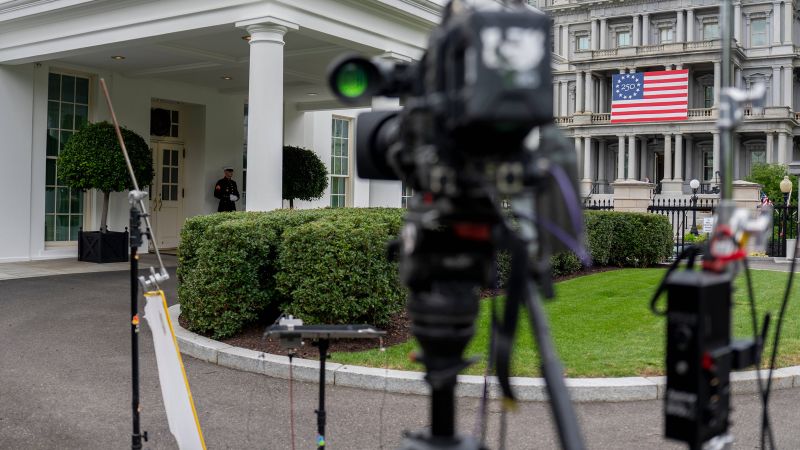
The television pool is a rotating arrangement in which ABC, CBS, CNN, Fox News and NBC share the responsibility of covering presidential events. Footage gathered by the assigned network is then made available to other outlets, allowing a much wider audience to see events that cannot accommodate every news crew.
Justice Department officials are examining whether the networks’ response to the CNN ban could amount to unlawful coordination among commercial competitors. The investigation focuses on the pool’s structure, its creation and its operations during the recent access dispute.
“Members of the television press pool have boycotted covering White House events. Group boycotts among commercial competitors can violate the Sherman Act,” a Justice Department spokesperson said. “The Antitrust Division is simply investigating to determine whether these news organizations have violated the antitrust laws.”
Pool Coverage Halted During CNN Ban
When Trump blocked CNN from carrying out its scheduled pool responsibilities, the television pool chair said no substitute crew would be named. As a result, presidential events went without pooled television coverage for several days.
That gap ended after a federal judge temporarily stopped the administration from enforcing its restrictions against CNN, MSNOW and Politico. The broader lawsuit over the access limits remains unresolved, and the Justice Department is defending the administration’s position in court while separately reviewing the pool arrangement.
Attorneys representing some of the networks received government document requests on Friday, according to two people familiar with the matter. The demands sought records concerning the pool’s origins and its recent operations. ABC, CBS, CNN, Fox News and NBC either declined to comment or did not respond to requests for comment Saturday night.
The unusual inquiry followed public calls from Trump ally Laura Loomer, who urged the Justice Department two weeks earlier to challenge the networks under antitrust law.
A System Built Around Access and Shared Costs
The television pool was developed decades ago, when the country’s national television landscape was dominated by three broadcast networks. It was designed as a practical answer to a recurring problem: many presidential settings offer limited space, restricted access or fast-moving travel conditions that make it impossible for every outlet to send its own full crew.
Under the system, one network’s crew can document an Oval Office question-and-answer session, a presidential departure, an appearance at the White House or travel aboard Air Force One. The resulting live and recorded material is then shared beyond the participating networks, reaching local stations, newspaper websites and media organizations around the world.
The arrangement also reduces the substantial cost of maintaining constant presidential coverage. Networks involved in the pool operate every day of the year, and multi-day presidential trips can cost tens of thousands of dollars. For viewers, the cooperative system often means access to images and remarks that might otherwise be available only to a small number of organizations.
The recent interruption illustrated how dependent the broader media ecosystem can be on the pool. When no replacement was appointed after CNN’s exclusion, the absence of a designated crew affected not only the five participating networks but also outlets that rely on shared footage to cover the presidency.
First Amendment Concerns Raised
Press-freedom advocates and former antitrust officials have questioned the legal basis for treating the networks’ conduct as a potential antitrust violation. Bruce D. Brown, president of the Reporters Committee for Freedom of the Press, said the investigation appeared aimed at obtaining internal information about how networks decided to cover White House events during a media restriction imposed by the president.
“The decisions news organizations make about coverage are protected by the First Amendment, and summoning antitrust authority, on top of the retaliatory actions the White House has already taken to bar certain outlets, is another and even more brazen attempt to try to intimidate journalists,” Brown said.
Jonathan Kanter, who served as the Biden administration’s assistant attorney general for antitrust, argued that any claim against the networks would confront Supreme Court precedent recognizing certain boycotts as protected expression, including civil rights-era actions.
“This is not even in the same zip code of an antitrust violation,” Kanter said. “It’s literally freedom of speech.”
Kanter said journalists joining together through the pool falls within First Amendment protections. The arrangement, he noted, has existed through multiple administrations and has operated with White House cooperation over many years. In his view, a coordinated response to what participating news organizations consider a constitutional access issue does not transform the pool into an antitrust matter.
“It’s no more an antitrust violation than the reporters coming together to form the pool in the first place,” Kanter said.
Why the Dispute Matters Beyond the Networks
The case carries implications beyond the five networks directly involved. White House pool coverage is one of the mechanisms through which regional and international newsrooms gain access to presidential activity. A disruption can limit the visual reporting available to audiences far from Washington, particularly smaller organizations without permanent White House crews.
The networks issued a rare joint statement after the CNN ban began, emphasizing the public interest served by independent reporting on the federal government. Their collective position reflected the central role of the pool: it is both a logistical partnership and a method for extending access to presidential events beyond a handful of large national outlets.
As the court challenge over the White House restrictions continues, the antitrust investigation places the pool itself under scrutiny. The outcome could shape how news organizations coordinate access, share footage and respond when a government decision prevents one of their members from performing assigned duties.
Related Reading
Frequently Asked Questions
What is Trump s DOJ probes major TV networks?
Trump s DOJ probes major TV networks is the main topic of this guide. The article explains the context, practical details, and next steps readers should understand.
Why does Trump s DOJ probes major TV networks matter?
Trump s DOJ probes major TV networks matters because readers are looking for a useful answer, not just a short summary. Good content should match search intent and help them decide what to do next.