Brazil Faces a Defining Presidential Choice Amid Polarization and Foreign Pressure
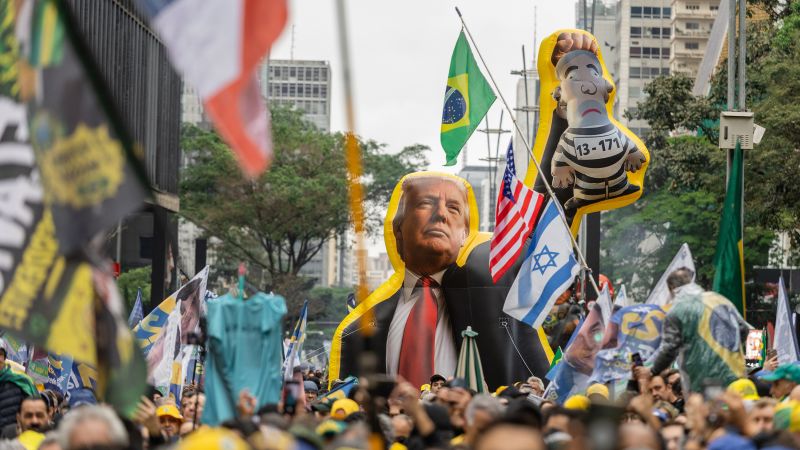
Sandego.net – Brazilian voters head to the polls on Sunday in a presidential election shaped by political exhaustion, corruption controversies, concerns about crime and an increasingly sharp debate over the country’s place in the world. The contest centers on two established political forces: President Luiz Inácio Lula da Silva on the left and Senator Flávio Bolsonaro on the right.
For the world’s fifth-most-populous country, where voting is mandatory for most adults and participation is usually high by regional standards, the result will carry consequences beyond Brasília. It may influence whether Latin America’s largest economy draws closer to a conservative regional current associated with US President Donald Trump or continues Lula’s push for a more independent, multipolar foreign policy.
“It’s two competing visions of what the country should look like and what Latin America should look like,” Brian Winter, editor-in-chief of Americas Quarterly and vice president of policy at Americas Society/Council of the Americas, said.
Lula Seeks a Fourth Term
Lula, now 80, is pursuing what would likely be his final term as president. He first led Brazil from 2003 through 2010, then returned to office in 2023 after one of the country’s most extraordinary political comebacks.
He spent 580 days in prison after corruption convictions, but Brazil’s Supreme Court annulled those convictions in 2021 and restored his political eligibility. Lula subsequently defeated then-President Jair Bolsonaro in the 2022 election, returning the Workers’ Party leader to power more than a decade after he had left office.
His principal rival is Flávio Bolsonaro, who is seeking to preserve and expand the political movement built by his father. Jair Bolsonaro cannot run: he is serving a 27-year sentence after his conviction for attempting to overturn the result of the 2022 election through a coup attempt. He is also under humanitarian house arrest because of health issues.
The campaign has therefore become both a contest between two candidates and a referendum on the political eras they represent. Lula presents himself as a defender of national sovereignty and international cooperation, while Flávio Bolsonaro appeals to voters who favor a more conservative direction and remain loyal to the Bolsonaro family’s political base.
Other Candidates Remain Behind the Leaders
Four additional candidates are running but trail the two frontrunners in polling. They include Augusto Cury, a centrist psychiatrist and best-selling author; Ronaldo Caiado, the right-wing former governor of Goiás; Renan Santos, founder of the right-wing Movimento Brasil Livre and a candidate for the Missão party; and Romeu Zema, the economically liberal former governor of Minas Gerais who also leans right.
Brazil’s electoral rules require a candidate to receive more than half of valid votes to win outright in the first round. If nobody reaches that threshold on Sunday, the top two finishers will advance to a runoff scheduled for October 25. With Lula and Flávio Bolsonaro closely matched, the second-round scenario remains central to the campaign’s final days.
Trump and Trade Have Entered the Campaign
Relations with Washington have become a prominent issue in the race. Lula has sought to maintain Brazil’s multilateral diplomatic approach while creating greater distance from the United States, particularly as trade disagreements and tensions over organized-crime policy have intensified.
China has been Brazil’s leading export destination since 2009, and official trade figures show that its advantage has expanded substantially since Trump returned to power. That commercial shift provides an important backdrop to Lula’s argument that Brazil should avoid excessive dependence on any single global partner.
The first major rupture came during the summer of 2025, when Trump announced tariffs on a range of Brazilian products. His administration explicitly linked the measures to what it described as the politically motivated prosecution of Jair Bolsonaro. Those tariffs were reversed in November, but the episode left a mark on Brazilian businesses and on the presidential campaign.
Eduardo Bolsonaro, another son of the former president, had moved to the United States and lobbied the Trump administration on his father’s behalf. He initially took credit for the pressure on Brazil, but that claim later created difficulties for Flávio Bolsonaro as companies affected by the tariffs absorbed the consequences.
This summer, the trade dispute flared again when Trump imposed new tariffs on selected Brazilian goods. Those measures remain in force. Lula rejected the action and warned that Brazil could respond, although he said in late September that he would refrain from retaliation while talks with Washington continued.
Sovereignty Becomes a Campaign Message
The dispute has given Lula an issue that reaches beyond his traditional supporters. Right-leaning swing voters with strong nationalist instincts have also reacted to what they see as outside interference in Brazilian affairs.
“Some have joked that the most effective campaigner for Lula has been Donald Trump,” Winter said. “The tariffs and the other efforts to interfere in Brazil’s politics have, for the most part, backfired and helped Lula.”
Lula took that message to the United Nations General Assembly in September, declaring that Brazil would not accept a subordinate role in international affairs.
“Brazil is nobody’s backyard,” Lula said.
He also criticized unnamed Brazilian political figures whom he said were siding with foreign interests rather than the country’s own priorities. The remarks were widely interpreted as a reference to Flávio Bolsonaro and the wider Bolsonaro political network.
The election arrives at a moment when Brazilian voters are weighing immediate domestic frustrations against broader questions of democracy, diplomacy and economic independence. Crime, allegations of corruption and deep partisan divisions remain powerful forces in daily political debate. Yet the direction of Brazil’s relationship with the United States, China and other global powers has become unusually visible in a campaign that could define the country’s course for years to come.
Related Reading
Frequently Asked Questions
What is Trump crime and corruption loom over?
Trump crime and corruption loom over is the main topic of this guide. The article explains the context, practical details, and next steps readers should understand.
Why does Trump crime and corruption loom over matter?
Trump crime and corruption loom over matters because readers are looking for a useful answer, not just a short summary. Good content should match search intent and help them decide what to do next.