Russia and Germany Resume Direct Diplomatic Contact at the United Nations
Sandego.net – Russia’s and Germany’s foreign ministers held a face-to-face meeting during the United Nations General Assembly, reopening a direct channel that had been dormant since before Moscow launched its full-scale invasion of Ukraine in 2022.
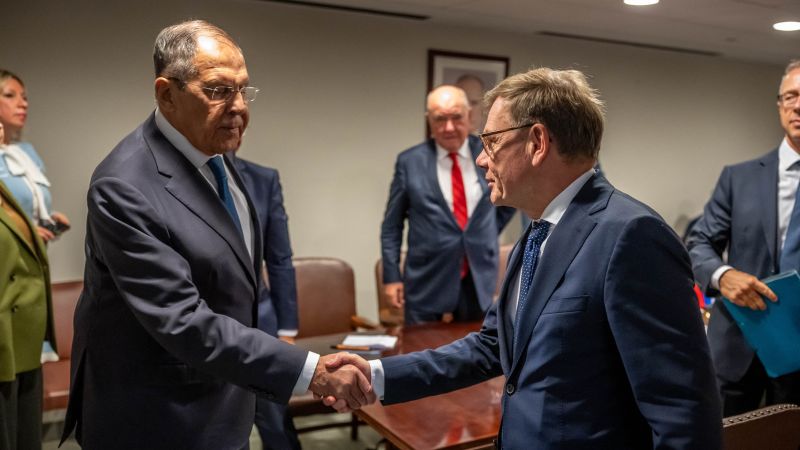
Sergey Lavrov, Russia’s foreign minister, met with his German counterpart Johann Wadephul on Saturday. The conversation covered the strained relationship between Moscow and Berlin as well as the continuing war in Ukraine. It marked the first publicly disclosed ministerial-level talks between the two countries since the invasion transformed European security and sharply damaged bilateral ties.
The meeting came as attention remains fixed on the Black Sea, where fighting and attacks on maritime infrastructure have severely disrupted trade routes that are important for agricultural exports. Russia and Ukraine have targeted ports, vessels and related facilities in recent months, limiting the movement of goods through an area that had long been a major route for grain shipments.
Black Sea Grain Exports at the Center of Talks
Wadephul pressed Lavrov to support efforts aimed at restoring grain exports through the Black Sea. German officials emphasized the urgency of reaching a practical arrangement, particularly because reduced supplies can deepen food shortages in countries that depend heavily on imported grain.
“Time is of the essence: given the food shortages in many countries — particularly in the Global South — all parties must be willing to engage constructively,” Wadephul told Lavrov.
The issue carries consequences far beyond the conflict zone. When maritime routes are disrupted, shipments can become more difficult and expensive to arrange, putting added pressure on countries already facing limited food availability. Germany’s position was that progress on grain transport could create room for additional steps to reduce risks around the conflict.
“A pragmatic solution could pave the way for further concrete steps,” Wadephul said.
Ukraine and its partners have been seeking a limited truce covering Black Sea operations and attacks on energy infrastructure. Such an agreement would not end the war, but it could reduce threats to civilian commerce and critical facilities. Russia has not publicly provided a clear endorsement of those proposals.
Relations Remain Deeply Strained
Any discussion between the two ministers unfolded against a backdrop of exceptionally poor relations. Germany has been one of Ukraine’s close European allies since the invasion, while Moscow and Berlin have remained divided over the war, security policy and Russia’s conduct toward Europe.
Tensions intensified after an incident involving a drone at Leipzig/Halle Airport in eastern Germany in August. The German government said this month that it had determined Russia was responsible for the attempted drone attack. Berlin responded with several measures, including plans to close a consulate and a Russian cultural centre in the German capital.
Russia’s embassy in Berlin rejected the accusation, calling it a “fabricated provocation” and describing it as part of “a new wave of anti-Russian hysteria in Germany.”
Wadephul used the UN meeting to tell Lavrov that Russia should step away from what Germany views as an escalating course toward Germany, Europe and NATO. German officials also stressed that suspected hybrid activity, including the Leipzig incident and any future attacks of a similar nature, would not weaken Berlin’s commitment to Ukraine.
A Limited Opening, Not a Breakthrough
The talks did not signal a broader thaw between the two governments. No agreement on Black Sea shipping, the war or bilateral disputes was announced after the meeting. Still, the encounter demonstrated that even governments with deeply hostile relations may retain limited diplomatic contact when urgent issues affect regional security, trade and humanitarian conditions.
For Germany, the immediate focus is preventing further escalation while maintaining support for Ukraine. For Russia, engagement with a major European power offers an opportunity to present its own position on the war and maritime arrangements. The Black Sea question may remain one of the few areas where practical interests could encourage further discussion, even as the wider political divide shows no sign of disappearing.
Related Reading
Frequently Asked Questions
What is At UN Russia and Germany s top?
At UN Russia and Germany s top is the main topic of this guide. The article explains the context, practical details, and next steps readers should understand.
Why does At UN Russia and Germany s top matter?
At UN Russia and Germany s top matters because readers are looking for a useful answer, not just a short summary. Good content should match search intent and help them decide what to do next.