A Man’s 15-Year Legal Journey: Posthumous Retrial for Hiromu Sakahara
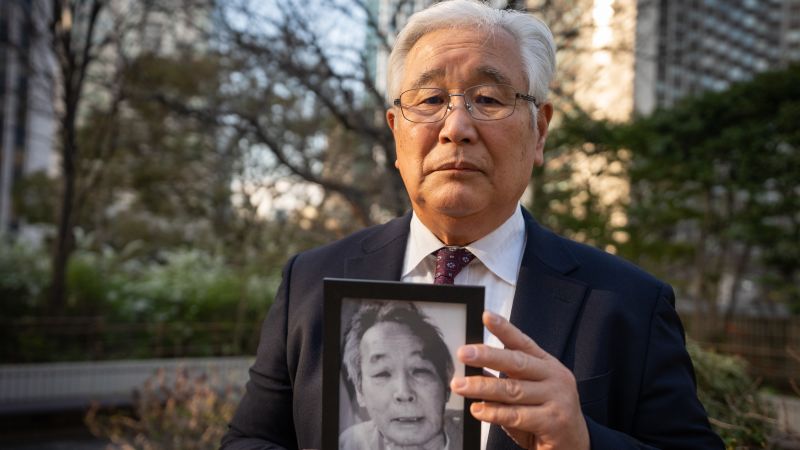
Sandego.net – In a significant legal development, a Japanese court recently approved a retrial for Hiromu Sakahara, a man who spent nearly three decades behind bars for a crime he claimed was not his own. The news brought quiet reflection to his family, who gathered at his gravesite to celebrate a long-awaited chance to revisit the case that had consumed their lives for years. Sakahara, who died in 2011 while serving a life sentence, had spent his final days grappling with the injustice of his conviction, a fate he believed stemmed from a coerced confession. His son, Koji Sakahara, now in his early 60s, described the emotional weight of the moment: “We’ve waited so long for this. It’s a bittersweet victory, but my father’s voice still echoes in our hearts.”
The Case That Changed a Family’s Life
Sakahara’s story began in December 1984, when the body of a liquor store manager was discovered in a field near Hino, a small town east of Kyoto. The crime, suspected to be a robbery-murder, led to his arrest. Though initially questioned as a suspect due to his frequent visits to the store, Sakahara was released after his wife provided evidence placing him elsewhere on the night of the incident. Three years later, however, police returned with renewed pressure, and after a day of interrogation, he confessed to the crime. According to Koji, Sakahara admitted to being physically abused during the questioning, with officers targeting his loved ones to break his resistance.
“He told me he was beaten and kicked until he broke down. It wasn’t his choice—it was theirs,” Koji recounted. “You don’t have to fight anymore. It’s okay to let go. You’ve worked so hard until now,” his sister had whispered moments before his death in 2011, as he succumbed to pneumonia after two decades of imprisonment.
The conviction, which relied heavily on the confession and the discovery of the body, marked the start of a prolonged struggle. For 24 years, Sakahara’s son and relatives persisted in their efforts to prove his innocence, visiting him regularly and urging him to keep fighting. “You can’t give up in a place like this,” they told him, a refrain that became a symbol of their unyielding hope. Despite their dedication, the legal system’s sluggish pace meant the case remained unresolved, even after his death.
Japan’s “Hostage Justice” System
Japan’s judicial process has long been criticized for its capacity to detain suspects for extended periods without legal representation, a phenomenon dubbed “hostage justice.” This system, where individuals may be held for questioning far beyond the legal limit in other nations, has resulted in a conviction rate exceeding 99%. Human rights organizations argue that such high rates often lead to wrongful convictions, with innocent people spending years in prison before their cases are reviewed. Sakahara’s case, which dragged on for over 15 years after his death, has since become a catalyst for reform, highlighting the need to streamline the retrial process.
His family’s relentless advocacy led to the introduction of a new bill aimed at reducing the number of appeals prosecutors can file against retrial decisions. While this measure could expedite justice for those like Sakahara, officials in Japan’s Justice Department warn that it might compromise the finality of convictions. “If we make it easier to overturn past rulings, we risk undermining the credibility of the legal system,” one official noted. However, Prime Minister Sanae Takaichi, a prominent right-wing leader who admires Margaret Thatcher’s leadership style, has endorsed the legislation. In a recent parliamentary address, she emphasized the importance of ensuring that the retrial process delivers swift and fair outcomes. “It is unacceptable for innocent people to be punished. If a final judgment convicts an innocent person, they must be exonerated without delay,” she stated.
The Fight for Redemption
For years, Sakahara’s family faced skepticism and stigma, with neighbors and even strangers labeling them as supporters of a criminal. Koji described how his mother endured harassing calls, with callers taunting her as the mother of a “murderer.” Yet, the family’s resolve never wavered. Their persistence eventually led to the submission of evidence suggesting that police may have guided Sakahara to the crime scene, a claim their lawyer argued could invalidate his confession. This breakthrough paved the way for the posthumous retrial, which is expected to begin soon.
The case has not only brought attention to Sakahara’s personal ordeal but also to broader systemic issues in Japan. His family’s efforts underscore the emotional and psychological toll of prolonged legal battles, as well as the resilience required to challenge a flawed process. “We wanted to clear his name, but it felt like we were fighting against the tide,” Koji said. “Every day in court was a battle, and we never gave up.”
A Legacy of Advocacy
Sakahara’s story has inspired a movement within Japan’s legal community, prompting discussions about the need for transparency and reform. His case, which took over 30 years to reach the retrial stage, exemplifies the challenges faced by those seeking justice in a system that prioritizes conviction over doubt. The family’s victory, though posthumous, serves as a reminder of the human cost of delayed redress. As Koji reflects on his father’s final days, he emphasizes the importance of continuing the fight: “Even after he passed, we knew his struggle wasn’t over. This retrial is for him, but it’s also for everyone who’s been wronged by the system.”
With the retrial set to begin, the Sakahara family hopes it will not only restore their father’s reputation but also catalyze a shift in Japan’s approach to justice. The case has reignited debates about the balance between speed and accuracy in criminal trials, a discussion that has gained momentum in recent years. As the legal process unfolds, it carries the weight of a legacy built on perseverance, a story that will continue to shape the narrative of justice in Japan for years to come.