Medicine shortages deepen hardship for patients across Iran
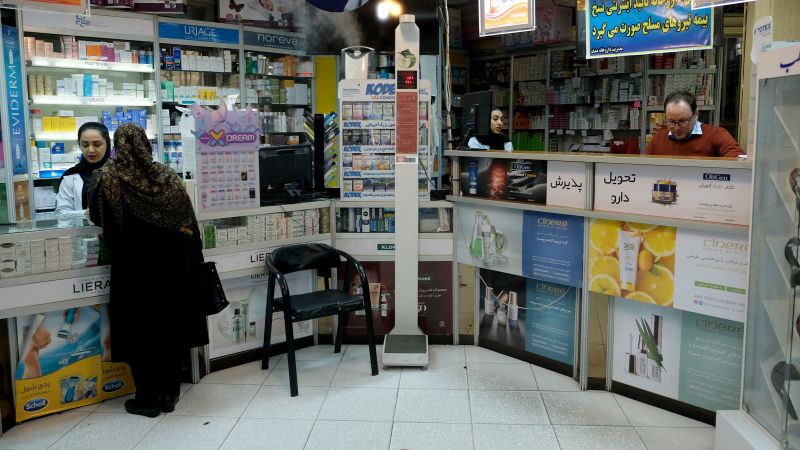
Sandego.net – For many Iranians with serious medical conditions, finding treatment has become an exhausting and increasingly unaffordable task. A 35-year-old woman in Tehran, identified as Sima, spent hours searching pharmacies for the medication she needs to prevent kidney failure. She eventually located it at the seventh pharmacy she visited, in an affluent part of the capital, only to discover that its price had risen again.
Unable to absorb the cost, Sima has begun taking less than the prescribed amount of a drug she considers essential to staying alive. Her experience reflects a broader crisis in which shortages, rising prices and damaged insurance payments are pushing patients to delay care, reduce doses or settle for treatments that may not work as well.
“They’ve stopped using cancer medication for people who they say are terminal or far along. They only use it for those who are in the very early stages.”
US sanctions have compounded pressure on Iran’s economy, limiting oil exports and making foreign-currency transactions more difficult. That currency is vital for importing specialized medicines, pharmaceutical ingredients, equipment and technology. Even a country that produces most of its drugs domestically can remain exposed when critical parts of the supply chain depend on imports.
Specialized drugs are especially difficult to obtain
Mehdi Pirsalehi, who leads Iran’s Food and Drug Organization, said in February that domestic companies manufacture more than 97% of medicines by volume. But volume does not necessarily equal full independence in health care. Peivand Bastani, a senior lecturer at Flinders University and co-author of research on sanctions and pharmaceutical procurement in Iran, has noted that local drug production can still require foreign materials, machinery and expertise. Some high-cost and highly specialized treatments must also be brought in from abroad.
Those imported medicines have been among the hardest to find as President Donald Trump’s maximum-pressure campaign has intensified scrutiny of Iranian banks. The restrictions have also complicated Iran’s ability to earn foreign currency from oil sales, undermining the funds needed to pay suppliers and restock pharmacies.
The consequences reach well beyond rare medications. Pharmacies have confirmed difficulties involving heart drugs, cholesterol medication and migraine treatments. In some cases, prescribed branded heart medicine has been replaced with a locally made generic. Cholesterol pills may still be available, but at sharply higher prices. Some migraine drugs have disappeared from shelves entirely.
Broader shortages have affected medications used for depression, diabetes, pregnancy and other health needs. Seasonal influenza vaccinations were canceled this year after the government did not secure supplies from Europe. For people managing chronic illness, the disruption means that an ordinary prescription can turn into a search across multiple neighborhoods, followed by a choice between paying an inflated price or going without.
Patients face painful financial choices
A mother in Tehran who lost her only daughter has had to replace her antidepressant with a locally produced alternative she finds less effective. Cancer patients have sold household belongings, including televisions and refrigerators, to pay for medicine priced far beyond their normal means.
A 55-year-old cancer patient in Tehran said she has increasingly relied on visitors returning from overseas to try to bring back medicine that cannot be found locally. The uncertainty of illness has been made worse by fears connected to the war.
“I’ve asked if people who come visit or come back from abroad can bring my medicine back, especially the things we can’t find here or get access, too.”
“Between the illness and uncertainty of the war I have a hard time knowing what to do.”
The strain is not limited to patients. Private pharmacies are caught between suppliers demanding payment and insurers that have failed to reimburse them. More than 18,000 private pharmacies were awaiting insurance payments nationwide, officials from Iran’s Pharmacists Association said at a news conference last month. Outstanding insurance debt to pharmacies had reached nearly 800 trillion rials, or about $300 million.
For millions of insured Iranians, an insurance card and prescription no longer guarantee that medicine will be dispensed without major expense. Pharmacies may have no stock, or patients may be asked to pay themselves because reimbursements have stalled. This weakens a system intended to spread health-care costs across the population and leaves the sick carrying risks they cannot afford.
A fragile supply chain under economic pressure
Shahram Kalantari, head of the Iranian Pharmacists Association, said shortages had affected almost 800 medicines. Rising costs have also made it harder for pharmacies to secure substitute products. Inflation, insurance arrears and the shortage of foreign currency have combined to disrupt every step between drug makers, importers, distributors, pharmacies and patients.
Generic alternatives can sometimes provide needed treatment, but they do not solve every problem. Patients may have been stabilized on a specific medicine, while some specialized treatments do not have readily available replacements. A substitute can also be difficult to trust when supplies change repeatedly or when a patient has already experienced poor results with a different version.
For people with cancer, kidney disease, heart conditions or severe mental-health needs, missed treatment is not simply an inconvenience. It can bring pain, worsening symptoms and constant anxiety over whether the next dose will be available. The financial burden also extends to families, who may be forced to choose between medicine and other essentials.
“Everyone says we’re brave. But I don’t know if being brave means anything when you’re dying.”
As shortages persist, the country’s health-care crisis is becoming inseparable from its economic crisis. Domestic manufacturing remains significant, but it has not insulated patients from the effects of sanctions, inflation and payment failures. For those waiting at pharmacy counters, the issue is immediate: whether the medicine they need can be found today, and whether they can still afford it.
Related Reading
Frequently Asked Questions
What is Trump s sanctions inflation and a collapsing?
Trump s sanctions inflation and a collapsing is the main topic of this guide. The article explains the context, practical details, and next steps readers should understand.
Why does Trump s sanctions inflation and a collapsing matter?
Trump s sanctions inflation and a collapsing matters because readers are looking for a useful answer, not just a short summary. Good content should match search intent and help them decide what to do next.