Pressure grows to replace Buckingham Palace’s real bearskin caps
Sandego.net – The towering black hats worn by soldiers outside Buckingham Palace have long been part of London’s most recognizable ceremonial image. Now, the real bear fur used in those caps is facing renewed political scrutiny, with a cross-party group of parliamentarians urging the UK government to move to a synthetic substitute.
Eighteen MPs and one member of the House of Lords wrote to Defence Minister Luke Pollard this week, asking the Ministry of Defence to stop ordering new caps made from bear pelts. The group argued that continuing the practice falls short of modern expectations on animal welfare and called for suppliers to develop a credible faux-fur option.
The practice is “impossible to justify” and should be replaced with synthetic alternatives.
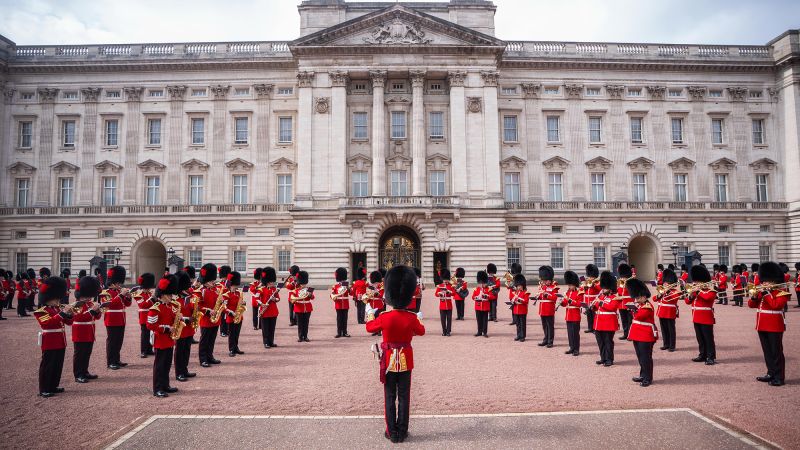
The caps are most closely linked with the King’s Guard, whose members stand duty outside Buckingham Palace and other royal residences. They are also seen at major state occasions, including Trooping the Colour, formally known as the King’s Birthday Parade, and the State Opening of Parliament.
A historic uniform under modern scrutiny
Bearskin caps date to the early 19th century, when their height was intended to give soldiers a more intimidating presence on the battlefield. Built over wicker frames, the headpieces rise to roughly 45 centimetres, or 18 inches.
Today, they are worn ceremonially by soldiers drawn from the British Army’s five Foot Guards regiments: the Grenadier Guards, Coldstream Guards, Scots Guards, Irish Guards and Welsh Guards. Their distinctive silhouette has become inseparable from public displays of military pageantry and royal tradition.
Yet the ceremonial role of the caps has intensified questions about whether animal fur remains necessary. The pelts used in new bearskins come from legal bear culls in Canada. In their letter, the parliamentarians said the government and its suppliers should actively pursue a replacement consistent with its stated commitment to improving animal welfare.
“Most urgently, while this process continues, bears are still being shot with crossbows and killed, their cubs orphaned, and their pelts used to produce new caps,” the lawmakers wrote.
The appeal also asks the Ministry of Defence to pause fresh orders while an alternative is being developed. For critics, the central issue is whether an item of ceremonial dress can retain its historic visual character without relying on real animal fur.
Orders and cost draw further attention
PETA UK, which has campaigned repeatedly against the use of bearskins, said Freedom of Information material showed that 22 caps were ordered in 2024 and a further 96 in 2025. The organization has stated that at least one bear’s skin is needed for each cap.
During a 2024 campaign, PETA UK said the Ministry of Defence had bought 526 bearskin hats between 2017 and July 2024, meaning at least that many bears had been killed for the purchases. It estimated that spending on the caps exceeded £1 million, or about $1.3 million, between 2017 and 2024.
The government said in April that buying one bearskin cap costs roughly £2,460, equivalent to about $3,300. Supporters of replacement materials point to both the welfare concerns and the financial case for finding an option that can be used repeatedly over the long term.
Existing caps are designed to last. The Welsh Guards say their bearskins are brushed, steamed and shampooed to maintain the fur’s condition. With proper maintenance, a cap can remain in service for decades; some currently worn are more than 40 years old.
A substitute must meet military standards
The Ministry of Defence has said it supports replacing real bearskin with faux fur, but any proposed material must meet demanding practical requirements. The ministry has set five tests covering water absorption, water penetration, appearance, drying speed and compression.
Those standards reflect more than appearance. Guards must be able to wear the caps safely and comfortably throughout ceremonial duties, while the material needs to preserve its shape in varied weather conditions. Serving guards would also need to approve a replacement before it could take the place of real bearskin.
Sustainability, affordability and long-term performance would form part of the assessment as well. The challenge is to produce an artificial material that looks suitable at close range and during televised national events, but also performs reliably over many years.
A Defence Ministry spokesperson said the department would welcome renewed work with PETA on an alternative if the organization chose to re-engage.
The MoD “backs replacing bearskin caps with a faux-fur alternative and we have set five tests any alternative must pass.”
The debate places tradition and changing ethical expectations in direct conversation. The bearskin remains a powerful visual emblem of the Guards, but its future may depend on whether manufacturers can create a synthetic version capable of satisfying ceremonial, operational and environmental demands.
Related Reading
Frequently Asked Questions
What is Why Buckingham Palace s bearskin caps?
Why Buckingham Palace s bearskin caps is the main topic of this guide. The article explains the context, practical details, and next steps readers should understand.
Why does Why Buckingham Palace s bearskin caps matter?
Why Buckingham Palace s bearskin caps matters because readers are looking for a useful answer, not just a short summary. Good content should match search intent and help them decide what to do next.