UN inquiry raises war-crime concerns over deadly US strikes in Iran
Sandego.net – A United Nations investigative mission has concluded there are reasonable grounds to believe two US attacks in southern Iran at the start of the war, including a strike on an elementary school, may constitute war crimes.
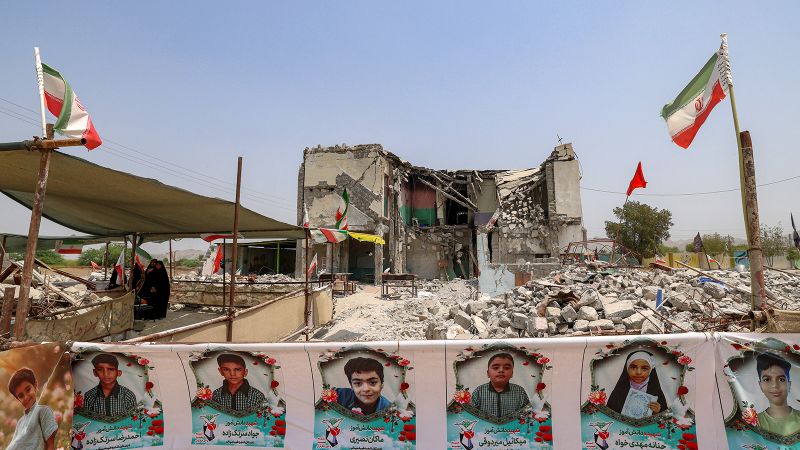
The February 28 strike on the Shajareh Tayyiba school in Minab killed at least 156 people, Iranian officials said. The dead included 120 children and 26 teachers. Although casualty totals have differed slightly, the incident could rank among the gravest civilian-casualty events involving the US military in recent history.
Investigators also reviewed an attack later that day on a sports facility and nearby homes in Lamerd, another southern Iranian city. The UN said 22 civilians were killed there.
“[The mission] found reasonable grounds to believe the United States committed the war crime of launching indiscriminate attacks resulting in the loss of life or injury to civilians or damage to civilian objects.”
The finding came from the UN’s Independent International Fact-Finding Mission, whose report is expected to be presented to the UN Human Rights Council. Its team examined satellite images, videos, photographs, material from organizations and specialists deemed credible, and dozens of interviews conducted inside and outside Iran.
Questions over intelligence used for the Minab strike
Early information surrounding the Minab attack points to a possible intelligence failure. US Central Command prepared target coordinates using outdated material supplied by the Defense Intelligence Agency, two people briefed on preliminary findings of an internal Pentagon inquiry said in March.
The school stood beside an Islamic Revolutionary Guard Corps naval base. Satellite imagery from 2013 showed the school and the base had previously been part of one compound. Later images, from 2016, showed a fence dividing the school from the base and a separate school entrance.
Images taken in December 2025 showed dozens of people in the school courtyard, seemingly engaged in play. The UN mission said it found no indication that the school was being used for military activity when it was struck.
“No information indicates that the school was used for military purposes at the time.”
The report said the US had not met its obligation to take all feasible steps to confirm that the site was a military objective before attacking it. Under the laws of armed conflict, parties must distinguish military targets from civilians and civilian facilities, while also taking practical precautions to reduce harm to noncombatants.
President Donald Trump initially suggested Iran could have been responsible for the school strike. When questioned about the lack of public support for that assertion from within his administration, he said: “Because I just don’t know enough about it.”
The Pentagon has not released the results of its own review. A Defense Department representative declined further comment, saying an investigation remained underway and there was no announcement to make.
US rejects UN report’s credibility
A State Department official said the Trump administration did not view the UN report as credible. The official highlighted Trump’s February 2025 decision to withdraw the United States from the UN Human Rights Council, made weeks after he returned to office. Trump had accused the council of antisemitism.
US withdrawal from the council does not eliminate questions about the military’s conduct under US law. The United States is not a member of the International Criminal Court, but it maintains domestic laws and military procedures dealing with potential war crimes and battlefield violations.
The UN investigators sought meetings with US officials and requested information from the Israeli government, but said those efforts received no response. They also asked Iran for unrestricted access to the country. Tehran did not grant that access and responded to roughly one-quarter of the mission’s information requests, the report said.
Report also details Iran’s crackdown on protesters
Beyond the US strikes, the investigation assessed Iran’s response to anti-government demonstrations in late 2025 and early 2026, before the conflict with the United States began.
The report described a severe campaign against protesters in which thousands of people were killed. It said detainees were subjected to torture and forcibly disappeared, with families receiving no notification of their relatives’ whereabouts.
“Gross violations amount to crimes against humanity,” the investigators said, calling the repression “a widespread and systematic attack on civilians.”
The mission’s conclusions place scrutiny on both the conduct of US military operations and Iran’s treatment of its own population. Its findings are not a criminal verdict, but they establish the investigators’ assessment that there is a sufficient factual basis for serious legal concerns.
For families in Minab and Lamerd, the legal debate follows a far more immediate loss: classrooms, homes and public spaces became sites of civilian deaths during the first hours of a widening war. The still-unpublished US inquiry may determine whether military planners violated their own standards, why old intelligence was used, and whether anyone will be held accountable for the attack on the school.
Related Reading
Frequently Asked Questions
What is Deadly US strike on Iran school?
Deadly US strike on Iran school is the main topic of this guide. The article explains the context, practical details, and next steps readers should understand.
Why does Deadly US strike on Iran school matter?
Deadly US strike on Iran school matters because readers are looking for a useful answer, not just a short summary. Good content should match search intent and help them decide what to do next.