
New Hampshire Court Reverses Father’s Murder Conviction in Tragic Case of Harmony Montgomery
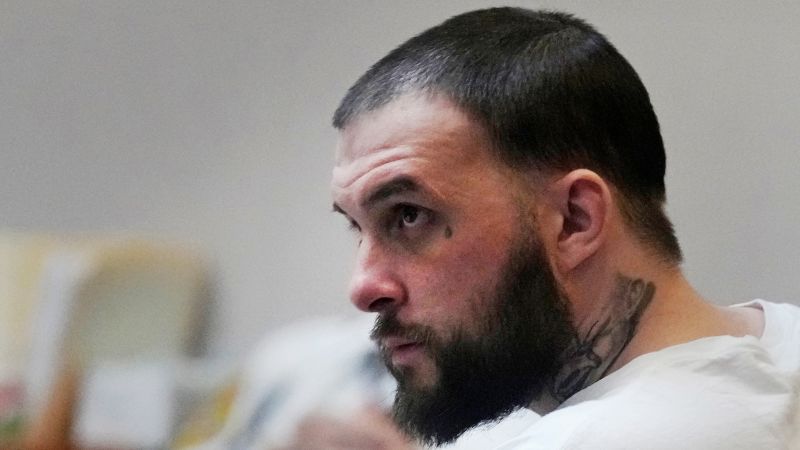
Sandego.net – The New Hampshire Supreme Court has taken a decisive step in revisiting the legal saga surrounding the death of Harmony Montgomery, a 5-year-old girl whose fate has become a focal point of debate over child protective services. In a landmark ruling, the court overturned Adam Montgomery’s second-degree murder conviction, which was secured in 2024 for the death of his daughter, who was reported missing in 2021. The decision comes as a response to concerns about the fairness of the trial and the reliability of evidence presented against Montgomery.
A Trial of Diverging Evidence
The court’s 15-page ruling highlighted a critical flaw in the original trial: the merging of the second-degree assault charge with the murder charge. In the initial proceedings, Montgomery was accused of striking Harmony in December 2021, a claim tied to the murder conviction. However, the court emphasized that this combination may have compromised his right to a fair trial. “Trying the assault and murder charges together created a risk that the jury would be swayed by the stronger evidence of the assault, while underestimating the weaker proof of the murder,” the court stated in its analysis.
“We conclude that, under these circumstances, trying the second degree assault and second degree murder charges in a single trial jeopardized the defendant’s right to a fair trial,” the ruling noted.
The assault charge relied on multiple witnesses and robust evidence, such as video footage and testimony from a caretaker. Yet, the murder conviction depended heavily on the testimony of Kayla Montgomery, Adam’s wife, who had earlier pleaded guilty to perjury. The court argued that this discrepancy in evidence could have led to a biased jury verdict, where the forceful assault incident in July 2019 was used to infer intent in Harmony’s December 2021 death.
Reopening the Case for Retrial
Following the court’s decision, the case was remanded to a trial court for a new trial on the murder charge. While the murder conviction was overturned, the other charges—second-degree assault, witness tampering, falsifying physical evidence, and abuse of a corpse—were upheld. This means Adam Montgomery will face retrial for the most serious charge, though he remains incarcerated on a 43.5-year sentence for unrelated felony and firearms offenses.
The ruling has reignited discussions about the complexities of the case, which has been described as a harrowing example of systemic failures in child care. Harmony’s disappearance in October 2019, her mother’s last FaceTime contact in spring of that year, and the repeated transfers between foster care and her parents’ custody have all contributed to the public’s scrutiny of the child welfare system.
Child Advocacy Report Highlights Systemic Failures
In 2022, the Massachusetts Office of the Child Advocate published a detailed 101-page report that scrutinized the handling of Harmony’s case. The report criticized state officials for prioritizing the rights of her parents over her well-being, citing instances where her needs were overlooked. “By not putting her and her needs first, our system ultimately failed her,” said Maria Mossaides, director of the Office of the Child Advocate, at the time of the report’s release. The findings suggest that the child protective services system may have contributed to the tragedy by allowing Harmony to remain in the care of her father, Adam, despite prior concerns about neglect.
Harmony was born in June 2014 and had a history of health challenges, including being blind in one eye and other medical issues. During her early years, the Department of Children and Families received reports of neglect while she lived with her mother, who was battling substance abuse. Adam Montgomery, who was incarcerated at the time of her birth, was described as “not involved in Harmony’s life” during this period. The girl was eventually placed in her father’s care in February 2019, a move that would later become central to the legal proceedings.
Reactions to the Court’s Decision
The reversal of the murder conviction has drawn mixed reactions. The New Hampshire Attorney General’s Office expressed disappointment, stating its confidence in the evidence and the work of prosecutors, investigators, and law enforcement partners. “We remain committed to seeking justice for Harmony and all those who knew and loved her,” the office said in a statement. However, it announced plans to retry Adam Montgomery on the murder charge, signaling its determination to pursue the case further.
Pamela Phelan, the attorney who defended Adam Montgomery during the appeals process, welcomed the decision. “The Court’s ruling underscores the importance of ensuring every accused person receives a fair trial,” she said. “Without these principles, justice cannot be truly served, either to the defendant or to the victim.” Her comments reflect the broader debate about the balance between accountability and procedural fairness in high-profile cases involving children.
A Legacy of Questions and Uncertainty
Despite the court’s intervention, many questions remain unanswered. Harmony’s remains have still not been located, leaving her family and the public in a state of lingering grief. The case also raises concerns about the role of foster care in child protection, particularly after her mother’s inability to reach her in spring 2019. The timing of her disappearance, just months after being placed in her father’s care, has fueled speculation about the circumstances surrounding her death.
The Massachusetts judge who placed Harmony in Adam Montgomery’s custody in New Hampshire has faced particular criticism. The decision to transfer her care was seen by some as a pivotal moment in the case, given the history of neglect and the father’s prior involvement. The court’s reversal now shifts the focus back to this critical decision, prompting renewed calls for accountability and reform in child protective services across the region.
As the case moves forward for retrial, the legal community and families will closely watch the proceedings. The overturned conviction serves as a reminder of the challenges in proving guilt in cases where evidence is both strong and subject to interpretation. For Harmony’s family, the decision offers a chance to seek closure, but also highlights the ongoing struggle to ensure that the justice system reflects the best interests of vulnerable children.
With the retrial looming, the story of Harmony Montgomery continues to resonate as a symbol of the complexities and shortcomings within child welfare systems. Her case has exposed issues of domestic violence, drug abuse, and the emotional toll of foster care transitions, leaving a lasting impact on public perception and legal discourse.