UK Defense Secretary Resigns Over Military Spending, in Fresh Blow to Keir Starmer
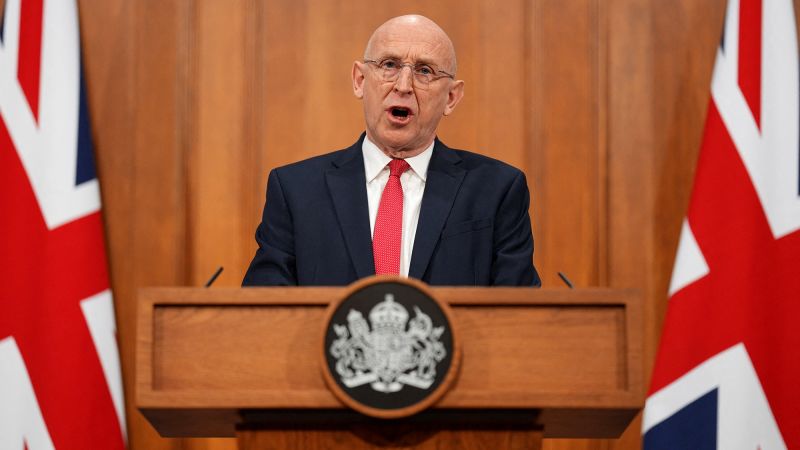
Sandego.net – On Thursday, UK Prime Minister Keir Starmer faced yet another political challenge as John Healey, the nation’s defense secretary, announced his resignation. The decision, driven by a disagreement over military funding, underscores growing tensions within the Labour Party and highlights the mounting pressure on Starmer to address the government’s spending priorities. Healey’s departure comes as his administration grapples with a sharp decline in public support, just two years after securing a decisive general election win. This latest development adds to a series of setbacks, intensifying scrutiny over Starmer’s leadership and the party’s ability to maintain cohesion.
Deficit in Defense Commitments
Healey’s letter, circulated on the social media platform X, criticized the government for failing to provide the British Armed Forces with adequate resources. “The amount of money allocated to defense falls well short of what is required for defence and the country at this dangerous time,” he stated. The defense secretary emphasized that the current budget does not align with the nation’s security needs, particularly as international tensions continue to rise. His resignation signals a rift between the executive branch and key advisors, raising concerns about the stability of Starmer’s administration.
“You have been unable, and the Treasury has been unwilling, to commit the resources that the nation needs to defend the country at this time of rising threats,” Healey wrote in his letter, referencing the commitment to reach 3.5% of GDP for defense by 20235.
The controversy centers on the government’s pledge to increase defense spending to 3.5% of GDP by 20235, a target set to bolster Britain’s military readiness. However, Healey argued that the current funding levels are insufficient, given the escalating risks posed by global conflicts and the need for modernization. His comments echo warnings from former NATO leaders, who have expressed alarm over the UK’s complacency in defense matters. One such warning, from a retired NATO chief, stated that the British leader’s lack of urgency puts the country “in peril” amid potential threats from Russia.
NATO Summit and Funding Uncertainty
Healey’s resignation occurs just days before the government is set to unveil its strategy for upgrading the UK’s defense capabilities, a plan that has been delayed multiple times due to internal disagreements. The announcement, scheduled for a NATO summit next week, is critical for maintaining the alliance’s trust and demonstrating the UK’s commitment to collective security. Analysts suggest that the delay reflects a lack of consensus within the government, with key ministers vying for control over resource allocation. This uncertainty could weaken the UK’s position in international negotiations and fuel criticism from allies.
Defense spending has become a flashpoint in domestic politics, with the Labour Party split over how to balance economic priorities with national security. While some members advocate for increased military investment, others push for fiscal restraint, citing the need to address domestic challenges such as healthcare and education. Healey’s stance aligns with those who believe the government must prioritize defense, even at the expense of short-term economic gains. His departure, however, has left a void in the cabinet, further complicating efforts to stabilize the party’s agenda.
Political Fallout and Leadership Risks
Starmer, who has already been under pressure to defend his leadership following poor results in recent local elections, now faces a new round of criticism. The prime minister’s pledge to boost defense spending was a cornerstone of his campaign, yet the current funding shortfall has cast doubt on his ability to deliver on promises. Many within the Labour Party argue that the government’s complacency has undermined its credibility, especially with voters increasingly concerned about the country’s preparedness for conflict.
The resignation also highlights the fragility of Starmer’s coalition. After a landslide victory in the 2024 general election, the Labour Party has struggled to maintain its momentum, with recent local election losses deepening divisions. Healey’s exit could be a catalyst for more internal dissent, as cabinet members reassess their loyalty to Starmer. The upcoming by-election in Makerfield, northwest England, is expected to be a turning point, with Andy Burnham, Starmer’s rival and current Manchester Mayor, vying for a parliamentary seat. If Burnham succeeds, it may embolden other party members to challenge Starmer’s leadership directly.
Starmer’s government has been accused of prioritizing economic policies over defense preparedness, a strategy that has drawn sharp criticism from both within and outside the Labour Party. The UK’s role in NATO requires robust financial support, and the delay in announcing funding plans risks alienating allies. Meanwhile, the public’s perception of the government’s reliability is being tested, with concerns mounting over whether the UK can effectively respond to emerging threats. As the NATO summit approaches, the stakes have never been higher for Starmer, who must now navigate a crisis that could reshape the political landscape.
Healey’s decision to resign reflects not only personal disagreement with the budget but also a broader ideological clash. He argued that the current approach is unsustainable and that the UK must invest more heavily in its military to ensure long-term security. This sentiment is shared by many in the defense community, who warn that the lack of resources could leave the country vulnerable in the event of a sudden conflict. The Treasury’s reluctance to commit additional funds has been a point of contention, with Healey’s letter serving as a stark reminder of the gap between promises and actions.
As the government prepares to unveil its defense strategy, the focus will be on whether it can reconcile its fiscal goals with the urgent needs of the military. The NATO summit presents an opportunity for Starmer to reaffirm the UK’s commitment to collective security, but the pressure to deliver on this promise will only intensify. The resignation of Healey, a senior minister with a strong reputation in defense, has already sent shockwaves through the Labour Party, raising questions about the stability of the administration and the likelihood of further resignations.
Despite the setback, Starmer remains determined to hold onto his position. The prime minister’s leadership has been tested by a series of challenges, from economic missteps to political infighting. However, he continues to rely on the support of key allies within the party, including his chief of staff and other senior ministers. The outcome of the Makerfield by-election will be closely watched, as it could determine the next phase of the leadership contest. For now, the focus remains on the defense secretary’s resignation and its impact on the government’s ability to secure the nation’s future.