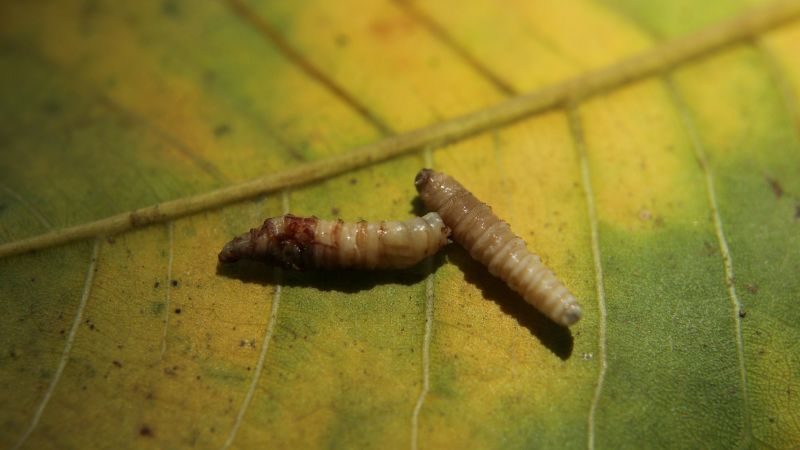
Flesh-eating Screwworm Has Reached the US — A Comeback Driven by Organized Crime
Sandego.net – Last week, the U.S. Department of Agriculture confirmed the presence of New World screwworm in a Texas calf, a development that caught ecologist Jeremy Radachowsky off guard. As the Mesoamerica and Western Caribbean director for the Wildlife Conservation Society, Radachowsky had long predicted the return of the invasive fly. Known for its horrifying life cycle, the screwworm’s larvae develop in the open wounds or bodily openings of warm-blooded animals, including cattle, dogs, and humans. This parasitic insect, once eradicated from North and Central America through a sustained fly sterilization program led by the U.S., is now reappearing due to illegal cattle smuggling, according to researchers like Radachowsky.
The Resurgence of a Deadly Threat
Radachowsky and other experts have pointed to organized crime as a key factor in the screwworm’s comeback. Cattle trafficking, a persistent problem in Central America, allows criminal groups to bypass health inspections and move livestock carrying the parasite across borders. A 2022 report by the think tank InSight Crime highlighted how this illicit trade not only generates profit but also serves as a tool for money laundering and territorial control through deforestation. Massive ranches established in jungle areas have accelerated the spread of the disease, with Radachowsky warning that every illegally transported cow poses a risk of introducing screwworm and other pathogens.
“The influx of cattle and their traffickers into Central America’s forests has triggered a chain reaction of ecological and economic damage,” Radachowsky said. “We’re seeing reduced tree cover, escalating violence, and the emergence of new diseases like avian flu and tuberculosis, all linked to this unchecked movement of livestock.” The screwworm’s return has already reached Mexico, Texas, and now New Mexico, marking a worrying expansion into U.S. territory. The USDA and Mexican Agriculture Department have launched initiatives to combat the spread, including the release of sterilized flies to curb reproduction. However, the effectiveness of these measures remains under debate.
A System Under Scrutiny
The USDA’s response to the outbreak has drawn criticism from Texas Agriculture Commissioner Sid Miller, who argues that the agency should adopt the Screwworm Adult Suppression System (SWASS) alongside sterile fly releases. SWASS, a pesticide and bait combination, has been used successfully in the past to control the pest. Miller, in a statement last Monday, reiterated his call for President Donald Trump to direct the USDA to deploy the system, noting that he had previously provided Agriculture Secretary Brooke Rollins with information about its benefits. “For over a year, I’ve been urging USDA to bring SWASS back into the fight,” Miller said. “We know this tool works, and it’s time to act.”
Yet the USDA has resisted Miller’s push, with its screwworm task force stating on social media that SWASS employs carcinogenic chemicals and could inadvertently attract the sterile flies being released. USDA Undersecretary Scott Hutchins, during a Monday press conference, labeled the method as environmentally problematic and “no longer really viable to utilize anymore.” This stance has sparked controversy, as critics argue that the closure of southern border ports to livestock in July 2025, a measure implemented to prevent the spread of the pest, was effective in slowing its advance. Rollins, who supported the closure, claims it helped limit the screwworm’s entry into the U.S. before the current outbreak.
Blame and Cooperation Across Borders
While the U.S. and Mexico have taken steps to address the issue, tensions persist. Rollins has accused the Mexican government of failing to curb “cartel trafficking and immigration,” allowing the screwworm to spread rapidly through southern Mexico. Mexican President Claudia Sheinbaum’s office, when contacted by CNN, did not respond. However, the closure of border ports in 2025 has been a point of contention. Sheinbaum’s administration initially opposed the measure, calling it an overreach. “We do not agree with this decision,” she stated at the time, though it ultimately contributed to slowing the pest’s progress into the U.S.
The current resurgence has raised concerns about the potential economic toll on the U.S. beef industry. If left uncontrolled, the screwworm could cause billions in damage, with outbreaks in the 1970s previously costing hundreds of millions in cattle losses. The parasite’s ability to rapidly infect herds has forced officials to reconsider strategies for containment. Radachowsky emphasizes that a coordinated effort between the U.S., Mexico, and Central American nations is essential to address the root causes of the problem. “Unless we shut down this illicit activity at the source, the threat will keep growing,” he said.
Human Impact and Disease Spread
Although the screwworm is not directly transmissible between humans, its presence in cattle can lead to the spread of other diseases. Radachowsky noted that avian flu and tuberculosis can be carried by infected animals, compounding the risks to both livestock and public health. The interconnectedness of global trade and smuggling networks has created a scenario where pests and pathogens move alongside goods, posing challenges for quarantine measures. “Cattle trafficking isn’t just about moving animals—it’s about moving risks,” he explained.
The spread of the screwworm underscores broader issues in border management and disease prevention. With the U.S. facing pressure to contain the outbreak, there is growing urgency to streamline health protocols and enhance surveillance. Radachowsky suggests that targeted interventions, such as stricter inspections and collaboration with regional governments, are necessary to prevent further spread. “We need a unified strategy that addresses both the biological and economic drivers of this crisis,” he said. The recent detection in New Mexico highlights the need for immediate action, as the parasite continues its northward journey.
As the situation evolves, the debate over pest management methods intensifies. While SWASS remains a viable option, its environmental impact and chemical composition have sparked questions about its long-term use. The USDA’s decision to prioritize sterile fly releases reflects a balance between efficacy and safety, but critics argue that more aggressive tactics are required. With the threat of widespread infestation looming, the question is whether the U.S. can adapt its approach to protect its agricultural sector and prevent another catastrophic outbreak.
Experts remain cautious, acknowledging that the screwworm’s return is a result of complex interactions between human activity and natural ecosystems. “This isn’t just a local problem—it’s a regional and global one,” said Radachowsky. “We’re seeing how crime and commerce intertwine to create new challenges for conservation and public health.” As the insect makes its way into new territories, the stakes for the U.S. cattle industry—and the ecosystems it affects—have never been higher.
“Every cow being moved illegally has the potential to carry a screwworm and other diseases,” Radachowsky said. “The consequences are far-reaching, and we need to act before the situation escalates.”