The Man Accused of Orchestrating Tupac Shakur’s Death Faces a Jury
Sandego.net – Nearly three decades after a drive-by shooting claimed the life of one of hip-hop’s most iconic figures, a courtroom in Las Vegas has finally seated a jury to decide whether Duane Keith Davis — widely known by his street name, “Keffe D” — engineered the killing. Davis, who was 33 years old on the night of September 7, 1996, has pleaded not guilty to a single count of first-degree murder using a deadly weapon, charged with the intent to promote, further, or assist a criminal gang. Prosecutors do not claim he pulled the trigger. Their theory is narrower and, they argue, more damning: that he conceived the ambush and provided the firearm.
The Night in Las Vegas
The shooting followed a confrontation at the MGM Grand casino, where Shakur and his entourage had been attending a Mike Tyson boxing match. Shakur’s nephew got into a physical altercation with members of the rapper’s group, and prosecutors say Davis used that moment of chaos to execute a premeditated plan. The weapon was fired from a passing vehicle, striking the 25-year-old musician. He died shortly afterward.
Law enforcement officials have long pointed to the bitter rivalry between two Los Angeles-based street organizations — the Bloods and the Crips — as the underlying engine of violence that night. Davis belonged to the South Side Compton Crips. Yet several individuals connected to the case have pushed back on the idea that a simple gang feud explains what happened, suggesting the motives were more tangled and personal.
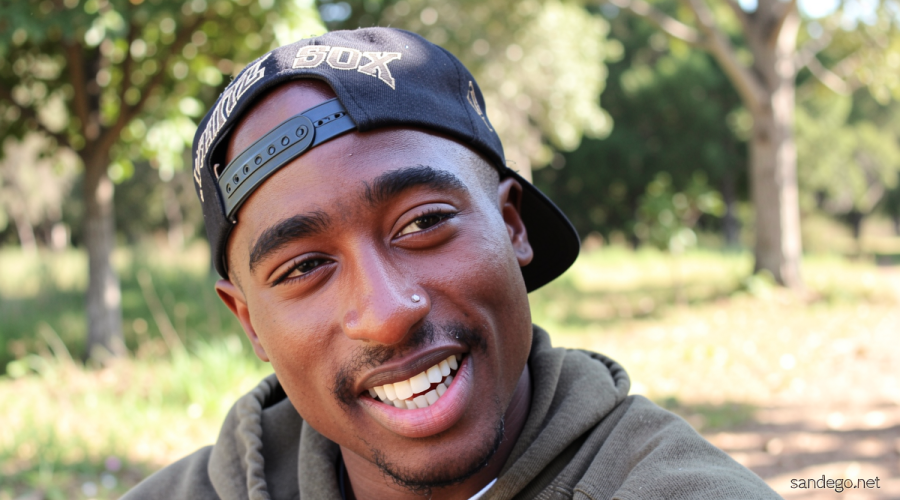
Who Tupac Shakur Was
Shakur entered the world in 1971 in Harlem, Manhattan, but his identity became inseparable from the West Coast. He relocated repeatedly during his youth and ultimately anchored himself in Oakland, California. In a 1993 interview he made his allegiance explicit:
“I give all my love to Oakland, if I’ma claim somewhere I’ma claim Oakland, even if I don’t live there.”
By the mid-1990s he was one of the most recognizable faces in West Coast rap, locked in a cultural rivalry with East Coast stars — most notably Christopher Wallace, known as “The Notorious B.I.G.” or “Biggie Smalls.” Shakur’s catalog included 11 platinum albums, seven of them released after his death. Titles such as All Eyez on Me and Me Against the World remain both celebrated and debated. Beyond music, he took acting roles in films including Poetic Justice and Above the Rim, and his lyrics consistently addressed social justice, street survival, and the experience of navigating the world as a Black man. Critics and fans alike have called him a “street poet.”
His mother, Afeni Shakur Davis, was a member of the Black Panther Party in her younger years and continued activist work for the rest of her life. She was a central figure in shaping his worldview and his public persona.
Gangster Label and Legal Troubles
Despite lyrics steeped in gangster imagery and his association with Marion “Suge” Knight — the head of Death Row Records, the label with which Shakur signed — the rapper publicly rejected being categorized as a gang member. Speaking to the Los Angeles Times in 1995, he was blunt:
“I am not a gangster and never have been.”
He explained that his songs simply reflected the brutal realities of his environment, which included “lots of killing and drugs.” In the final years of his life he also faced serious legal problems, including a conviction for sexual abuse that sent him to prison for eight months. At the time of his death he was out on bail while appealing that conviction.
Davis’s Account and the Combs Thread
Most of what the public knows about Davis comes from his 2019 memoir, Compton Street Legend, co-written with Yusuf Jah, who is listed among potential trial witnesses. The book walks through Davis’s life inside the South Side Compton Crips, the people he moved with, and how those relationships intersected with the events of that September night in Las Vegas.
In the memoir, Davis recounts a conversation with Sean “Diddy” Combs, then one of the dominant figures in East Coast music, who ran his own label and represented artists including Biggie Smalls. According to Davis, Combs approached him asking for help with “a couple of problems I need to be handled,” pointing to Knight and Shakur. Davis describes his reaction:
“I looked at him in his eyes, and without hesitation, I responded, ‘That’s not a problem. We can make that happen!'”
Davis does not specify a figure in that exchange, though he later characterizes the arrangement as “a million-dollar bounty.” Combs, who is also listed as a potential witness, dismissed any suggestion of his involvement in a 2016 interview on the syndicated radio program The Breakfast Club, calling the allegations “nonsense.” He has never been charged in connection with Shakur’s death.
Why This Trial Matters Now
The case has lingered for almost 30 years without a single conviction. Shakur’s cultural footprint has only grown in the interim — in 2012, sixteen years after his death, a holographic performance of his music was staged at the Coachella Valley Music and Arts Festival, drawing enormous crowds who treated the projection as though the artist were still alive. His fans, family, and the broader hip-hop community have waited decades for accountability. This trial represents the first and, so far, only opportunity for a jury to determine whether the man prosecutors say planned the ambush will be held criminally responsible. The outcome will shape how the music world, the city of Las Vegas, and the families of both Shakur and Davis reckon with a loss that has haunted popular culture since 1996.
Related Reading
Frequently Asked Questions
What is These are the key players in Tupac?
These are the key players in Tupac is the main topic of this guide. The article explains the context, practical details, and next steps readers should understand.
Why does These are the key players in Tupac matter?
These are the key players in Tupac matters because readers are looking for a useful answer, not just a short summary. Good content should match search intent and help them decide what to do next.