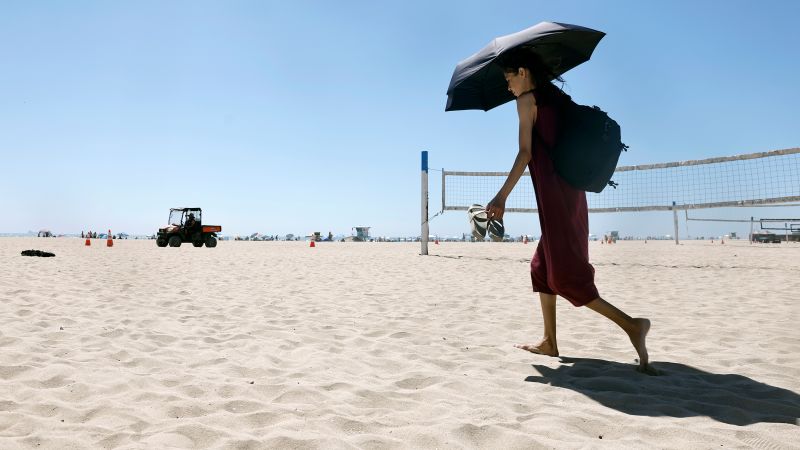
Western US Heat Dome Brings Record Temperatures to Millions
Sandego.net – Western US heat dome brings dangerously hot conditions across a vast portion of the country, affecting tens of millions of residents. As of Saturday, approximately 55 million people are living under various heat alerts throughout the western region. Most of these individuals are located in California, Nevada, and Arizona, though the affected zone stretches northward to the Canadian border. This persistent high-pressure system has created hazardous conditions that meteorologists describe as potentially life-threatening, particularly for vulnerable populations without access to air conditioning.
Nighttime Heat Prevents Recovery
One of the most troubling features of this weather pattern is the failure of nighttime temperatures to drop significantly. When heat lingers through the evening hours, it severely limits the human body’s ability to recover and rest. In major cities such as Phoenix and Las Vegas, overnight lows are projected to stay in the upper 80s and low 90s Fahrenheit. These elevated nighttime readings prevent residents from experiencing the relief that cooler evenings normally provide. The National Weather Service notes that extreme heat remains the leading cause of weather-related deaths in the United States each year. This particular event carries what experts call “extreme heat risk,” indicating conditions could prove fatal for those without adequate cooling.
Healthcare Systems Under Strain
Beyond the immediate threats to individuals, this heat wave is expected to place considerable pressure on healthcare infrastructure. Emergency departments across the impacted regions are likely to see increased patient volumes seeking treatment for heat-related illnesses. These conditions may include heat exhaustion, heat stroke, and severe dehydration among other serious ailments. While the heart of this heat event focuses on the Southwest during Saturday and Sunday, some of the most dramatic temperature deviations occur in other areas. The Plains states and northern Rocky Mountain region are experiencing triple-digit temperatures that far surpass seasonal norms. Montana, Nebraska, Colorado, and Wyoming are all grappling with scorching conditions that challenge even residents accustomed to warm weather.
Climate Change Intensifies Heat Events
This summer has seen multiple distinct heat domes affecting both the United States and European countries. Scientific studies increasingly show that human-driven climate change is responsible for making heat waves more frequent, more intense, and longer-lasting than in earlier decades. Researchers warn that current projections may actually underestimate the severity of future heat events. Particularly strong and slow-moving heat domes appear to be becoming more common as global temperatures continue rising, though scientists are still actively researching this trend. The relationship between warming oceans, shifting atmospheric patterns, and these persistent high-pressure systems remains an area of intense investigation.
Wildfire Danger Reaches Critical Levels
Adding to the heat crisis, the Pacific Northwest faces extreme wildfire conditions. The fire season in Oregon and Washington has already progressed at a record-breaking pace this year. Meteorologists have issued a rare level 3 of 3 “extremely critical” fire danger rating for portions of both states on Saturday. Multiple large wildfires are currently burning across this region, and forecasters warn that high winds combined with ongoing drought conditions could cause these blazes and any new fires to spread with alarming speed. The smoke generated by these wildfires is drifting across state lines and reaching into Canadian territory, creating air quality concerns for millions more people beyond the immediate fire zones. For more information on fire safety, visit CNN’s wildfire coverage.
What Residents Should Know
As this heat dome continues to influence weather patterns, experts recommend several precautions for those living in affected areas. Staying hydrated remains essential, with many officials suggesting drinking water even when not feeling thirsty. Residents should avoid strenuous outdoor activities during peak heat hours, typically between 10 a.m. and 4 p.m. Checking on elderly neighbors and those with medical conditions is also crucial, as they are at higher risk for heat-related illnesses. If you experience symptoms such as dizziness, nausea, or confusion, seek medical attention immediately. Local cooling centers are opening across the region for those without air conditioning at home.
Frequently Asked Questions
How long will the Western US heat dome last? Meteorologists expect the heat dome to persist for at least one to two weeks, though exact duration depends on atmospheric conditions and potential changes in weather patterns.
Which areas are most at risk? California, Nevada, Arizona, and parts of the Pacific Northwest face the highest risk, though the Plains states and northern Rockies are also experiencing dangerous temperatures.
What should I do if power goes out during the heat? Move to a cooler location such as a library, shopping mall, or designated cooling center. Keep blinds closed during the day to reduce indoor temperatures, and use fans if available.
Are there any health risks beyond heat exhaustion? Yes, heat stroke is a medical emergency that can be fatal. Other risks include dehydration, kidney problems, and exacerbation of existing heart and respiratory conditions.
How does climate change affect heat domes? Research shows that climate change makes heat domes more frequent, more intense, and longer-lasting, with scientists predicting these trends will continue to accelerate in coming decades.