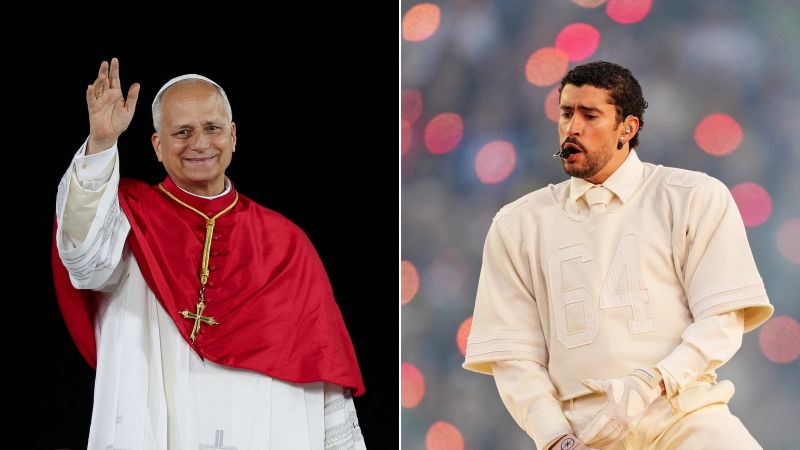
The Pope Met Bad Bunny in Madrid, but Photos Were Missing
Sandego.net – In recent days, Pope Leo XIV and Bad Bunny have captured the attention of Spain’s public in distinct ways. While the pontiff has been drawing massive crowds to prayer events and religious gatherings, the Puerto Rican reggaeton artist has been entertaining fans with high-energy performances in front of thousands. The Vatican recently confirmed that the two met briefly in Madrid on Monday, though the encounter was notable for the absence of official photos or videos. This lack of visual documentation has left fans, especially those eager to see the first U.S.-born pope alongside the global music icon, slightly disappointed.
A Meeting Marked by Contrast
The meeting occurred during Leo XIV’s visit to Madrid, where he had been engaging with young people in a prayer vigil. Bad Bunny, meanwhile, was in the city for a concert that drew hundreds of thousands of attendees. Despite their differing styles, the Vatican spokesperson stated that the pope met the artist “alongside his family and other individuals.” The Grammy-winning musician, who had expressed a desire to connect with the pontiff, reportedly felt “deeply touched” after their handshake, according to the Vatican’s statement.
“If they are asked whether they prefer to see Bad Bunny or the pope, I believe many will choose the artist. But there will also be a handful who are there for the pope. That, too, speaks volumes,” the Vatican official remarked on board the papal plane.
Leo XIV’s comments on the plane highlighted the cultural clash between his religious mission and Bad Bunny’s pop phenomenon. The rapper, known for his bold lyrics and vibrant stage presence, had been a major draw in Spain, with his concerts often described as “party-style spectacles.” The pope’s event, however, focused on spiritual reflection, emphasizing the importance of commitment and faith.
Messages That Diverge
Though both figures have massive followings, their messages are starkly different. Bad Bunny’s music frequently explores themes of casual relationships and modern love, while the pope has been vocal about the sacredness of marriage as a lifelong vocation. During his address to a crowd of approximately 600,000 at a recent prayer vigil, Leo XIV encouraged attendees to embrace marriage, stating, “Do not fear the responsibilities of love or the call to build a family.”
“Do not be afraid of marriage and of starting a family,” he told the crowd, underscoring his focus on spiritual values in a nation where cultural and religious dynamics are often in flux.
In contrast, Bad Bunny’s lyrics often highlight personal freedom and fleeting connections, resonating with a younger audience that prioritizes spontaneity over tradition. This divergence in messaging has sparked discussions about how the two icons, despite their shared public interest, represent opposing views on love and commitment. The Vatican’s decision to limit media coverage of the meeting may have been intentional, emphasizing the event’s symbolic weight over its visual appeal.
Immigration Concerns on the Agenda
Beyond their public personas, Pope Leo XIV and Bad Bunny share a common concern: the U.S. immigration policies under Donald Trump. Both have faced criticism for their stances on the issue. Bad Bunny was harshly criticized for his Super Bowl halftime performance in February, where some saw his music as a commentary on the displacement of immigrants. Meanwhile, the pope has drawn Trump’s ire for his vocal opposition to the war in Iran, which he views as a barrier to peace and global unity.
During his visit to Spain, Leo XIV has focused on addressing the immigration crisis, with plans to visit the Canary Islands—the primary entry point for many migrants arriving in Europe. The Pope’s meetings with immigrants and advocacy groups there aim to highlight the human stories behind the policy debates. This visit, combined with his earlier activities in Madrid, underscores his commitment to connecting with people on the move.
Sagrada Família’s Historical Significance
On Wednesday, Pope Leo XIV’s itinerary included a stop at Montserrat, a spiritual hub in Catalonia, followed by a Mass at the iconic Sagrada Família in Barcelona. The basilica, under construction for over 144 years, is set to reach a milestone with the completion of its new tower, which will make it the tallest church in the world. The tower, a symbol of the cathedral’s enduring legacy, has been a focal point of anticipation for visitors and architects alike. The Pope’s presence at this historic site adds a layer of religious significance to the event, blending tradition with modern architectural achievement.
The Sagrada Família, designed by Antoni Gaudí, has long been a beacon of both artistic and spiritual inspiration. Its completion, delayed for decades, marks the culmination of a project that has become a global icon. Leo XIV’s visit here, alongside his meeting with Bad Bunny, reflects the Pope’s efforts to engage with Spain’s diverse cultural landscape. While the artist’s music resonates with a different kind of audience, the Pope’s presence in the same city highlights the coexistence of faith and contemporary expression.
A Nation in Focus
Spain has been a central stage for both Leo XIV’s papal mission and Bad Bunny’s cultural influence. The country’s unique position as a bridge between Europe and the Mediterranean has made it a critical location for immigration discussions. The Pope’s upcoming events in the Canary Islands will further explore this theme, emphasizing the importance of compassion and solidarity in times of crisis.
Meanwhile, Bad Bunny’s concerts continue to fill stadiums, showcasing the enduring power of music to unite people across generations. His presence in Madrid on the same day as the Pope’s vigil demonstrates the nation’s ability to host both religious and entertainment events on a grand scale. Whether through prayer or performance, both figures are shaping the cultural and spiritual dialogue in Spain, even if their approaches differ.
As the Pope’s visit unfolds, the contrast between his message of faith and Bad Bunny’s message of personal expression remains a point of interest. Yet, their shared engagement with Spain’s most pressing issues—immigration, social values, and public attention—highlights the interconnectedness of their roles in a society that values both tradition and innovation. The absence of photos from their meeting may not diminish its impact, but it could be seen as a deliberate choice to focus on the substance of their interaction rather than its spectacle.
With the Sagrada Família’s tower nearing completion, the Pope’s visit to Barcelona adds a symbolic dimension to his efforts in Spain. The event not only celebrates the architectural triumph of the basilica but also serves as a reminder of the long-term vision required to address global challenges. As the Pope moves through the country, the interplay between his spiritual leadership and the vibrant cultural presence of Bad Bunny continues to captivate observers, offering a glimpse into the multifaceted nature of modern Spain.