Elizabeth Pryor Grapples with Her Father’s N-Word Legacy
Sandego.net – Richard Pryor’s daughter grapples with the enduring impact of her father’s use of the n-word, a term that has become emblematic of his comedic genius and cultural influence. The legendary comedian, renowned for his sharp wit and unfiltered humor, often wielded the word with a blend of defiance and playfulness, famously quipping, “I said it over and over like a preacher singing hallelujah.” However, a pivotal moment during a 1979 televised interview with Barbara Walters highlighted the personal toll of his language on his daughter, Elizabeth Stordeur Pryor. As she reflects on the incident, Elizabeth reveals how it sparked her lifelong exploration of the word’s significance in both family and public spheres.
A Defining Moment in the Spotlight
The 1979 interview, part of ABC’s *20/20* series, marked a critical juncture in Elizabeth’s understanding of her father’s legacy. Richard Pryor, then at the peak of his fame, was challenged by Walters about his frequent use of the racial slur. She hesitated before using the full term, prompting Pryor to retort with a sly grin, “You just said it. You said it very good.” This exchange, captured on camera, became a symbol of Pryor’s ability to turn critique into a powerful cultural commentary. Yet for Elizabeth, who was 12 at the time, it was a moment that left her questioning her own identity.
“I don’t know if there’s anyone … appearing Whiter than Barbara Walters in that moment with her bouffant hair, pink lips, and daintiness,” Elizabeth recalls. “And she’s here with my father using the n-word, and he calls her out for it. I wasn’t sure what was going to happen.”
The incident revealed a tension between Pryor’s artistry and his expectations for his daughter. While he used the term to provoke and challenge, he also pressed Elizabeth to internalize its weight. This duality became a central theme in her memoir, *Something We Said: Richard Pryor, a Notorious Word, and Me*, which explores how her father’s legacy shaped her personal and academic journey.
From Family to Academia: A Legacy in Question
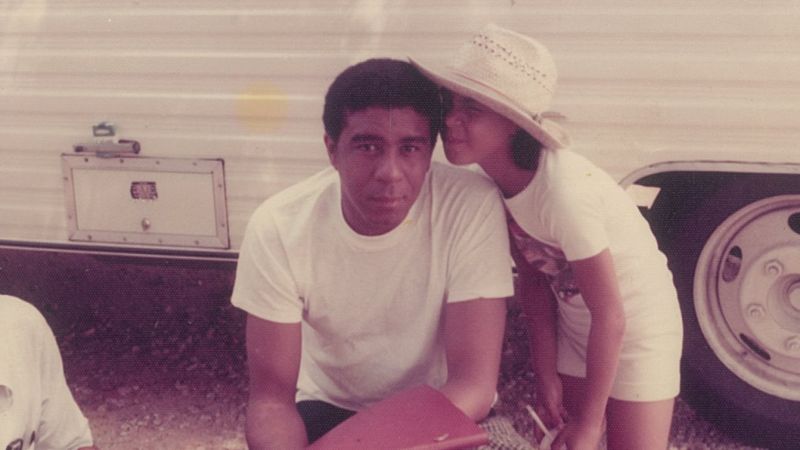
Elizabeth’s upbringing was influenced by the unique dynamic of her parents’ relationship—Richard Pryor, a Black comedian, and Maxine Pryor, a Jewish woman. Their interracial marriage, which defied societal norms in the 1970s, instilled in Elizabeth a complex sense of identity. She writes in her memoir that her father often struggled to balance his roles as a performer and a parent, leaving her to question whether she was “funny enough” or “Black enough” to be his daughter. Richard Pryor’s daughter grapples with this duality as she examines the word’s evolution from a tool of humor to a symbol of racial pain and pride.
The 1979 interview became a catalyst for Elizabeth’s academic inquiry. Observing her father’s bold confrontation of Walters, she was struck by the contrast between his on-stage swagger and his off-stage expectations. “He told me to never let a White person use the n-word,” she says, highlighting the personal stakes of the moment. This episode, though brief, lingered in her mind, inspiring a deeper analysis of how language reflects power dynamics and cultural context. Elizabeth’s work now bridges the gap between personal memory and historical discourse, offering a nuanced perspective on Richard Pryor’s daughter grapples with the term’s legacy.
Pryor’s N-Word: A Tool for Defiance and Art
Richard Pryor’s use of the n-word extended beyond mere shock value. He framed it as a means to dismantle racial stereotypes and give voice to Black American experiences. Albums like *That N***er’s Crazy* and *Bicentennial N***er* wove the term into narratives that celebrated both the struggles and triumphs of Black identity. “He tamed it like a lion in the ring,” Elizabeth notes, “and used it to empower the very people it was meant to demean.” This artistic approach allowed Pryor to challenge listeners without shying away from the term’s divisive history.
While earlier Black comedians like Dick Gregory had employed the n-word in their work, Richard Pryor’s daughter grapples with the broader implications of his use. His ability to manipulate the term with humor and intensity elevated it to a new level of cultural resonance. Elizabeth’s memoir captures this tension, tracing how her father’s legacy—both celebrated and scrutinized—shaped her perspective. The n-word, once a source of familial conflict, became a lens through which she examined race, power, and belonging in American society.