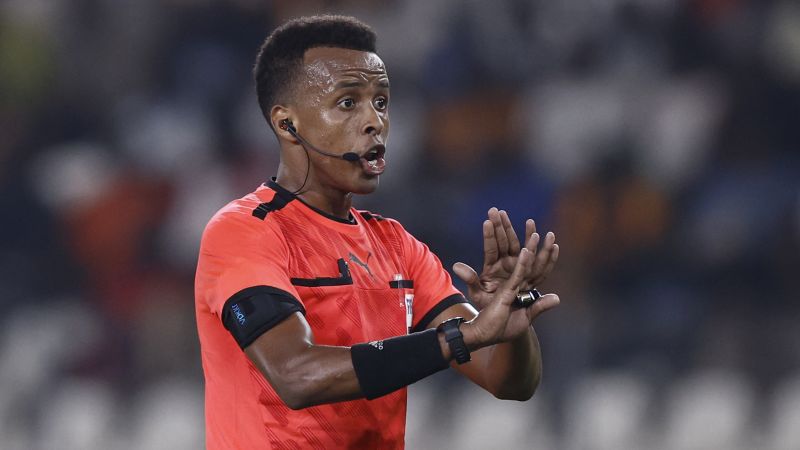
World Cup Referee Denied Entry to U.S.
Sandego.net – Omar Abdulkadir Artan, a Somali official who was selected as a FIFA World Cup referee, faces exclusion from the United States due to immigration hurdles, FIFA confirmed on Monday. The decision to block his entry has raised questions about the impact of U.S. policies on international sports participation. Artan, who had been chosen to officiate matches in the upcoming tournament, arrived in Miami from Istanbul but was detained for further scrutiny by U.S. Customs and Border Protection (CBP) officials.
Additional Scrutiny During Arrival
When queried about the incident, a CBP spokesperson stated that Artan underwent extra checks upon landing in Miami. “During processing, the traveler was subjected to additional inspection, which is a standard part of our procedures when officers need to confirm details or assess eligibility,” the official explained. This step was taken to ensure compliance with the administration’s strict immigration guidelines, which have been applied to multiple nations since the policy’s implementation.
According to the CBP, the inspector determined that Artan was not admissible for the current period due to concerns about his vetting status. While the specific reasons for his rejection were not disclosed, it is known that individuals from countries designated under the Trump-era travel ban are often subjected to more rigorous examination. Somalia, one of the 39 nations included in this list, has been affected by the policy, which prioritizes security assessments for foreign visitors.
Artan’s Response to the Denial
In a statement shared with CNN, Artan expressed optimism despite the setback. “Although the circumstances are challenging, I remain in a good spirits and am determined to tackle the next phases of my refereeing journey,” he said. The statement also highlighted his gratitude to FIFA and the Confederation of African Football (CAF) for their support. “I appreciate the backing I’ve received and will strive to maintain my standards as I focus on future opportunities,” Artan added.
He also acknowledged the encouragement from the global football community. “I want to thank my colleagues and the football family for their messages of support. I hope to collaborate with them again in future competitions,” he said. Artan’s selection for the World Cup was a significant milestone, as he was recently recognized as Africa’s top male referee in 2025. His inclusion was a testament to his skills and the recognition of his work on the continent.
FIFA’s Role in the Process
FIFA clarified that it does not manage visa approvals or immigration procedures for the host country. “The organization is not involved in determining admissibility for the U.S., and has been informed that Mr. Artan’s status will not be altered at this time,” a FIFA spokesperson noted. This policy aligns with FIFA’s approach to past tournaments, where the host government retains authority over entry decisions.
The incident underscores the broader implications of U.S. immigration policies on international sporting events. While the tournament itself is a global celebration of the sport, the entry of officials and participants from affected countries has become a point of contention. The U.S. has hosted several FIFA events, including the 2018 World Cup, and the current administration’s stance on immigration has introduced new challenges for foreign delegates.
Iran’s Similar Entry Struggles
The denial of Artan’s entry follows reports of other nations, such as Iran, encountering difficulties in securing access to the U.S. for the World Cup. The Iranian national team was granted permission to enter just one day before their match, as reported by semi-official Iranian media. This last-minute approval sparked criticism from Iranian officials, who accused the U.S. of discriminatory practices.
Mehdi Taj, president of Iran’s football federation, noted the inconsistency in the treatment of team members and staff. “The Iranian squad was allowed in, but not all of our management and support personnel,” he said. Amir Ghalenoei, the team’s head coach, added that some media representatives and executives had not yet received entry clearance. These cases highlight the potential for logistical disruptions in international competitions, as countries grapple with the effects of stringent immigration measures.
Impact on Global Football
The World Cup, set to begin in just three days, now faces the challenge of ensuring smooth participation from officials and teams worldwide. Artan’s case has drawn attention to how U.S. policies can affect the flow of international talent and the collaborative spirit of global sports. Referees, coaches, and support staff play critical roles in the tournament’s success, and their exclusion could influence the quality of officiating or the readiness of teams for the competition.
While FIFA maintains that it cannot override U.S. immigration decisions, the situation has prompted discussions about the need for more flexible entry protocols for sporting events. Some analysts argue that the current policies may unintentionally hinder the exchange of expertise and cultural ties among nations. The World Cup is a prime example of how sports can unite people across borders, yet the entry barriers imposed by the U.S. are testing this ideal.
Broader Implications of the Travel Ban
The travel ban, which was introduced under the Trump administration, has had far-reaching consequences beyond politics. Its application to sports events reveals how immigration restrictions can intersect with international collaboration. For instance, the ban has affected not only athletes but also referees, analysts, and administrators who travel for competitions. These individuals often serve as ambassadors of their countries, promoting cultural exchange and shared interests through the sport.
Artan’s experience is emblematic of the challenges faced by professionals from countries in the targeted list. Despite his credentials and the support from FIFA and CAF, his entry into the U.S. was denied. This has raised concerns about the fairness of the process and its potential to disrupt the World Cup’s operations. As the tournament unfolds, the question remains: how will these barriers affect the global nature of the event and the athletes and officials who contribute to its success?
Looking Ahead
Artan’s determination to continue his career remains undiminished, as he expressed confidence in future opportunities. “I am focused on the next steps in my development as a referee and will not let this setback deter me,” he said. His words reflect a broader resolve among professionals to adapt to changing circumstances. Meanwhile, the FIFA and CAF organizations are likely to monitor the situation closely, seeking ways to support their officials while navigating U.S. immigration requirements.
The World Cup’s opening ceremony is approaching, and the tournament is poised to showcase the best of global football. While Artan’s exclusion is a setback, it also highlights the ongoing dialogue about the role of immigration policies in international sports. As the event progresses, the focus will remain on the game itself, yet the challenges faced by officials like Artan serve as a reminder of the complex interplay between politics and the world of sports.
With the tournament in full swing, the sports community will continue to watch how the U.S. handles the logistical aspects of the event. The success of the World Cup depends not only on the skill of players and referees but also on the seamless coordination between nations. Artan’s story, while a single instance, encapsulates the broader issues of access and inclusion in the global sports arena. As the world gathers to celebrate the sport, the hope is that such challenges will be addressed to ensure the continued unity of the football family.