An American Blue Crab Took Over Italian Lagoons
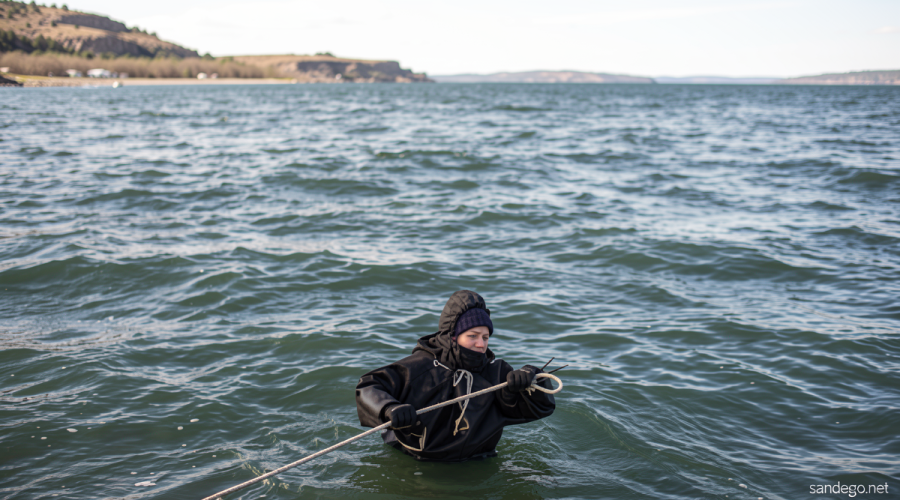
Sandego.net – As dawn broke over the Scardovari lagoon in northeastern Italy, Oscarina Soncin and her fishing partner Giovanna Pizzo began their daily routine. Soncin stood knee-deep in the frigid waters of one of Europe’s largest clam-harvesting sites, using a metal rake to scrape the seafloor. The motion stirred up mud, sand, and the region’s prized Manila clams into her net. For more than two decades, the duo had collected over 4 pounds of clams each morning, challenging traditional notions about women in demanding fishing work. Their success even earned a National Geographic profile in 2021.
Life on the water brought both steady income and freedom. But everything changed in 2023 when they began finding broken shells without any clams inside. The pair had to spend more time on the water just to meet their quotas, and success was no longer guaranteed.
The Invader Arrives
An American blue crab took root in the Po Delta, becoming a formidable competitor. This crustacean, highly valued as seafood in Maryland, along the US eastern seaboard, and in the Gulf of Mexico, had spread throughout the lagoon system. The crabs devoured Manila clams—cultural staples in Italian cuisine that are tossed into pasta or served steamed. Italy ranks as the second-largest producer of Manila clams globally after China, with the Po Delta lagoons serving as the heart of this industry.
The impact was devastating. Within just three years, Atlantic blue crabs transformed the local fishery. Annual clam harvests in the Scardovari lagoon, where Soncin and Pizzo worked, plummeted by 93%. Some clam beds became completely barren, with no survivors remaining.
Scientists attribute this crisis to multiple factors. The delta’s naturally nutrient-rich waters offer an ideal buffet for crabs and other marine creatures. Meanwhile, a warming planet has raised ocean temperatures and created milder winters, enabling crabs to multiply rapidly and feast on clam populations. “My experience has taught me that anything can happen in nature,” Soncin reflected. “The sea can give a lot, but it can also take everything away, and that is exactly what happened to me.”
“The introduction of eggs and larvae through maritime transport has likely occurred continuously over several decades. What seems to have changed were the environmental conditions, which became much more favorable for the species, allowing the population to increase dramatically.” — Viviana Carli, Po Delta Park field technician
The human toll has been significant. More than 600 fishers—representing 40% of local consortium members—have abandoned their licenses and pivoted to new careers. Yet some refuse to surrender to the ecological shift.
Blue crabs had swarmed quietly around the Po Delta lagoons for decades before their population exploded. Researchers point to extreme weather events, climate change, and increased shipping traffic as contributing factors. Massimiliano Costa, director of the Po Delta Park, explained that Italy’s longest river delivers abundant nutrients to the lagoons from both natural sources and human activities like farming. This creates a food surplus for sea creatures, including blue crabs. Incoming Adriatic Sea tides continually replenish oxygen and bring saltwater essential for female reproduction.
The crabs’ success stems from multiple advantages. They burrow into the muddy seafloor to hide from predators and survive winter temperatures. In 2022, northern Italy experienced its most severe drought in two centuries, allowing salty seawater to push upstream into the Po River. This created ideal conditions for female blue crabs to reproduce and for their eggs to develop. The following year, heavy rains and flooding dispersed larvae and juveniles throughout the entire delta region.
Broader climate patterns have shifted in the crabs’ favor. Mediterranean waters have warmed to temperatures that enable blue crabs to reproduce more successfully—sometimes multiple times within a single breeding season. Studies confirm that warmer winters have extended their reproduction period while reducing cold-related fatalities. “I never imagined … the blue crab could establish itself in the Po Delta, given our climate,” said Pizzo, who entered clam harvesting for its reliable earnings. “This makes me think that the seasons are no longer what they used to be.”
Given that one female blue crab can produce millions of eggs, a population explosion in the lagoons may have been inevitable in this new environment. No matter how they were introduced to the region, the blue crabs found a paradise in the delta’s lagoons, and an American blue crab took over what once belonged to the clammers.