Bronze Age Shaman Was Woman, Not Male Metalworker
Genetic Study Rewrites 200 Years of Archaeology
Sandego.net – A groundbreaking genetic analysis has revealed that the famous Bronze Age shaman previously assumed to be a male metalworker was actually a woman. This discovery challenges long-held beliefs about ancient British society and gender roles. The 4,000-year-old skeleton, known as the Upton Lovell Shaman, was found in a barrow—a burial mound reserved for people of high status. Tom Booth, a senior scientist at London’s Francis Crick Institute, presented these findings to CNN on Thursday.
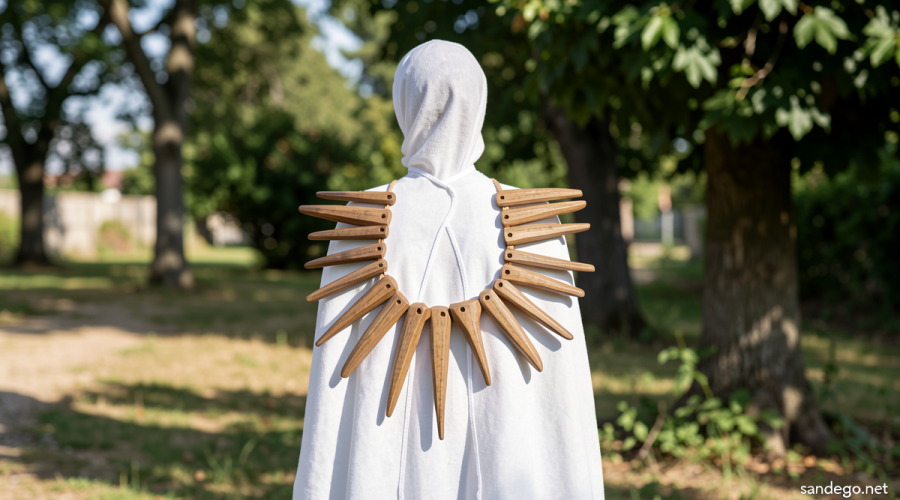
When archaeologists first excavated the Upton Lovell site in southern England during the early 1800s, they uncovered an impressive array of grave goods. According to Booth, the burial contained bone points, a delicate gold necklace, and several axes. Gold residue on the axe edges suggested the person worked with precious metals like copper, bronze, and gold.
“They were buried with their tools in a special way because they were considered particularly eminent,” Booth explained, noting that the quantity and variety of items made this one of the most significant Bronze Age burials in Britain and across Europe.
The remarkable collection of burial items convinced researchers that no similar examples existed. Combined with preliminary bone size measurements, archaeologists concluded the skeleton belonged to a man. Without DNA testing technology in the nineteenth century, this interpretation stood unchallenged for generations.
Modern DNA Analysis Reveals Hidden Truth
Booth and his team later examined the skeleton as part of a larger genome sequencing project. The genetic results came back as female. “We’re overturning sort of two centuries of thought about this skeleton here, so we’d better be careful,” Booth said, highlighting the importance of their work. He analyzed two additional bone samples to confirm the result.
“Both came back as female as well, so that essentially confirms that the skeleton was female, and this was probably a female metalworker, and specifically a gold worker, who had some kind of special status within their community,” Booth stated.
This finding challenges the earlier assumption that women buried with valuable grave goods were simply spouses of prominent men. “This subverts the idea that women or females in these societies couldn’t be powerful in their own right and special in their own right,” Booth added, pointing to greater female agency in ancient times.
Booth noted that the Upton Lovell woman’s height—about 5 feet 4 inches—was closer to the average Bronze Age male than to modern females, which helped explain the earlier misidentification. Her age at death, around 45 years, also made sex determination harder since female bones gradually resemble male bones after menopause.
The title “Shaman” was originally given because her grave offerings suggested connections to ritual practices. However, Booth suggests metalworking itself held ritualistic importance due to its role in Bronze Age European trade networks. “It kind of shows the importance of metalworking as this sort of intrinsic thing that’s linked to the ritual lives of people and the economic lives of people to some extent as well,” he observed.
“This metalworker would have been very much embedded within that kind of network of trade and metalworking and exchange,” Booth concluded.
These findings appear in “We Go Way Back,” a free exhibition at the Francis Crick Institute that opened on Thursday. Pontus Skoglund, who leads the institute’s Ancient Genomics laboratory, noted that the broader project aims to sequence approximately 1,000 ancient individuals. “As we continue to build an ancient genetic record, that is publicly available, that will provide a rich source of information for understanding human history,” he said.