Drone Vessel Saves Two US Crew Members After Apache Helicopter Incident
Sandego.net – On Tuesday, a dramatic event unfolded near the coast of Oman when a US Army Apache helicopter crashed in the waters of the Strait of Hormuz. The US military confirmed that a drone vessel, operated by the Navy, successfully rescued the two crew members from the downed aircraft. This marked the first time an Apache had been lost since the conflict with Iran escalated in late February, highlighting the ongoing challenges faced by US forces in the region.
Rescue Operation Details
The rescue was executed by a surface drone, a specialized unmanned vessel deployed by the US Navy as part of Task Force 59. According to a statement from US Central Command, the crew members were located and retrieved within roughly two hours of the incident. The drone vessel picked up the pilots and transported them to a secondary location where they were then hoisted aboard a helicopter. This operation demonstrated the effectiveness of uncrewed systems in maritime rescue scenarios.
“The Soldiers were safely rescued within approximately two hours and are in stable condition,” said US Central Command in a post on X. “The cause of the incident is under investigation.”
Task Force 59, established in 2021, is unique in its focus on integrating uncrewed platforms into naval operations. The drone vessel used in the rescue, identified as the “Corsair unmanned surface vessel,” was deployed in late March. This marks the first time the Navy has activated such a task force for a direct rescue mission, underscoring its growing role in modern warfare.
Trump’s Response to the Incident
US President Donald Trump addressed the event overnight, offering reassurance following initial reports of the Apache’s crash. When asked about the incident, he stated, “The pilots are fine, nobody injured.” This came after the New York Times first reported the event, detailing the crash near the Strait of Hormuz and the subsequent rescue efforts. Trump’s comments, delivered in New York following Monday night’s NBA Finals, reflected the administration’s efforts to maintain public confidence in military operations.
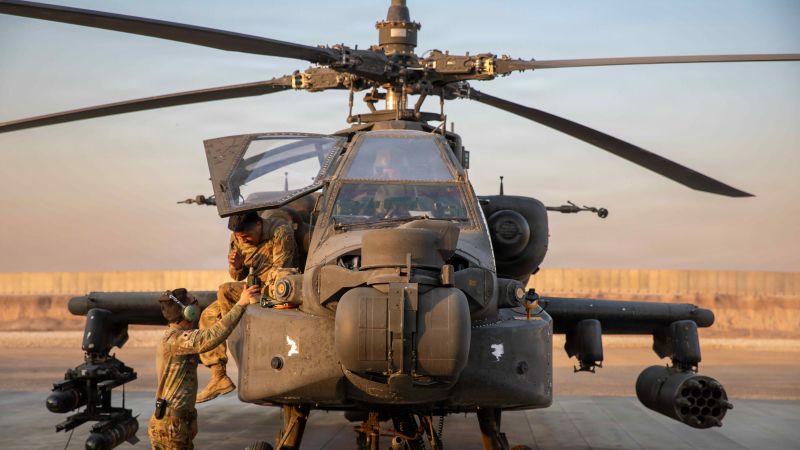
The Apache helicopter, a versatile aircraft, is primarily used for precision strikes, close air support, and reconnaissance missions. Its role in the conflict has included targeting Iranian small boats as part of the US blockade of Iranian ports. The crash raises questions about the safety of these operations, particularly in contested waters.
Broader Context of US Military Losses
Since the war with Iran began in late February, the US military has experienced a series of losses, including at least five fighter jets, seven Stratotanker refueling aircraft, a search-and-rescue helicopter, and more than two dozen drones. These incidents have occurred across multiple fronts, from the Gulf to the Arabian Peninsula. The latest Apache loss adds to this tally, emphasizing the intensity of the conflict.
The incident also comes amid heightened tensions in the region, as Iran and Israel exchanged direct strikes for the first time in months over the weekend. This escalation has increased the risk for US military assets operating in the area. The Apache’s crash off Oman’s coast occurred during a routine patrol, underscoring the unpredictable nature of the conflict.
Historical Incidents and Strategic Implications
Recent months have seen a pattern of US military losses in the region. In early April, a daring operation was required to rescue a pilot from a F-15E Strike Eagle that was shot down inside Iran. During this mission, two Navy aircraft were destroyed on the ground to create a distraction, involving hundreds of personnel including special operations forces.
Other incidents include a KC-135 Stratotanker refueling aircraft crashing in western Iraq in March, which claimed all six crew members. Days earlier, three F-15 fighter jets were mistakenly targeted by Kuwaiti air defenses, resulting in safe ejections for all pilots. Meanwhile, Iranian strikes on a US airbase in Saudi Arabia damaged several aircraft, while others sustained damage from aerial attacks.
These events collectively illustrate the challenges of operating in a volatile region where both Iran and its allies are actively engaged in military maneuvers. The Apache incident, while the first of its kind since the conflict began, is part of a larger narrative of operational risks and strategic adaptability. The use of drones and unmanned vessels, such as the Corsair, is increasingly critical in reducing casualties and enhancing mission flexibility.
Media Coverage and Future Operations
The incident has drawn significant attention from media outlets, with Iranian state television releasing images and videos of the wreckage. These visuals, geolocated by CNN, appear to show the aftermath of several aircraft being damaged in southern Esfahan province. While the exact timeline of the crash and the drone’s involvement remains under investigation, the rapid response by US forces has been praised for its coordination and efficiency.
As the conflict continues, the US military is likely to rely more heavily on uncrewed systems to navigate dangerous environments. Task Force 59’s deployment of drones represents a shift toward autonomous operations, allowing for quicker intervention in emergencies. This strategy not only minimizes risk to human life but also enhances the capability to respond to threats in real-time.
With the situation in the region remaining dynamic, the incident serves as a reminder of the importance of integrating advanced technology into military operations. The successful rescue of the Apache crew members, despite the challenges posed by the conflict, highlights the potential of drone vessels in modern naval warfare. As the investigation into the crash continues, further details about the cause and circumstances of the incident are expected to emerge, providing insight into the evolving nature of the war.
Updates to the story have included additional information on the drone’s capabilities and the strategic significance of the rescue. CNN’s Kaanita Iyer contributed to the reporting, ensuring that the details were accurately presented. The incident has also prompted a review of safety protocols for Apache helicopters operating in the region, as their role in precision strikes and reconnaissance continues to be vital to US military objectives.
The Strait of Hormuz, a critical chokepoint for global oil trade, has become a focal point of military activity. The crash of the Apache helicopter near this strategic location underscores the high stakes of operations in the area. As the US military adapts to the evolving threats, the use of drones and other uncrewed systems is expected to play a central role in future missions, offering both safety and operational advantages.
With the conflict showing no signs of abating, the US military’s ability to respond swiftly to emergencies remains a key factor in maintaining its presence in the region. The rescue of the two crew members not only highlights the effectiveness of these new technologies but also reinforces the importance of preparedness in high-risk environments. As investigations proceed, the incident may provide valuable lessons for improving the safety and efficiency of future operations.