MLB’s Strategic Fan Engagement Ahead of Critical Labor Negotiations
A Moment of Self-Awareness at the All-Star Press Conference
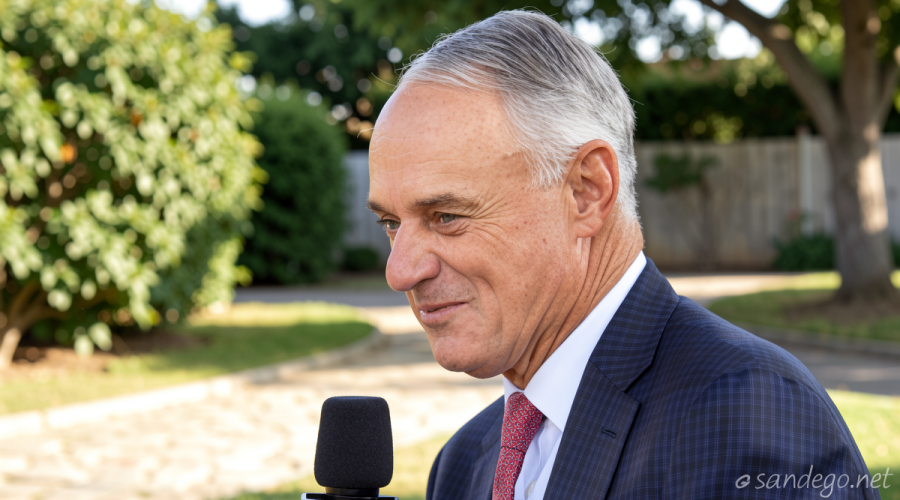
Sandego.net – During the media gathering preceding this week’s All-Star Game, MLB commissioner Rob Manfred delivered what could be described as a moment of genuine self-reflection. While “hilarious” might overstate the occasion, within the typically formal atmosphere of a Baseball Writers Association of America gathering, Manfred’s response certainly earned some amusement. When journalists brought up President Donald Trump’s recent comments regarding the ongoing labor negotiations, Manfred visibly recognized the delicate nature of the topic. The president’s involvement had become somewhat of a distraction from the actual labor dispute, which remained the central concern of the conference.
“This is where Pat (Courtney) always tells me to take a minute,” Manfred explained, making reference to his seasoned chief communications officer. “So I’m going to take a minute.” The room responded with laughter, acknowledging that Manfred has occasionally spoken without sufficient caution, and those moments have occasionally created complications for him. It hardly comes as a surprise that the head of a major professional sports organization would develop a deliberate communications approach. However, Manfred’s candid acknowledgment of this strategy—complete with a playful nod to areas where he hasn’t always excelled—caught my attention regarding how else this strategy was being deployed throughout the league.
The Fan-Centric Messaging Campaign
The league has clearly formulated a comprehensive approach for addressing the public about negotiations concerning the next collective bargaining agreement between MLB and its players. This agreement is virtually certain to culminate in a lockout during the upcoming off-season. The strategy encompasses Manfred’s habit of pausing before responding to particularly challenging questions. But there is more to this approach than careful timing.
When fielding questions about what has become an increasingly unpopular labor dispute, Manfred consistently returned to a central theme: everything is being done for the benefit of fans. Throughout a forty-minute question-and-answer session, Manfred utilized the phrase “listen to fans” or “listening to fans” on six separate occasions when responding to various inquiries. Yet it remains crucial to recognize that even if Manfred’s intentions are entirely sincere, when he sits at the bargaining table, he speaks for the owners—not the fans, and not necessarily for the broader interests of baseball itself.
Fans don’t have a seat at the table and labor negotiations are largely about divvying up money between management and the workforce.
Understanding the Core Disagreement
The specifics of the collective bargaining agreement negotiations can be examined at multiple levels, from granular proposals regarding revenue distribution and compensatory draft selections to the fundamental philosophical divide. At its core, the disagreement is straightforward: the owners, acting collectively as the league, desire a salary cap to establish cost certainty, while the players oppose such a cap because they believe it would prevent them from receiving compensation closer to true market value for their contributions.
It is hardly productive to expend considerable energy debating which side demonstrates greater greed. A baseball collective bargaining agreement does not concern itself with whether educators or law enforcement officers merit higher compensation than shortstops or, indeed, the offspring of a clothing retail entrepreneur. Furthermore, ticket pricing is not determined by the spectacular contracts awarded to players. The sports industry is unquestionably profitable, and all parties involved seek to maximize benefits for themselves and their respective constituencies.
Unprecedented Public Transparency from Both Sides
One of the most notable characteristics of the early bargaining phase has been the remarkable public nature of both sides’ positions. Bruce Meyer, the union’s primary negotiator who advanced from deputy director to interim director following Tony Clark’s departure earlier this year, has conducted regular press conferences to outline the exchange of incremental proposals. Meyer also made a lighthearted observation when speaking with the BBWAA about his constant availability to journalists, noting, “I’m on my devices probably way more than I should be, and I try to respond to any inquiries pretty much immediately.”
However, the league has moved beyond simply explaining its position to traditional media intermediaries. MLB is presenting its proposals directly to fans—publishing its own recommendations on social media platforms with favorable framing, hiring a reporter to “analyze” even the most ambitious opening proposals with the conclusion that they represent “a grand bargain,” and producing advertisements on MLB.tv that specifically highlight the advantages of implementing a salary cap.
Those videos present a cap as what fans want. Or, at least, they want baseball to have more “parity” and be more “equitable,” which the ad implies is directly correlated with implementing a cap.
The Question of Authentic Fan Support
Both advertisements in the campaign build toward MLB’s repeated assertion that it is “listening.” Now, as Meyer observed, if this truly represents what fans desire, why would MLB need to market the concept back to them? It is a legitimate question, as is his other observation regarding the timing and nature of this public relations effort. The league’s aggressive outreach suggests confidence in its position, but it also reveals an awareness that the public narrative matters just as much as the numbers at the bargaining table. Whether this fan-focused strategy will prove effective remains to be seen, but it certainly demonstrates that MLB understands the importance of controlling the conversation during what promises to be a contentious labor battle.