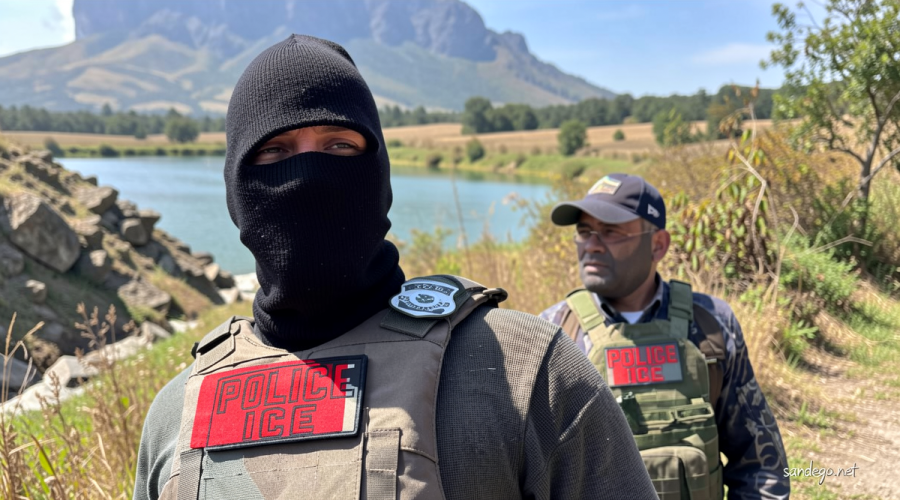
DHS Was Quick to Defend ICE Agents in January Fatal Shootings
Agency Communication Shows Notable Shift
Sandego.net – The Department of Homeland Security moved rapidly to support its immigration agents following the January deaths of Renee Good and Alex Pretti. In the immediate aftermath of these tragic incidents, the agency maintained that both individuals were attempting to kill federal law enforcement officers when they were fatally shot. This swift defensive posture from DHS generated considerable public attention, prompting local officials to demand comprehensive investigations into the circumstances surrounding each shooting. Community members simultaneously organized multiple demonstrations to voice their concerns about how the agency handled these cases.
However, new evidence has challenged several key elements of the department’s original narrative. Video recordings, court rulings, and additional documentation have raised questions about certain claims DHS made right after the shootings occurred. These revelations have triggered meaningful structural changes within the agency’s leadership. Secretary Kristi Noem, who directed immigration enforcement during this critical period, was ultimately removed from her position as part of broader accountability efforts.
Mullin’s Leadership Brings Measured Approach
Markwayne Mullin has now taken over as DHS Secretary following Noem’s departure from the role. Under his guidance, the department appears to be implementing a more considered approach to immigration enforcement operations. Rather than depending on the expansive, large-scale operations that defined Noem’s time in office, Mullin has shown preference for targeted initiatives that focus on specific individuals and situations. This strategic adjustment represents a significant change from earlier enforcement patterns.
As CNN has extensively documented, this evolving communication strategy becomes especially clear when reviewing the agency’s public responses to recent incidents. Two additional people have been fatally shot by ICE agents in the United States during the current month. When responding to these newer cases, DHS has shown a noticeably different communication pattern compared to its January statements. This shift suggests that DHS was quick to defend its agents initially, but is now taking a more nuanced approach to public messaging.
Timing and Tone Changes in Official Statements
The timing of DHS’s official responses has changed considerably since January. The agency now allows additional time to pass before releasing statements following fatal shootings. While certain terminology and phrasing have remained consistent with previous announcements, other aspects of the messaging have been moderated. Some details that were stated more definitively in earlier statements now appear with greater caution or qualification.
“We are reviewing all available evidence before making definitive conclusions about each incident,” a DHS spokesperson stated in a recent press briefing.
CNN has compiled a detailed comparison of the agency’s initial public responses to four separate fatal shootings involving Renee Good, Alex Pretti, Lorenzo Salgado Araujo, and Joan Sebastian Durán Guerrero. This comprehensive analysis reveals both continuity and evolution in how DHS communicates about these incidents to the American public.
The department has also indicated openness to further clarification, with representatives actively reaching out to gather additional information and perspectives on the ongoing situation. This willingness to engage with outside sources suggests a potential move toward greater transparency in future communications. Notably, DHS was quick to defend its agents in the initial wave of statements, but has since demonstrated a more balanced approach to acknowledging different viewpoints.
The broader implications of these changes extend beyond mere public relations considerations. They may reflect deeper shifts in how the agency views its relationship with communities affected by immigration enforcement actions across the country. Whether this represents a fundamental transformation or simply a tactical adjustment remains to be seen as more incidents unfold and additional evidence emerges over time.
This report has been updated to incorporate the latest developments in the ongoing story. Additional reporting was provided by CNN’s Michael Williams and Priscilla Alvarez, whose contributions help ensure comprehensive coverage of these significant developments within the Department of Homeland Security.