A New Proposal for Strait of Hormuz Security: The American Guardian Fee
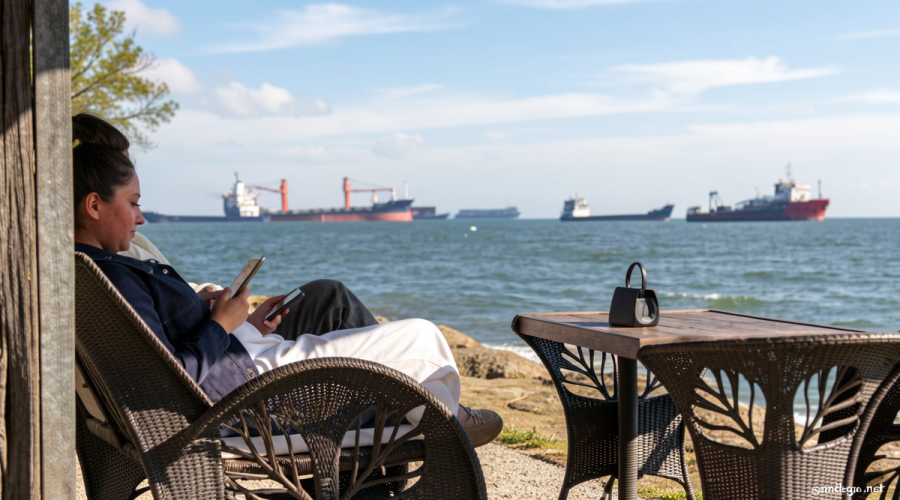
Sandego.net – Following the outbreak of hostilities between the United States, Israel, and Iran, maritime operators have been urging enhanced safeguards for their vessels navigating the Strait of Hormuz. This vital shipping corridor, which Iran maintains control over, serves as a crucial artery for global commerce. Now, President Donald Trump has stepped forward with a solution, though it comes with a substantial price tag. According to the American leader, the United States stands ready to ensure safe passage through these waters, provided shipping companies agree to a 20 percent surcharge on all cargo traversing the strait.
In a message published on Truth Social over the weekend, Trump declared that America would henceforth be recognized as “THE GUARDIAN OF THE HORMUZ STRAIT.” He emphasized that this role would require compensation, stating that the nation would receive reimbursement at a 20 percent rate on every shipment. This payment would cover all expenses related to maintaining safety and security in what he described as a highly unstable region of the globe. The president framed the arrangement as a matter of fairness, suggesting that those benefiting from American protection should contribute proportionally to the costs involved.
Questions Surrounding the Fee Structure
Despite the bold announcement, several practical and legal concerns have emerged regarding the feasibility of this proposal. John McCown, who serves as a senior fellow at the Center for Maritime Strategy, highlighted that potential customers need clarity on pricing before committing to the service. From Trump’s social media statement alone, it remains ambiguous how exactly the 20 percent calculation would function. McCown posed several possibilities to CNN, wondering whether the fee represents 20 percent of America’s total blockade expenses divided among participating ships, or perhaps 20 percent of the Navy’s escort expenditures. Another interpretation could involve charging 20 percent of the total value of the transported merchandise itself.
The White House has yet to provide additional clarification when approached by CNN for more information. Regardless of the precise methodology, McCown expressed skepticism about market acceptance. Drawing on his experience as the former chief executive of Trailer Bridge, a shipping logistics firm, he noted that industry participants typically shoulder between two and three percent of their cargo’s value in fees. A twenty percent rate would represent roughly ten times that standard amount, potentially rendering the service prohibitively expensive for many operators.
Legal Framework and Historical Precedents
While cost concerns loom large, insurance companies may ultimately hold significant influence over the situation. These entities might decline to underwrite vessels attempting to cross the Hormuz if they consider the dangers excessive, independent of whether shipowners are prepared to purchase American protection. The strait itself functions as an international waterway where maritime law guarantees vessels the right of free passage. Iran has occasionally levied what it termed service charges on passing ships, although such requirements are not currently active. James Kraska, a professor specializing in international maritime law at the US Naval War College, characterized those Iranian charges as essentially tolls. He maintains that this practice violates international legal standards.
Kraska offered his interpretation of Trump’s announcement, suggesting that America is proposing a voluntary convoy system. Under this model, vessels could choose whether to participate and pay the associated costs, rather than facing a mandatory fee that could block transit entirely. This approach would align with international law because participation remains optional. Nevertheless, Kraska cautioned that legality does not automatically equate to advisability. He pointed to a historical parallel involving Denmark, which collected dues from foreign ships navigating the Øresund strait from the early fifteenth century until the middle of the nineteenth century. Those charges were based on declared cargo values as well. Ironically, according to Bjorn Vang Jensen, an executive industry adviser at the freight analytics platform Xeneta, American intervention eventually brought an end to Denmark’s charging system.