Capitol Police Arrest Man with Handgun at North Barricade
Dramatic Video Captures Morning Arrest
Sandego.net – Capitol Police arrest man with a handgun Monday morning at the north barricade of the United States Capitol complex. Officers detained a man discovered with a handgun inside his vehicle, triggering a swift law enforcement response. The firearm is among weapons prohibited from Capitol grounds, prompting immediate action from security personnel on duty. CNN’s camera crew documented the entire sequence of events as the situation developed.
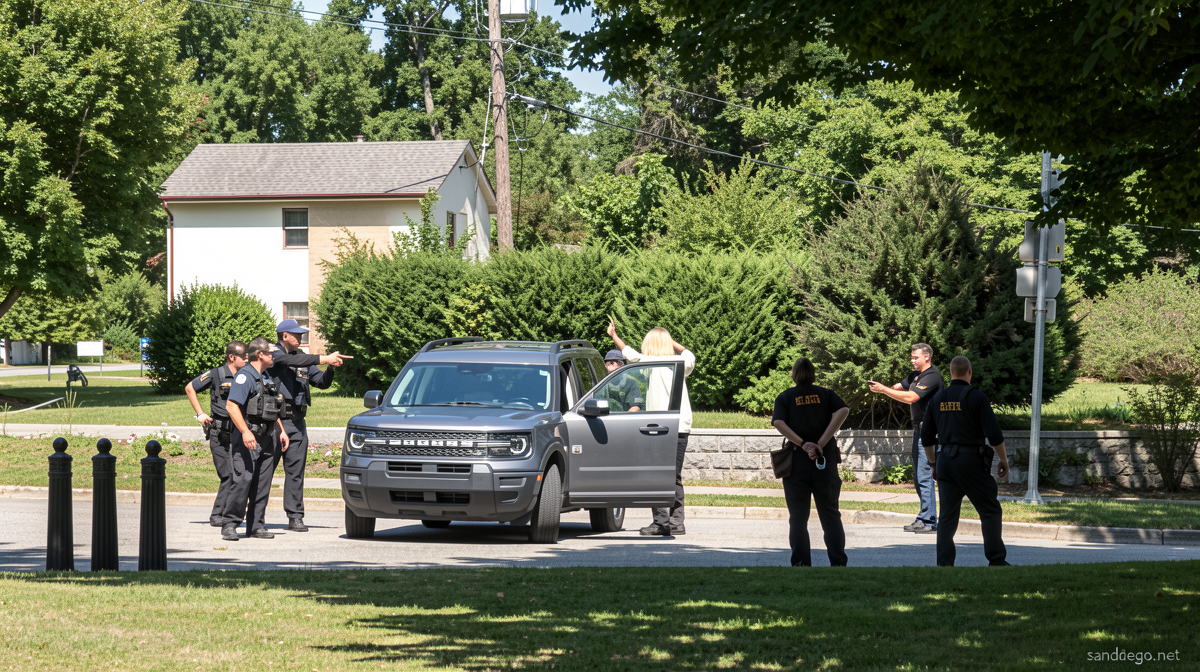
The recorded footage reveals six officers positioning themselves around a sport utility vehicle. Two responding officers had their firearms drawn and aimed at a man who emerged from the driver’s side door. The man kept his hands raised above his head as he stepped away from the vehicle. He walked backward, creating distance between himself and the SUV, while officers gradually lowered their weapons. A team of officers then approached the man and secured his hands behind his back with handcuffs as additional personnel arrived at the scene.
Man Identified and Charged
According to an official statement released by Capitol Police, the arrested individual was identified as 67-year-old Wendell J. Royster, a resident of Columbia, Mississippi. Authorities confirmed that Royster had been charged with carrying a pistol without a license and without a permit. As of Monday afternoon, Royster had not appeared in the Superior Court database, and no attorney had been listed for him in court records.
The incident commenced just after 11:20 a.m. Monday when Royster arrived at the north barricade driving a rented Ford Bronco. He approached an officer and requested directions to the Supreme Court building. Capitol Police reported that the officer immediately noticed a handgun resting on Royster’s lap. Officers took him into custody within two minutes of the initial encounter.
Additional Details and Context
Capitol Police officials stated that Royster was not currently on record with their agency. Furthermore, they noted that “there does not appear to be a nexus to the Congress,” suggesting no direct connection to congressional members or staff. The video footage obtained by CNN shows that after being handcuffed, the man engaged in conversation with one of the officers. This officer gestured toward the interior of the vehicle during their exchange.
Notably, a dog was observed sitting inside the Bronco during the arrest. The animal barked at an officer through an open window. Capitol Police clarified that the dog was “chained inside the Bronco” at the time of the incident. Officers remained on scene to provide water for the animal until animal control personnel arrived to retrieve it.
Security Response and Significance
The north barricade serves as one of the primary access points to the Capitol complex, making it a strategic location for security operations. The presence of a handgun in a vehicle at this location, while not uncommon, requires immediate attention from Capitol Police. The quick response time of just two minutes demonstrates the efficiency of the security protocols in place.
This report has been updated with additional information from further investigation. CNN’s Holmes Lybrand contributed reporting to this story, providing comprehensive coverage of the incident from multiple angles.