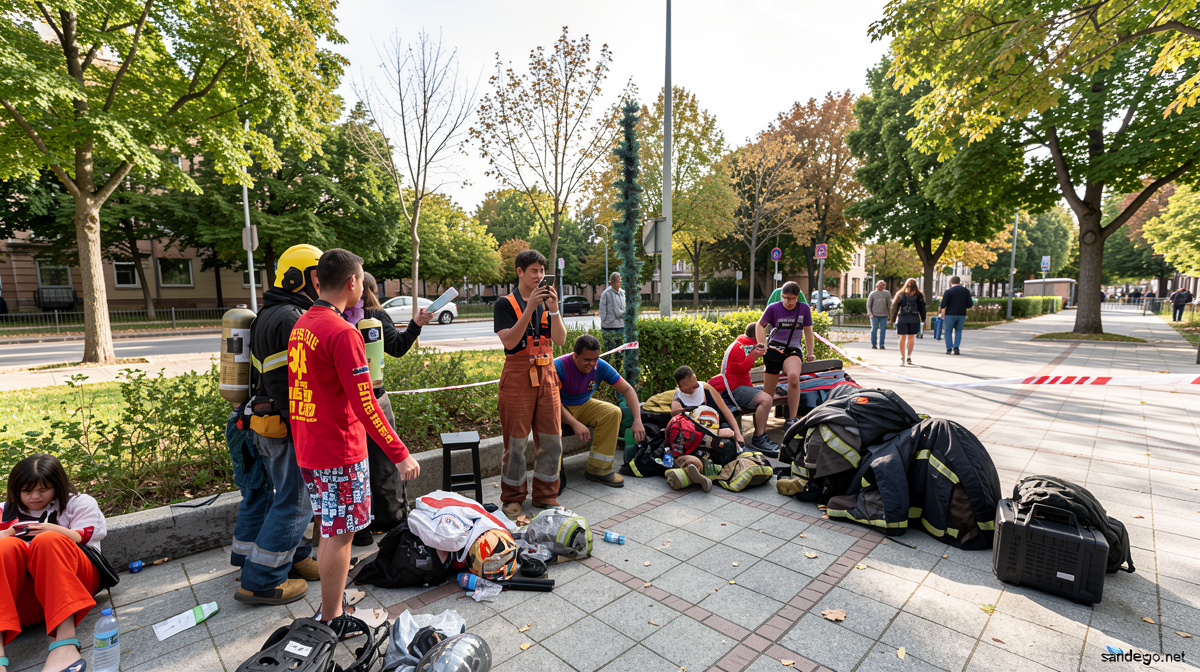
Fire breaks out at a pub in Bangkok: 27 Dead in Tragic Early Morning Blaze
Sandego.net – A devastating fire breaks out at a pub in Bangkok’s northern district, claiming at least 27 lives in the early hours of Monday morning. The catastrophic incident occurred around midnight local time at the Na Ladprao establishment, sending shockwaves through the Thai capital and beyond. Emergency responders rushed to the scene as thick smoke billowed from the building, with victims discovered trapped in back restrooms and throughout the venue.
How the Tragedy Unfolded
According to eyewitness accounts, a musician reported noticing smoke emanating from a circuit breaker near the stage area. This was followed by a sudden power outage, then a loud explosion that engulfed the pub in flames. The rapid spread of fire left many patrons with little time to escape. Firefighters worked tirelessly for approximately half an hour to bring the blaze under control, but the damage was already severe.
As news of the disaster spread, officials confirmed mounting casualties. Prime Minister Anutin Charnvirakul stated that 27 people had perished in the inferno. Bangkok Governor Chadchart Sittipunt reported that 63 individuals were hospitalized, with 22 in critical condition. The death toll is expected to rise as rescue operations continue and identification efforts proceed.
Community Grief and Historical Context
Singer Sukanya Wongwongwai, who was performing at the venue, shared heartbreaking details about her bandmates. She revealed that one of her fellow musicians died, three others were hospitalized, and one remains missing. Her testimony adds a deeply personal dimension to the growing list of victims.
This tragedy echoes previous devastating incidents in Thailand. In 2022, a music pub fire killed 14 people, while the 2009 Santika nightclub disaster claimed 66 lives and injured over 200 people after fireworks ignited a blaze. These recurring events have prompted renewed calls for improved fire safety regulations across the country.
Authorities have launched a comprehensive investigation to determine the exact cause of the fire breaks out at a pub incident. While the circuit breaker malfunction appears to be a primary factor, officials are examining all possible contributing elements. The community mourns together as the full scope of this heartbreaking event continues to emerge.