Federal Court Halts Seditious Conspiracy Prosecution of Proud Boys Members
A Landmark Decision by Judge Kelly
Sandego.net – In a significant development for those involved in the January 6, 2021, Capitol attack, a federal judge has officially dismissed the seditious conspiracy case targeting multiple members of the Proud Boys organization. This ruling comes after US District Judge Timothy Kelly, a Trump-appointed jurist, accepted the Justice Department’s formal request to terminate proceedings against four individuals. The decision effectively nullifies what had been considered one of the Biden administration’s most prominent legal achievements in holding accountable those deemed responsible for inspiring violence against American democratic institutions.
Judge Kelly acknowledged his limited power in the matter, stating clearly that he could not force the Executive Branch to continue pursuing legal action against the defendants. His ruling reflects the broader political landscape under the current Trump presidency, where the administration has demonstrated a willingness to reconsider previous prosecutions of January 6 participants.
The Four Defendants and Their Convictions
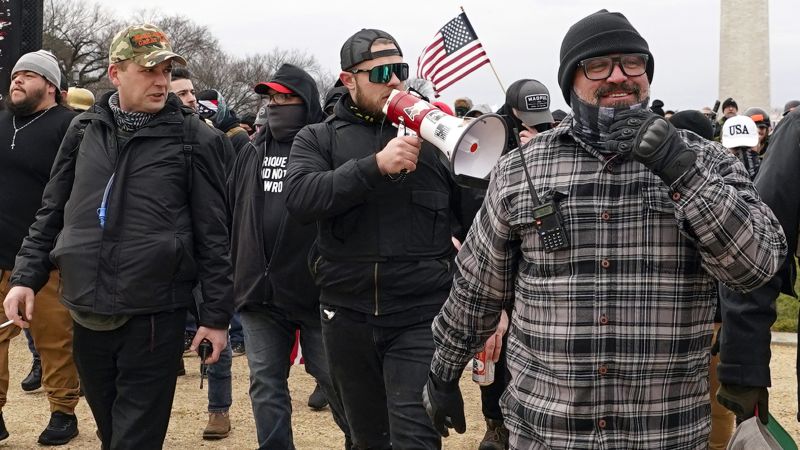
The case centered on four Proud Boys members whose legal fates had been intertwined since the Capitol riot. Ethan Nordean, Joseph Biggs, and Zachary Rehl all received guilty verdicts in 2023 for seditious conspiracy alongside various additional charges. Dominic Pezzola, while acquitted of the seditious conspiracy charge, faced conviction on other January 6-related offenses. These convictions represented some of the most serious outcomes from what remains one of the largest federal investigations in American history.
The Justice Department, operating under Todd Blanche’s leadership, formally moved in April to vacate these convictions. The administration’s position aligned with its broader strategy of treating all January 6 cases uniformly, regardless of when they were initiated or the severity of the conduct involved.
Trump’s Executive Action and Political Context
President Trump’s stance on the January 6 prosecutions has been consistently clear throughout his return to office. On his first day back, he signed an Executive Order commuting the sentences of several individuals connected to the Capitol attack. While this order granted pardons to more than 1,000 people convicted in connection with the events of January 6, it specifically preserved the convictions of the four Proud Boys members at the center of this latest dismissal.
Judge Kelly noted in his order that the President’s views on prosecuting January 6 participants—whether grounded in fact or perception—are widely recognized. The administration’s decision to abandon this particular prosecution, even after securing convictions for serious crimes, falls squarely within executive authority.
Reactions and Celebrations
Zachary Rehl expressed relief following the dismissal, posting on X that the matter was finally resolved for him. Enrique Tarrio, the former Proud Boys leader who had also received a presidential pardon, celebrated the outcome with characteristic confidence, declaring that justice had been served and that the organization had won another victory.
These reactions reflect Trump’s long-standing criticism of the January 6 prosecutions, which he has characterized as unfair treatment of his supporters. The President has repeatedly described the day as one of peace and love, maintaining that his followers posed no meaningful threat to the nation.
Constitutional Significance and Future Implications
Judge Kelly’s order emphasized that the Court’s acceptance of the dismissal motion did not constitute agreement with the administration’s decisions. He described the insurrection as a perilous event that attacked multiple pillars of American governance—individuals including injured police officers, Congress as a coordinate branch of government, and the constitutional mechanism for peaceful presidential transitions.
Concluding his order with a measured warning, Kelly urged Americans across partisan lines to work together to preserve the nation’s experiment in self-government. He suggested that maintaining this democratic framework for another 250 years would require collective commitment to protecting what President Reagan once called “nothing less than a miracle.”