Mobile Gaming Meets History: A Revolutionary Treasure Hunt
This popular mobile game wants players – When Hungarian art historian Gergely Barki sat down to watch the 1999 children’s film “Stuart Little” with his daughter in 2009, he never expected to stumble upon a remarkable discovery. Hanging unnoticed in the background of one scene was a painting he immediately recognized as Róbert Berény’s “Sleeping Lady with Black Vase,” a masterpiece that had vanished from public view decades prior. Barki reached out to the filmmakers and learned that a set designer had purchased the artwork at a California antique shop without knowing its true identity. That designer eventually sold it to a private collector, who returned it to Hungary where it was auctioned off. This serendipitous reunion sparked an idea that would eventually reach millions of gamers worldwide.
Bringing Lost Artifacts to Virtual Life
Ben O’Donnell, the game director behind “June’s Journey,” recalled how Barki’s experience led his team to consider whether embedding missing historical objects into interactive entertainment could facilitate their recovery. The free-to-play mobile title, developed by Berlin-based Wooga, has already attracted over 50 million downloads on Google Play. Players assume the identity of June Parker, an amateur detective navigating 1920s New York while solving mysteries. With a predominantly female audience and strong popularity in the United States, the developers recognized this year’s 250th anniversary as the perfect moment for a meaningful collaboration.
Wooga enlisted Don Hagist, author and managing editor of the “Journal of the American Revolution,” to help select which artifacts would be featured. Hagist consulted with the journal’s contributors, who enthusiastically suggested various items.
“A lot of people wrote and said ‘we’d love to have this or that person’s coat or musket or who knows what document.’ These are items we know existed at the time of the revolution but we don’t know if they survived.”
Historical Treasures Hidden in Plain Sight
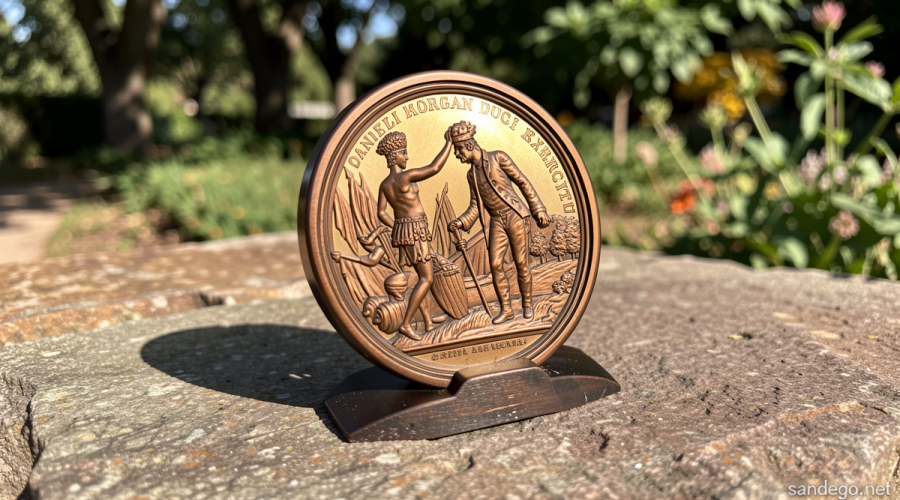
The treasure hunt features several remarkable objects. Among them is an 18th-century Battle of Cowpens medal presented to General Daniel Morgan following his victory over British forces in South Carolina in 1781. The medal was subsequently stolen from a bank vault and has remained unseen for more than two centuries. Players will also search for a military cap adorned with three ostrich feathers, an embroidered scene, a cannon, and a coat of arms.
Additional treasures include one of two engraved cannons surrendered during the Battles of Saratoga on September 19 and October 7, 1777. These cannons, later employed in defending the young nation, disappeared in 1813 after British and Canadian forces recaptured Ogdensburg, New York. Gamers will hunt for part of King George III’s royal coat of arms from Philadelphia’s Christ Church, where George Washington and Benjamin Franklin once worshipped. Most of the symbol was torn down by patriots at the revolution’s beginning, though one-third survives at the church today.
Other hidden items encompass an embroidered textile thought to portray the long-demolished New Jersey estate of Revolutionary War general William Alexander, known as Lord Stirling, alongside a red British military coat last documented in 1901 in Connecticut. While not all appear within gameplay, a dedicated webpage lists additional missing pieces for curious players seeking deeper engagement.
Real-World Impact Through Virtual Discovery
Anyone believing they have located a lost artifact can submit their findings through a special channel where Hagist personally reviews the evidence.
“If somebody contacts me, the first thing is to establish trust and say ‘nobody’s going to come and arrest you because you have this — we’re just grateful to know it exists,'”
Hagist explained. He subsequently consults with experts to authenticate any potential discoveries.
O’Donnnell emphasized that the game’s free-to-play model provides access to a massive audience.
“We thought it would be a good opportunity to use the power of the volume of people who really love this game to help us try and find something in the real world.”
By integrating these historical treasures into a medium that millions encounter regularly, the project aims to transform casual gaming into a meaningful contribution to historical preservation. Whether players uncover lost medals, forgotten coats, or vanished paintings, each discovery brings us closer to understanding the material legacy of America’s founding era.