
Denmark’s Frederiksen bruised in election, as voters put Trump’s Greenland ambitions to the side
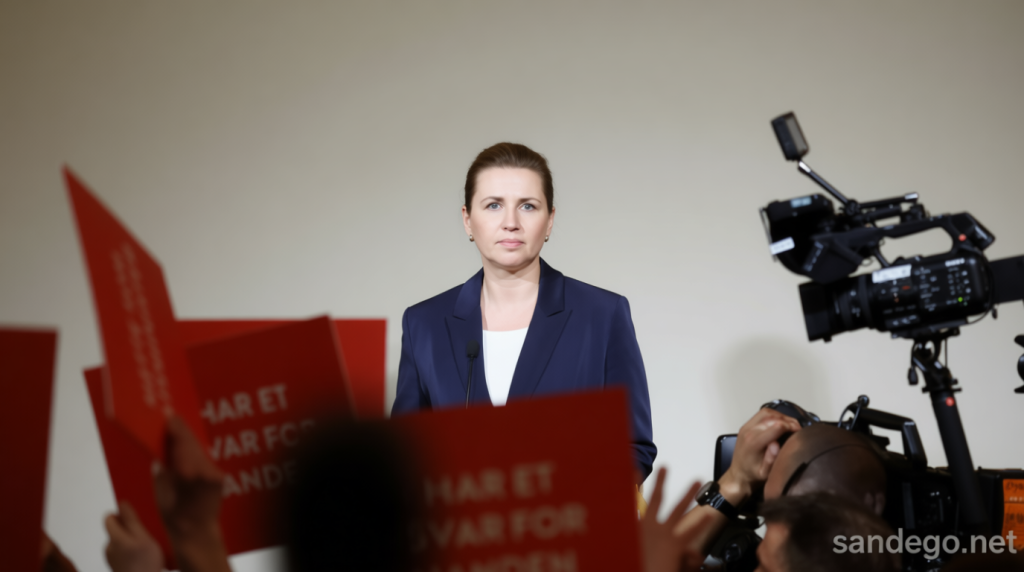
Denmark’s Frederiksen bruised in election, as voters put Trump’s Greenland ambitions to the side
The recent election in Denmark delivered an ambiguous outcome, leaving Prime Minister Mette Frederiksen’s political fate uncertain. The campaign centered on everyday concerns rather than her management of the dispute involving U.S. President Donald Trump’s interest in Greenland. Official tallies indicated that Frederiksen’s center-left Social Democrats suffered a decline in support compared to the 2022 election, as did the two allies in the previous administration. No single party secured a majority in the 179-seat parliament, positioning experienced Foreign Minister Lars Løkke Rasmussen, leader of the Moderate party, as a pivotal figure in shaping the next government.
Frederiksen’s leadership under scrutiny
Frederiksen, 48, asserted her readiness to continue as prime minister, emphasizing the need for stability in a world marked by uncertainty. “The world remains turbulent, with shifting tides of public sentiment,” she remarked. “Denmark requires a steady and capable government. We are prepared to lead.” Rasmussen urged left and right factions to temper their campaign stances, advocating unity. “Our nation, though small among 8 billion people, faces global upheaval—conflict in Ukraine and tensions in Iran,” he noted. “We are one tribe. We must unite, not fracture.”
“The world is unsettled. There are strong winds around us,” she said. “Denmark needs a stable government, a competent government. We are ready to take the lead.”
“Denmark is a small country of 6 million people in a world of 8 billion, which is in upheaval — and there is war in Iran, and there is war in Ukraine,” he said. “We are one tribe. We must come together. We must not be divided.”
Despite her previous focus on rallying allies against Trump’s Greenland aspirations, the issue faded during the campaign as broader consensus emerged on the island’s role within the kingdom. Defense Minister Troels Lund Poulsen, a prominent center-right opponent, declared his Liberal party would not ally with Frederiksen’s Social Democrats again. While the Social Democrats retained the largest party status, their 21.9% share fell short of the 27.5% from 2022. The election’s outcome mirrors a trend of declining support for parties seeking re-election, with Frederiksen’s party securing 25.9% in 2019 when she first took office.
Political challenges and coalition dynamics
Frederiksen’s government faced criticism for prioritizing international crises over domestic priorities. Social Democrat lawmaker Morten Klessen acknowledged the outgoing administration’s achievements but noted that Europe’s turmoil and focus on Ukraine had cost some domestic votes. “We need Mette Frederiksen in Europe for solidarity,” he argued. The proportional voting system, which typically results in coalition governments, now hinges on negotiations between left and right blocs. Frederiksen admitted the results were below expectations, calling it normal for a party seeking a third term to see a drop in support.
Denmark’s single-chamber parliament, the Folketing, operates under a four-year cycle. Lawmakers from Denmark hold 175 of its seats, while two each are allocated to representatives from Greenland and the kingdom’s…
