The Nashville Zoo has become an unlikely battleground in America’s data center race
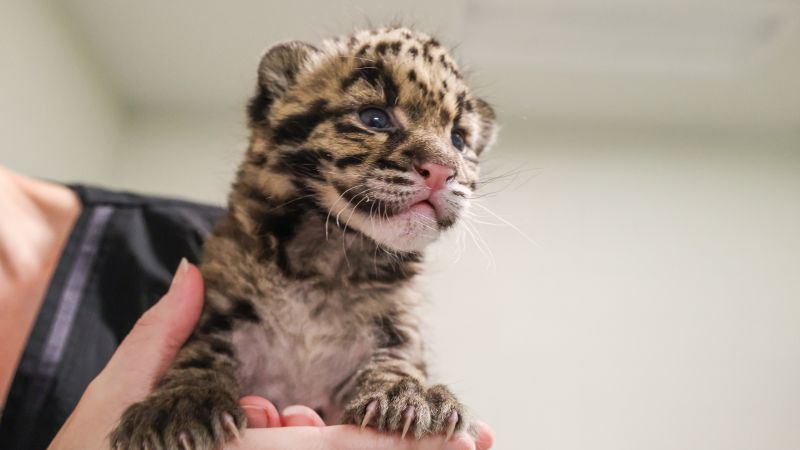
Sandego.net – As dawn breaks, Dr. Heather Schwartz begins her day by preparing a warmed feeding bottle for a clouded leopard cub, its small size barely reaching the length of her hands. The young feline impatiently wriggles, signaling its readiness for nourishment. This routine, performed daily by the zoo’s animal health director, is part of a larger effort to nurture and acclimate the vulnerable species. Schwartz’s responsibilities extend beyond feeding, encompassing the cub’s hygiene, social development, and gradual introduction to human interactions. It’s a tireless commitment that defines life at the Nashville Zoo, an institution uniquely positioned to support clouded leopard reproduction this past breeding season.
Yet, the zoo’s focus on conservation is now clashing with a proposed data center just beyond its perimeter. Officials warn that the industrial development could bring about persistent noise, increased light exposure, and constant human activity, all of which might disrupt the delicate balance required for the survival of the zoo’s 3,000 residents. The concern is not limited to the clouded leopards but spans to the entire ecosystem of animals housed within the facility. This conflict has sparked a national conversation about the environmental trade-offs of expanding data centers to meet the demands of modern technology.
Broader Implications of Data Center Expansion
America’s push toward cloud computing and artificial intelligence has led to an explosion in data center construction. With nearly 4,000 such facilities across the country, the infrastructure is now a critical component of the digital economy. However, this rapid growth has also drawn scrutiny from communities wary of its ecological footprint. Residents increasingly voice opposition to these projects, citing worries about energy consumption, water usage, and the cumulative effects of industrial noise and light pollution. The Nashville Zoo’s situation exemplifies this growing tension, where a seemingly benign technological advancement threatens to upend a vital wildlife initiative.
“This is indicative of the type of interactions data centers are now having with concerned communities,” said Costa Samaras, director of the Carnegie Mellon University Scott Institute for Energy Innovation. “The broader concerns around power, noise, emissions, and environmental impact are shaping how these projects are evaluated today.”
DC BLOX, the Atlanta-based firm spearheading the data center project, argues that its design incorporates measures to minimize disruptions. Still, the zoo’s leadership remains skeptical, emphasizing that the proximity of industrial operations to sensitive habitats could introduce variables that are difficult to predict. Rick Schwartz, the zoo’s CEO, called the conflict “unprecedented” in scale, noting that no other accredited zoo has publicly contested a data center proposal so close to its premises.
The controversy has also gained traction through public advocacy. A petition launched by the zoo has amassed over 500,000 signatures in just four weeks. Country music star Brad Paisley, among others, has lent his support, describing the project as “an absolute nightmare” for local wildlife. The campaign underscores the growing influence of grassroots movements in shaping the future of digital infrastructure, highlighting how communities are becoming more vocal about their environmental concerns.
Hand-Rearing Success and Its Vulnerabilities
The Nashville Zoo’s 30-year success in clouded leopard breeding is largely attributed to its hand-rearing program, a method that involves raising cubs in human care to ensure their development. Dr. Schwartz explained that this approach combats natural parental neglect, a common issue in the species, while also reducing stress. By exposing the cubs to the sights and sounds of their future exhibit early, the program helps them adapt to the zoo environment more smoothly. Additionally, early pairings between cubs foster reduced aggression, which is crucial for successful mating later in life.
However, this meticulous process is now at risk due to the potential interference of a nearby data center. The clouded leopard exhibit, located closest to the proposed facility, could suffer disproportionately from noise and light pollution. Heather Kostick, associate director of the Penn Center for Science, Sustainability, and the Media, pointed out that animals like elephants and cassowaries, both present at the zoo, rely heavily on low-frequency vibrations for communication. “Data centers emit a constant low hum, which animals can detect even when humans cannot,” she said. “This noise can alter behavior, particularly in species sensitive to environmental changes.”
“Zoo animals already live in semi-unnatural environments, often exposed to urban noise and artificial light,” Kostick added. “Keepers work tirelessly to create natural-feeling habitats through enrichment, careful habitat design, and balanced diets. But the addition of a data center’s constant hum could undermine these efforts, making it harder for the animals to thrive.”
Even with DC BLOX’s plans for mitigation, the zoo maintains that no industrial-scale data center should be built adjacent to its facilities. Rick Schwartz highlighted the unknowns surrounding the project, stressing that the effects on sensitive wildlife are still being studied. “We’re dealing with a species that requires precise conditions to breed successfully, and anything that could disrupt that process is cause for alarm,” he said.
The debate surrounding the Nashville Zoo and the data center is emblematic of a larger shift in how technology projects are perceived. No longer are these facilities seen solely as economic assets; they are now viewed as potential disruptors of natural ecosystems. As the race to build data centers intensifies, the question remains: can innovation coexist with conservation, or will the drive for progress come at the cost of biodiversity? For the Nashville Zoo, the answer hinges on the balance between human advancement and the preservation of the habitats that sustain wildlife.