
What is the strait of Hormuz and can the US stop Iran from blocking it?
What is the Strait of Hormuz and Can the US Stop Iran from Blocking It?
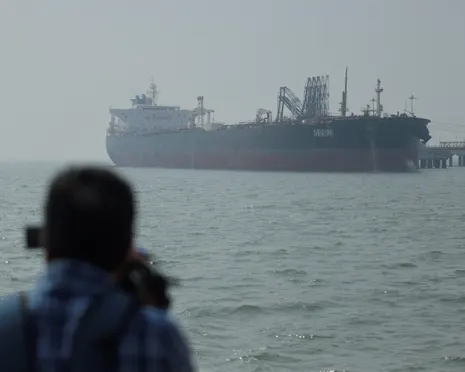
Iran’s actions in the Strait of Hormuz have disrupted maritime traffic, with over 1,000 oil and gas tankers reportedly halted from navigating the critical waterway. The conflict between Iran and the United States, supported by Israel, has intensified the situation, as Tehran has taken steps to restrict passage. Despite suggestions from Trump administration officials about resuming movement, the proposed naval escorts have not materialized, even as global energy prices have climbed sharply.
The Strategic Significance of the Strait
The Strait of Hormuz is the sole maritime corridor connecting the Gulf to the Gulf of Oman, vital for transporting approximately a quarter of the world’s liquefied natural gas and a significant portion of international trade originating from Gulf nations. Its narrowest point measures just 21 nautical miles, with the deepest channel flanked by Iran’s coastline and the Musandam peninsula in Oman. Traffic is confined to two two-mile-wide lanes, one for incoming vessels and one for outgoing, separated by a two-mile meridian.
A Historical Pattern of Threat
Strategic chokepoints like the Strait have long been targets in politically charged regions. During the Iran-Iraq war of the 1980s, the “tanker war” saw Iran attack commercial ships, prompting the U.S. to launch Operation Earnest Will in 1987. This operation, the largest convoy mission since World War II, aimed to safeguard shipping lanes. Now, Iran’s tactics have evolved, with reports of mine-laying and strikes on tankers, effectively closing the strait to global trade.
The U.S. Response and Challenges
U.S. military planners anticipated Iran’s potential to block the strait, yet the Trump administration seemed unprepared for the scale of the threat. Energy Secretary Chris Wright admitted that the navy was not yet ready to deploy escorts, contradicting earlier claims of an operation already underway. “It’ll happen relatively soon, but it can’t happen now,” he said, emphasizing the need for more resources. The U.S. focuses its assets on dismantling Iran’s military infrastructure, leaving naval protection underdeveloped.
Iran’s ability to launch missiles and drones from its coastal proximity complicates defense efforts. With transit lanes as close as 3 to 4 miles from the shore, ships face less than two minutes to respond to attacks. Recent incidents, such as the destruction of an oil tanker by a remote-controlled explosive boat, highlight the Iranian strategy of using small, fast vessels for sabotage.
The Psychological and Tactical Impact
While Iran possesses advanced naval mines, some of which can detonate at depths up to 164 feet, the country also employs fishing boats and other small craft for mine deployment. Analysts note that the psychological pressure on global trade may be a key objective, as Iran’s aggressive moves disrupt supply chains and raise shipping costs. Adel Bakawan, director of the European Institute for Studies on the Middle East and North Africa, stated: “Neither France, the United States, an international coalition, nor anybody is in a position to secure the Strait of Hormuz.”
Such operations require not only naval ships but also air cover, compounding logistical hurdles. The U.S., though one of the world’s most powerful navies, faces challenges in maintaining a continuous presence in the strait. As the conflict escalates, the region’s vulnerability underscores the delicate balance between military power and strategic foresight.
