
Police to use Thames to separate protesters at Al Quds protest
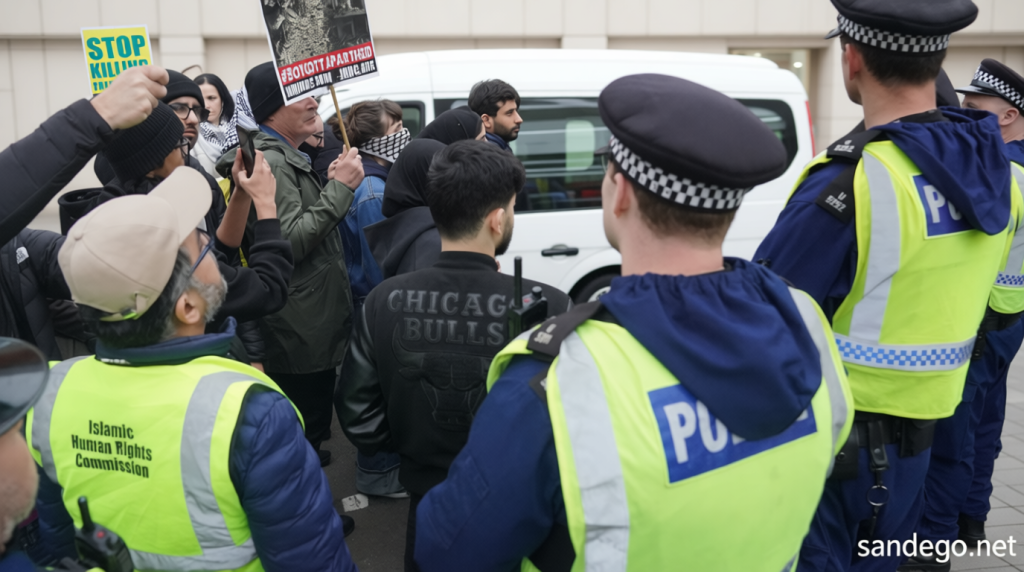
London Police Deploy Thames as Tactical Barrier at Al Quds Rally
London police have announced plans to use the River Thames as a strategic barrier to divide demonstrators and counter-protesters during the Al Quds Day rally on Sunday.
Metropolitan Police Request to Block March Approved
A planned demonstration heading to the Home Office was banned earlier this week after Home Secretary Shabana Mahmood endorsed the Metropolitan Police’s request to prevent potential serious disruptions.
Met stated the organizers, the Islamic Human Rights Commission (IHRC), are “supportive of the Iranian regime.”
This marks the first instance of a protest march being halted by the Met in over a decade. However, the IHRC responded by confirming a “static” demonstration will proceed, asserting the ban was a “politically motivated decision.” They described the event as a peaceful, pro-Palestinian gathering.
Assistant Commissioner Details Police Strategy
On Thursday, Assistant Commissioner Ade Adelekan noted in a briefing that the use of the Thames as a buffer between opposing groups is a “new, tailored strategy” designed to address the “specific challenges” posed by the Al Quds rally.
The Met anticipates approximately 6,000 participants in the Al Quds demonstration, with an equal number of counter-protesters expected. They warned of possible “substantial increases” due to heightened tensions in the Middle East.
Infrastructure and Security Measures
Lambeth and Vauxhall bridges will be closed to all vehicles, allowing only emergency services passage. Protesters will gather south of the Thames on Albert Embankment, while counter-protesters will be confined to Millbank.
Over 1,000 officers are deployed to manage the event, including teams from community policing and other regional forces. Enhanced security will also be enforced in areas with significant Jewish populations across London.
Enforcement Priorities
Mr Adelekan emphasized that the ban and policing efforts “do not entirely eliminate disorder risks,” but they will “greatly simplify the task of maintaining order.” Officers will be instructed to act decisively, targeting placards, flags, and chants as key elements.
Additionally, a “zero tolerance” stance toward hate crimes has been confirmed, with arrests possible for anyone endorsing proscribed organizations.
Read more: Iran war latest | How Iran blocks the Strait of Hormuz
