
Israel strikes Beirut and orders south Lebanon evacuation as conflict mounts
Israel strikes Beirut and orders south Lebanon evacuation as conflict mounts
Amid intensifying hostilities, Israel has expanded its evacuation directive to southern Lebanon, directing residents within 25 miles of the border to relocate northward. This order follows a series of aerial strikes targeting the heart of Beirut, marking a significant escalation in the ongoing confrontation with Hezbollah. The Israeli Defense Forces (IDF) announced the directive on Thursday, urging civilians to move beyond the Zahrani River for their safety, before launching a campaign against what it identified as Hezbollah strongholds.
The evacuation zone encompasses major cities such as Nabatieh and numerous villages. A specific warning was issued for a Beirut neighborhood adjacent to a cluster of eateries, where the IDF planned to bomb a structure. This latest measure comes shortly after Israel had already evacuated areas south of the Litani River and Beirut’s southern suburbs, displacing nearly a million people within ten days of the conflict.
“Where can I go?” questioned Hamza Zbeeb, a 48-year-old local official from Nimiriya, a village under the evacuation order. “Many people have gone to Beirut and come back because there’s no place to rest. I don’t want to be outside.”
Hours later, Israel’s bombardment hit central Beirut, demolishing two buildings. One fell near a shelter for displaced families, creating chaos in the main square. The other targeted the vicinity of the prime minister’s office, UN institutions, and foreign embassies. The strikes intensified after Hezbollah launched its most aggressive assault yet on Wednesday night, with rockets and drones raining down on Israeli territory.
Hezbollah’s operation, named “Operation Chewed Wheat,” referenced a Quranic verse symbolizing the reduction of enemies. The group claimed the attack was a response to Israel’s relentless airstrikes over nearly two years. In coordination with Iran, Hezbollah executed a joint strike, deploying missiles alongside drone and rocket fire. The operation resulted in injuries and damage to military bases in Haifa, Tel Aviv, and Beersheba, according to Iran’s Revolutionary Guards.
Residents in border towns described a harrowing night. Daniel Dorfman, 43, from Metula—a town bordering Lebanon—recalled the “very difficult” experience. “Last night was a bit crazy,” he said. “I don’t usually get anxious, but all the walls were shaking. It’s a little frightening. Here we get zero warning of any attack. You hear the interception explosions before the sirens.”
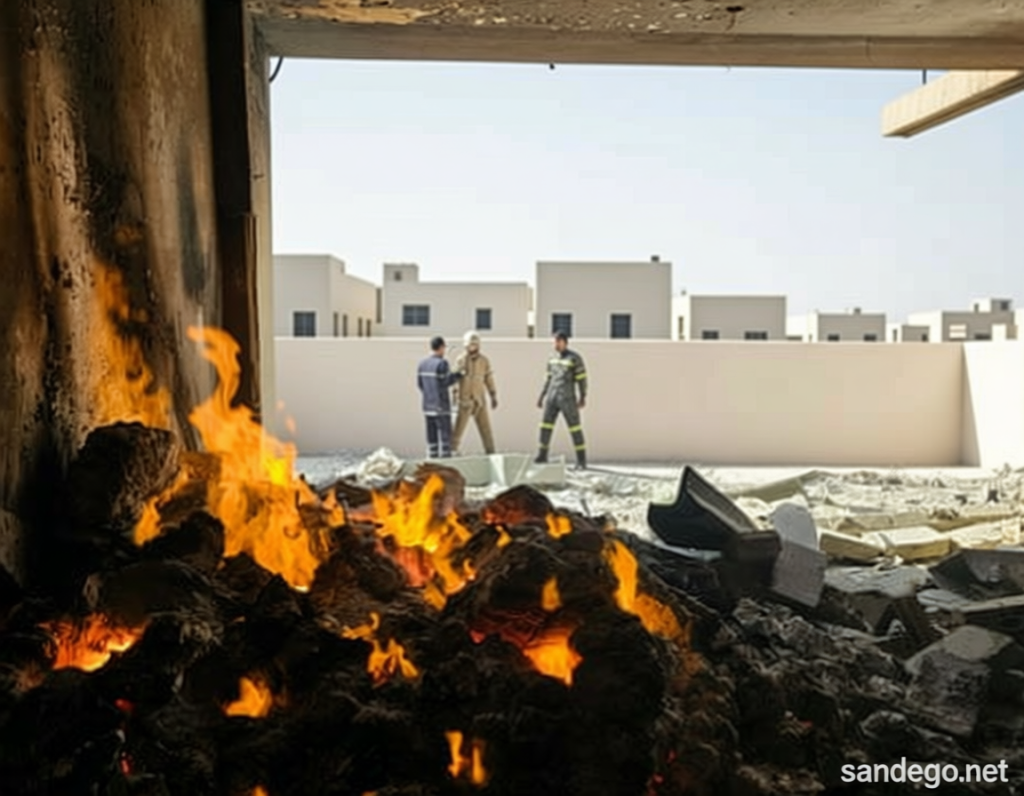
As Hezbollah continued launching rockets into northern Israel, Israel’s air force retaliated with strikes in the southern suburbs of Beirut. The skies over the capital turned red, and windows rattled under the force of sustained bombings. Footage captured collapsed structures and smoke-filled streets in southern Lebanon, illustrating the scale of destruction. Ali Hariri, a lawyer and first responder in Nabatieh, described the night as “very difficult; what can I say? Bombing all night.”
Meanwhile, a strike in the early hours of Thursday targeted Ramlet al-Baida, a Beirut neighborhood where many displaced families had taken refuge. Videos revealed at least two men lying dead on the seaside promenade. Lebanon’s health ministry reported 12 fatalities and 28 injuries from the attack. Riyadh al-Lattah, a 57-year-old woodworker from the southern suburbs, described the event as “terrifying,” with his family sleeping on the streets amid the destruction.
