
A NASA spacecraft is set to make an uncontrolled plunge back to Earth. Here are the risks
A NASA Spacecraft Faces Early Earth Reentry, Carrying Minimal Risk
On Tuesday evening, a retired NASA satellite is expected to descend into Earth’s atmosphere—years before its initial projection. Though the 1,323-pound (600-kilogram) probe will likely break apart during reentry, some parts may endure, according to the space agency. NASA and the US Space Force estimate the vehicle will enter the atmosphere around 7:45 p.m. ET, with a window of ±24 hours.
The probability of debris causing injury to someone is approximately 1 in 4,200, NASA stated in a news release. While this figure is low, it remains more significant than the risk posed by space debris incidents from earlier decades. “Reentries in the past had odds of 1 in 1,000, and nothing happened,” remarked Dr. Darren McKnight, a senior technical fellow at LeoLabs. “A 1 in 4,000 or 5,000 chance isn’t a catastrophic event for humanity,” he added.
“We’ve had things that have reentered have a 1 in 1,000 chance, and nothing happened; if we have a few that are 1 in 4,000 or 5000, it’s not a horrible day for mankind.”
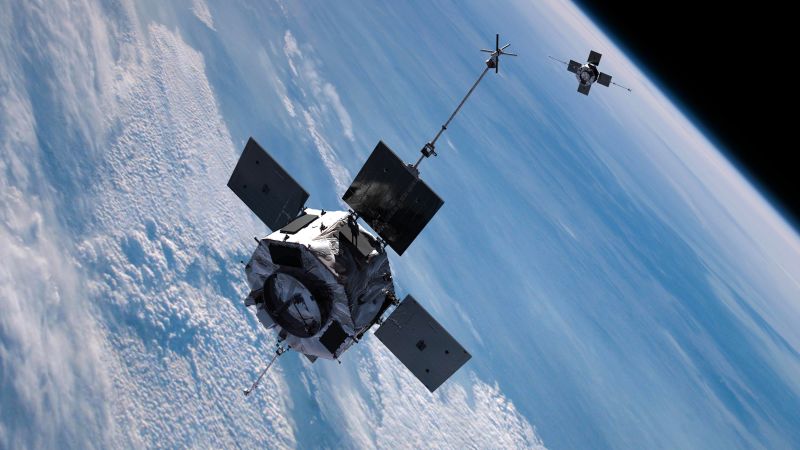
Despite this, the risk is greater than events like the 2018 reentry of China’s space station, which sparked global concern. At that time, the chance of debris harming a person was calculated as less than one in a trillion, yet no injuries occurred. The Van Allen Probe A, now defunct, was launched in 2012 with its twin to investigate Earth’s magnetically trapped radiation belts, spanning 400 to 93,300 miles (640 to 58,000 kilometers) above the surface.
These belts act as a shield against cosmic radiation, solar storms, and harmful solar winds. NASA highlighted their importance in a Tuesday statement. The probes’ mission revealed key insights about radiation dynamics, including evidence of a temporary third belt that forms during solar activity peaks. Both probes operated beyond their projected lifespan, depleting fuel before ending their work in 2019.
NASA originally planned for the satellites to burn up during reentry. By design, atmospheric drag would ensure their controlled descent. However, the current solar cycle has been more intense than anticipated. In 2024, scientists confirmed the Sun reached its peak activity, intensifying space weather effects. This led to increased atmospheric drag, shortening the spacecraft’s orbital life and accelerating its return.
The Van Allen Probe B is also anticipated to reenter before 2030. US policies mandate that spacecraft be retired or safely placed in orbits by 25 years post-launch. Options include deorbiting or moving them to graveyard orbits. However, graveyard orbits don’t fully eliminate collision risks, as debris can still threaten operational satellites. For the Van Allen Probes, reaching such an orbit would have used up remaining fuel, limiting further scientific contributions.
