Far Right AfD Elects Leaders Amid Protests and Tensions
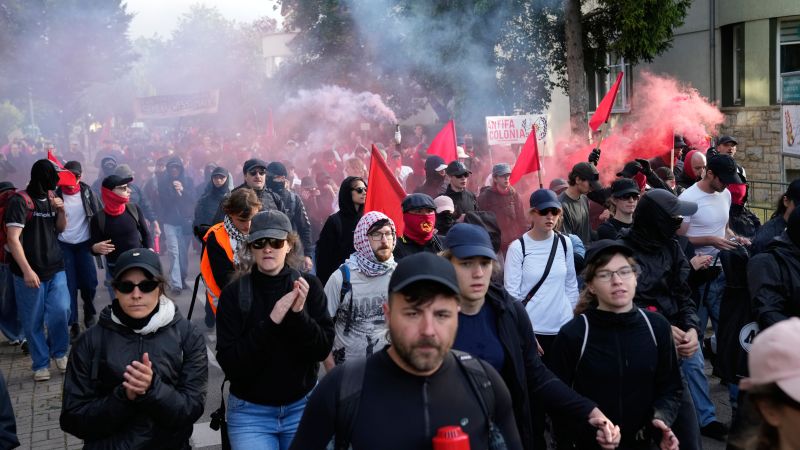
Sandego.net – The Far Right Alternative for Germany (AfD) party recently held its leadership election, with protests erupting in Erfurt as supporters and critics clashed. Demonstrators gathered to challenge the party’s national convention, where its top officials were finalizing their positions, highlighting the growing political polarization in Germany. The event took place in the eastern city, marking the second leadership vote in two years for the far-right group, which holds a significant presence in the country’s political landscape.
AfD’s Internal Dynamics and Public Divide
AfD, Germany’s largest far-right political force, sought to solidify its leadership during the convention. Alice Weidel and Tino Chrupalla, the party’s current leaders since 2021, were reappointed, signaling a commitment to stability. However, the event was overshadowed by protests, with activists outside the venue opposing the AfD’s policies and its representation of German society. The contrast between the party’s internal cohesion and the external unrest underscored its polarizing influence in the nation’s political discourse.
The timing of the election drew comparisons to historical events, including the 100th anniversary of a Nazi Party meeting held in Erfurt in 1926. Critics argued that the AfD’s leadership vote carried symbolic weight, reminiscent of the rise of far-right ideologies. Chrupalla defended the party, stating that the protests were a political tool used by opponents to disrupt AfD’s progress. “There are no democratic roadblocks, only efforts to hinder our movement,” he claimed in a
statement, emphasizing the party’s determination to advance its agenda.
Legal Challenges and Political Labeling
The AfD’s political trajectory has been marked by legal battles. Last year, Germany’s domestic intelligence agency labeled the party as right-wing extremist, a classification that faced scrutiny after a legal challenge. A Cologne court recently ruled that the label could not be applied until the review process was complete. AfD leaders have dismissed this designation, arguing it reflects political bias rather than ideological alignment. “We are not extremists, but a movement representing the people’s voice,” said a spokesperson during the convention.
Despite the legal debate, AfD’s support has steadily increased. In the February 2025 national election, the party secured 20.8% of the vote, the highest tally for a far-right group since World War II. This growth has positioned AfD as a major opposition force and a key player in the former communist east. Yet, the protests suggest ongoing challenges, with critics warning that the party’s policies could threaten Germany’s democratic foundations. The clash between AfD’s vision and opposition views continues to shape the nation’s political climate.
Strategic Alignment and International Rhetoric
The AfD’s recent surge is also linked to its alignment with global far-right movements. The party has shown support for Donald Trump’s “America First” policies and expressed admiration for his “Make America Great Again” slogan. In Erfurt, regional leader Björn Höcke echoed similar themes, advocating for a revival of national pride. “We want to make Germany great again,” he stated in a
speech, drawing parallels to international far-right narratives. This strategic positioning has helped AfD broaden its appeal beyond traditional anti-immigration rhetoric.
Internationally, the AfD’s stance on issues like Russia and Ukraine has further differentiated it from mainstream parties. By opposing military aid to Ukraine and advocating for eased sanctions on Russia, the party has gained traction among voters frustrated with Germany’s foreign policy. These positions, while controversial, have allowed AfD to position itself as a defender of national interests. As the September 6 state election in Saxony-Anhalt approaches, the party is positioning itself for a potential breakthrough in regional politics.