Extreme Heat Wave in Its Final Stretch and Could Fuel Storms During July 4 Celebrations
Sandego.net – The United States is entering the last phase of a severe heat wave that has gripped the eastern region for weeks, intensifying due to climate change. As the nation prepares to mark its 250th birthday with Fourth of July festivities, the weather pattern is expected to shift, potentially bringing thunderstorms to areas already reeling from record-breaking temperatures. The heat wave has already pushed many communities to their limits, and the coming days will test their resilience.
Heat-Related Illnesses and Fatalities Rise
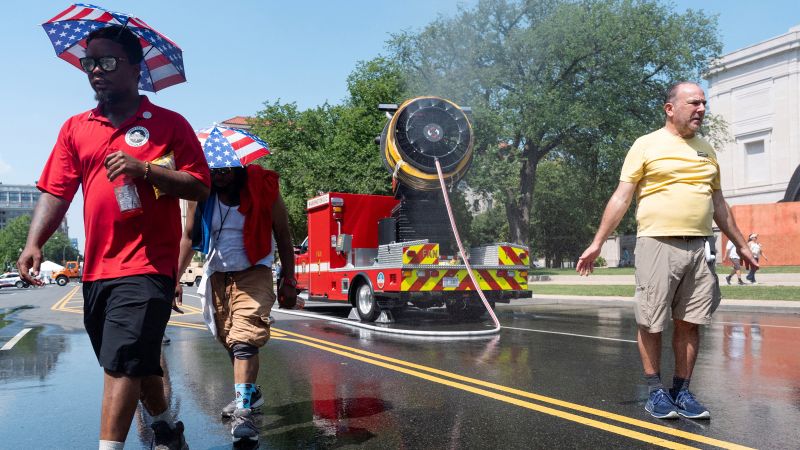
With the heat wave persisting, health authorities warn of a surge in heat-related illnesses. In Pennsylvania, a 68-year-old man succumbed to heat exhaustion after trimming bushes on July 2, according to the Berks County Coroner’s Office. The cause of death was attributed to a heart attack, compounded by the extreme conditions. Meanwhile, the Centers for Disease Control and Prevention (CDC) reported “extremely high rates of heat-related illness” across the Northeast, highlighting the growing danger for vulnerable populations.
“The combination of high temperatures and humidity has created a perfect storm for heat-related emergencies,” stated the CDC in their latest update. “We are seeing a significant increase in hospital admissions for heat exhaustion and dehydration.”
Events Canceled or Delayed Due to Unbearable Heat
Many planned events have been disrupted by the relentless heat. In Washington, DC, the July Fourth parade, scheduled for Saturday morning, was called off due to hazardous conditions. Similarly, President Donald Trump’s Great American State Fair, which typically draws large crowds, is opening two hours late at noon. These changes underscore the urgency of the situation as organizers prioritize safety over tradition.
Power Outages Threaten Urban Areas
Across the New York metro area, thousands of residents faced power interruptions on Friday and Saturday morning. Local utility Con Edison attributed some of these outages to preemptive shutdowns aimed at preventing further disruptions. Voltage reductions were also reported in parts of Staten Island, Queens, the Bronx, Brooklyn, and Westchester, according to Con Edison spokesperson Jamie McShane. The outages have added to the challenges of coping with the sweltering heat, affecting everything from air conditioning to communication systems.
“We’re experiencing a peak in demand, and some areas are under strain,” McShane explained. “These outages are a precautionary measure to ensure the grid remains stable for the rest of the week.”
Air Quality Deteriorates Amid Heat and Fireworks
The oppressive heat dome hovering over the eastern US is not only causing extreme temperatures but also worsening air quality. With fireworks displays and rocket shows planned for the weekend, pollutants from these activities are expected to mix with the already thick air, creating conditions similar to those of wildfires. In some cities, air quality may remain hazardous well past midday, forcing residents to adjust their outdoor plans.
“Millions of people will face a double dose of unhealthy air this week,” said an environmental expert. “The heat traps pollutants, and fireworks add a new layer of contamination.”
Thunderstorms Bring Relief and Risks
As the heat wave lingers, the possibility of thunderstorms is rising, offering a mix of relief and new challenges. The combination of high temperatures and humidity is likely to trigger severe weather in parts of the Mid-Atlantic and Northeast beginning Saturday afternoon. These storms could bring damaging wind gusts, lightning, and even localized flooding, all of which may disrupt fireworks displays and outdoor activities.
Regional Storm Risk Zones
While thunderstorms are expected to be scattered rather than widespread, certain areas face a heightened risk. The DC, Baltimore, and Arlington, Virginia, regions are particularly vulnerable, as are parts of Oklahoma and Kansas. Maps show these locations as critical zones for potential severe weather, with wind gusts of 60 mph or more being the primary concern. Despite the storms, some communities may still experience prolonged heat, making the weather a double-edged sword.
Heat Dome and Climate Change Intensify the Crisis
A strong heat dome—a mass of high-pressure air that traps and amplifies heat—is the root cause of this prolonged extreme weather. However, human-induced climate change, driven by fossil fuel pollution, has made these patterns more intense and frequent. The heat dome’s persistence means that Saturday’s temperatures will remain only slightly lower than those recorded on Thursday and Friday, continuing to strain infrastructure and public health systems.
Historical Context: A 250-Year Comparison
When the Founding Fathers signed the Declaration of Independence in 1776, Philadelphia’s high temperature was at least 76 degrees, a relatively mild day by historical standards. Thomas Jefferson himself recorded the temperature, reflecting the era’s typical weather. Today, the same city is enduring conditions that feel like a summer inferno, with Saturday’s forecast predicting a high of 100 degrees. The heat index, which accounts for humidity, will make the temperature feel even higher, intensifying the discomfort for those braving the outdoors.
“It’s like comparing a gentle breeze to a scorching sun,” said a meteorologist. “The 250-year-old temperatures are nothing compared to what we’re experiencing now.”
Transition to Milder Weather
While the heat wave remains active, there is a small window of hope as temperatures are expected to ease by Sunday. This gradual cooling may provide respite for those affected, but the full impact of the heat wave—both on human health and the environment—will be felt for days to come. The coming week will serve as a reminder of how climate change is reshaping the way we experience summer, turning what was once a mild period into a testing ground for resilience.
As the heat wave recedes, its legacy will linger in the form of broken records, health alerts, and altered weather patterns. The interplay between natural climate cycles and human activities is becoming increasingly evident, with the current event serving as a stark example of the challenges ahead. For communities across the eastern US, the Fourth of July is not just a celebration of independence but also a trial by fire in the face of a warming planet.